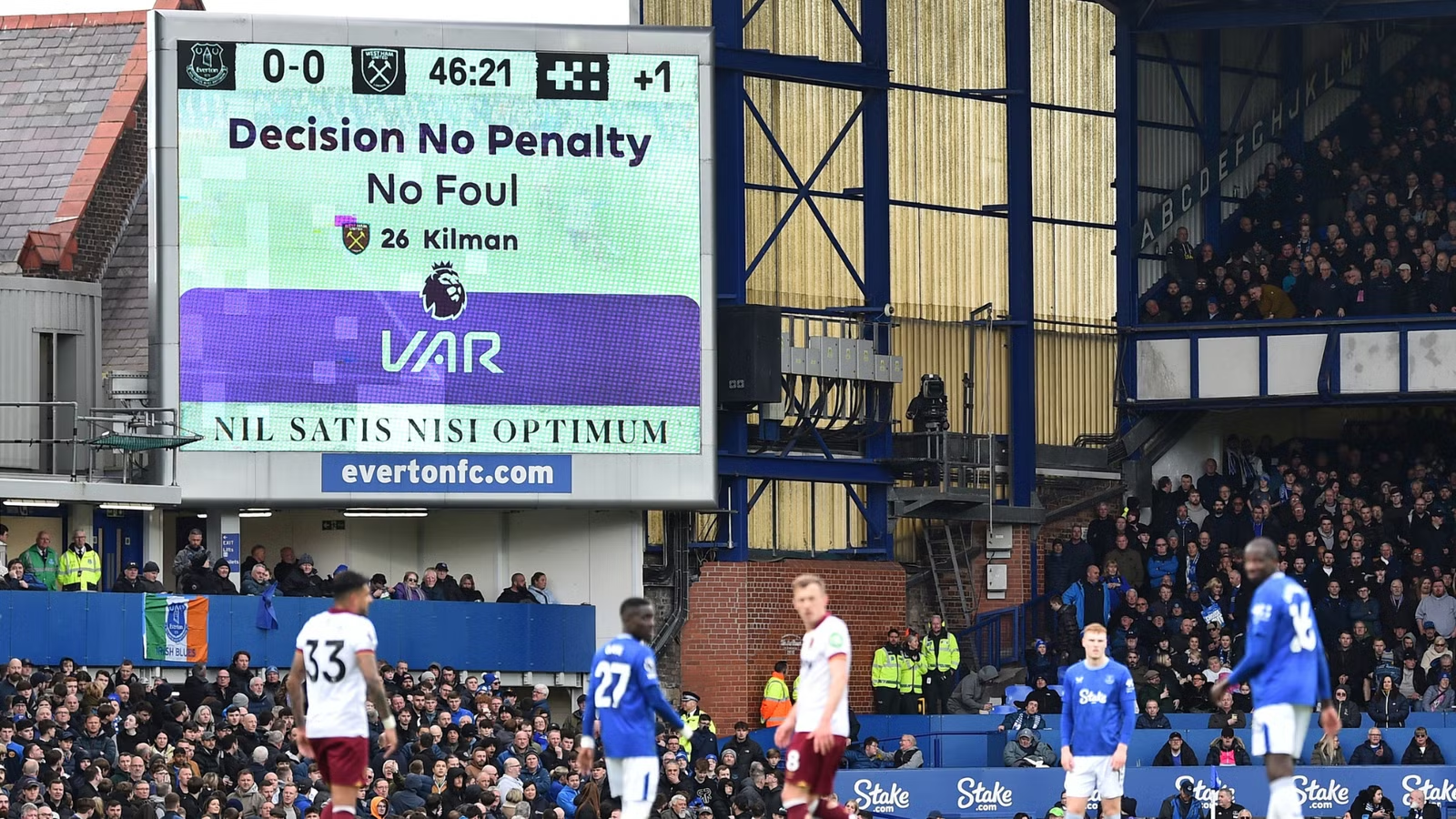
Supporters throughout the Championship have long wondered – and, in many cases, dreaded – when VAR would make its way to the league, having been adopted domestically during the 2019/20 Premier League season.
That was the season in which the majority of European leagues chose to implement additional technology to help match officials, with VAR’s full-scale debut coming at the 2018 FIFA World Cup in Russia.
VAR has rarely been without downsides. Critics have questioned how much VAR truly supports referees and ensures clear, consistent, and correct decisions at critical moments, and whether it has succeeded in eliminating “clear and obvious errors,” while the manner in which it slows down the game and keeps supporters guessing has also seen it become increasingly unpopular over time.
Pundits, players, managers, and fans have all agreed on the inadequacies of VAR, despite the fact that the technology is still in use and, at the Premier League level, is here to stay.
There are, however, others who advocate for the continuation of VAR, citing its ability to study important situations and make more informed choices.
VAR frequently creates headlines in Premier League games and is always decisive for those involved. But will it make it to the Championship soon? An update on that has just surfaced…
The EFL releases a new VAR update as the stance of Championship clubs emerges.
In a fresh update, Championship clubs have refused the option to implement VAR for the 2026/27 season.
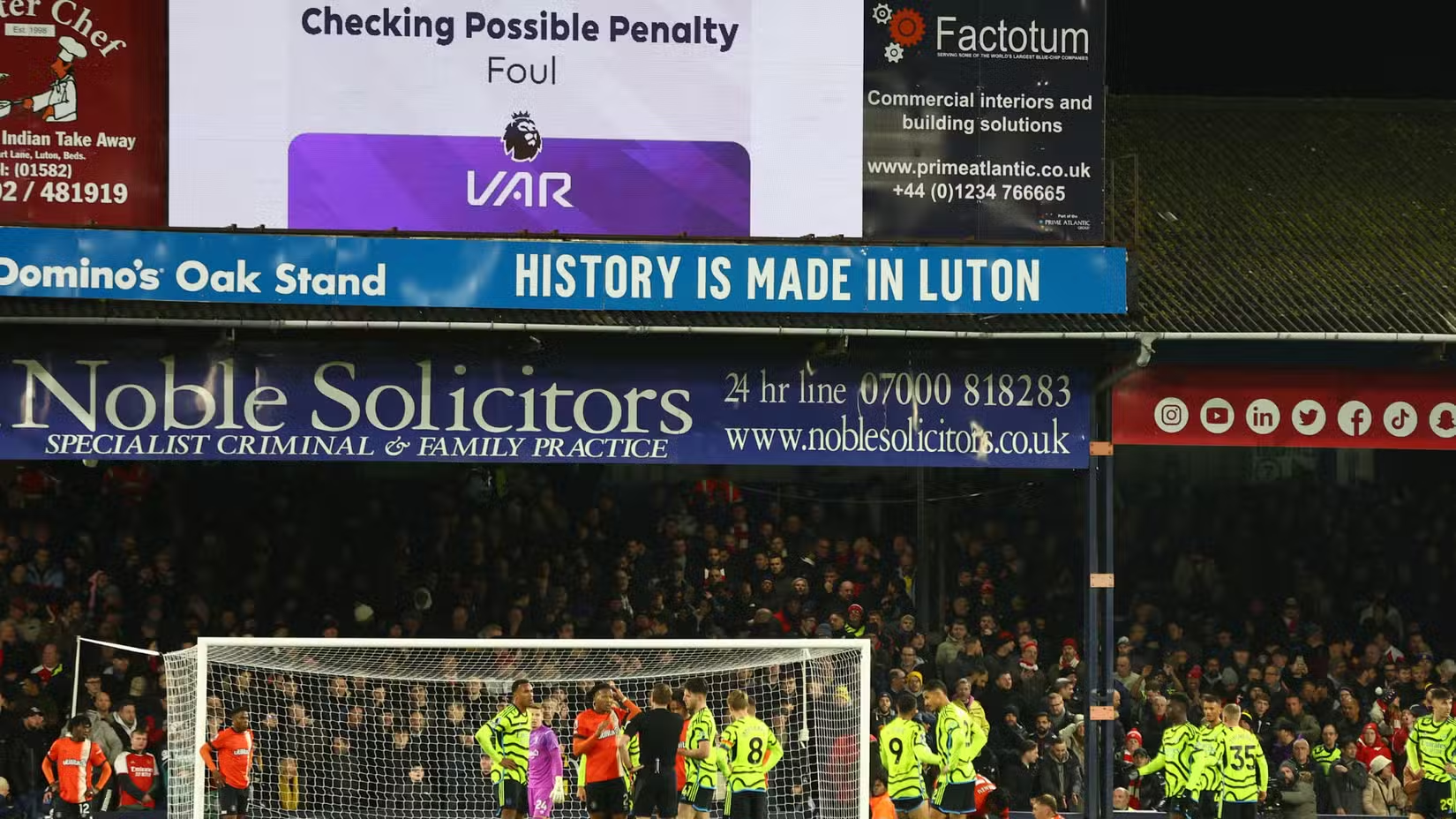
This system would have taken the shape of Football Video Support (FVS), a version of VAR that uses fewer resources and allows each manager two reviews per game.
However, as verified by the EFL via X on Tuesday evening, a recent consultation with clubs in the second tier revealed that a “significant majority” were opposed to introducing the FVS system.
According to a separate BBC Sport story, clubs did not support the implementation of VAR in the Championship, so the notion has been closed for the foreseeable future and is unlikely to alter.
There have been occasional exceptions to this norm, however. Earlier this month, Norwich City manager Philippe Clement, who formerly worked for Club Brugge, Monaco, and Rangers, highlighted how he missed VAR’s capacity to make correct decisions as his team conceded an early penalty in a 2-0 defeat to East Anglian rivals Ipswich Town.
Gerhard Struber, meantime, stated in January that VAR provides the chance for better and fairer choices, before being fired by Bristol City at the end of March.
Championship clubs have long been spared the controversy surrounding VAR, but some have met it in the FA Cup semi-finals, second-tier play-off finals, and, of course, after promotion to the Premier League.
What VFS genuinely is as Championship clubs reject the concept.
FVS has been tested in recent years as a potential alternative to VAR, with the system designed for use in divisions with fewer cameras and officials.
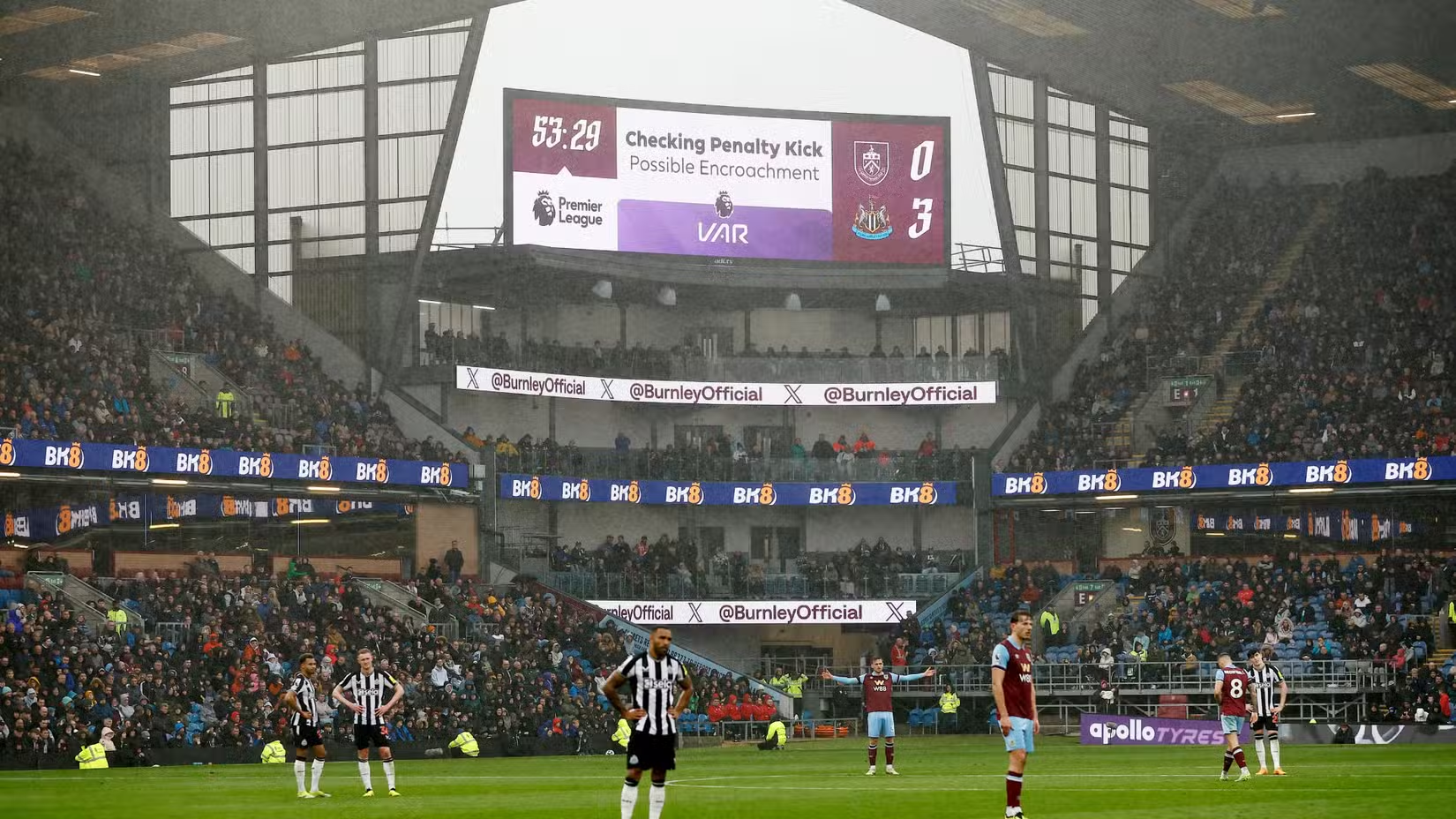
Indeed, FVS consists solely of a replay operator displaying camera views to the referee via the pitchside monitor. It is, however, far from easy in theory, as each coach is permitted two challenges per match, implying that the referee may visit the monitor at least four times throughout matches.
Given that one of the main problems of VAR has been lengthy game stoppages, it’s not surprising that so many Championship clubs have rejected this implementation, which is unlikely to be popular with fans.
FVS is currently being tested in various third-tier leagues, including Italy, as well as the top tier of domestic women’s football in Spain and the Canadian Premier League, but the results have been mixed, and it does not appear that it will be introduced to the Championship any time soon.
xz