Ambition is strong across the Championship, with clubs all vying for the same prize: promotion to the Premier League.
Reaching the top flight not only allows you to compete against England’s elite, but it also provides considerable cash benefits. In previous years, play-off final winners like Sunderland had been projected to earn at least £200 million in increased revenue.
With so much at risk, many business owners have made significant investments in promotion. While some have been rewarded, others have seen their gambles backfire, frequently with devastating consequences for their teams.
Unfortunately, as evidenced by the recent plights of Sheffield Wednesday, Reading, and Morecambe, bad ownership remains a major issue in English football, and the new Independent Football Regulator, which will begin operations later this year, will hope to prevent similar problems from recurring in the future.
With ownership now again a big topic in football, we selected the top eight most divisive owners in Championship history.
8 The Venky’s – Blackburn Rovers
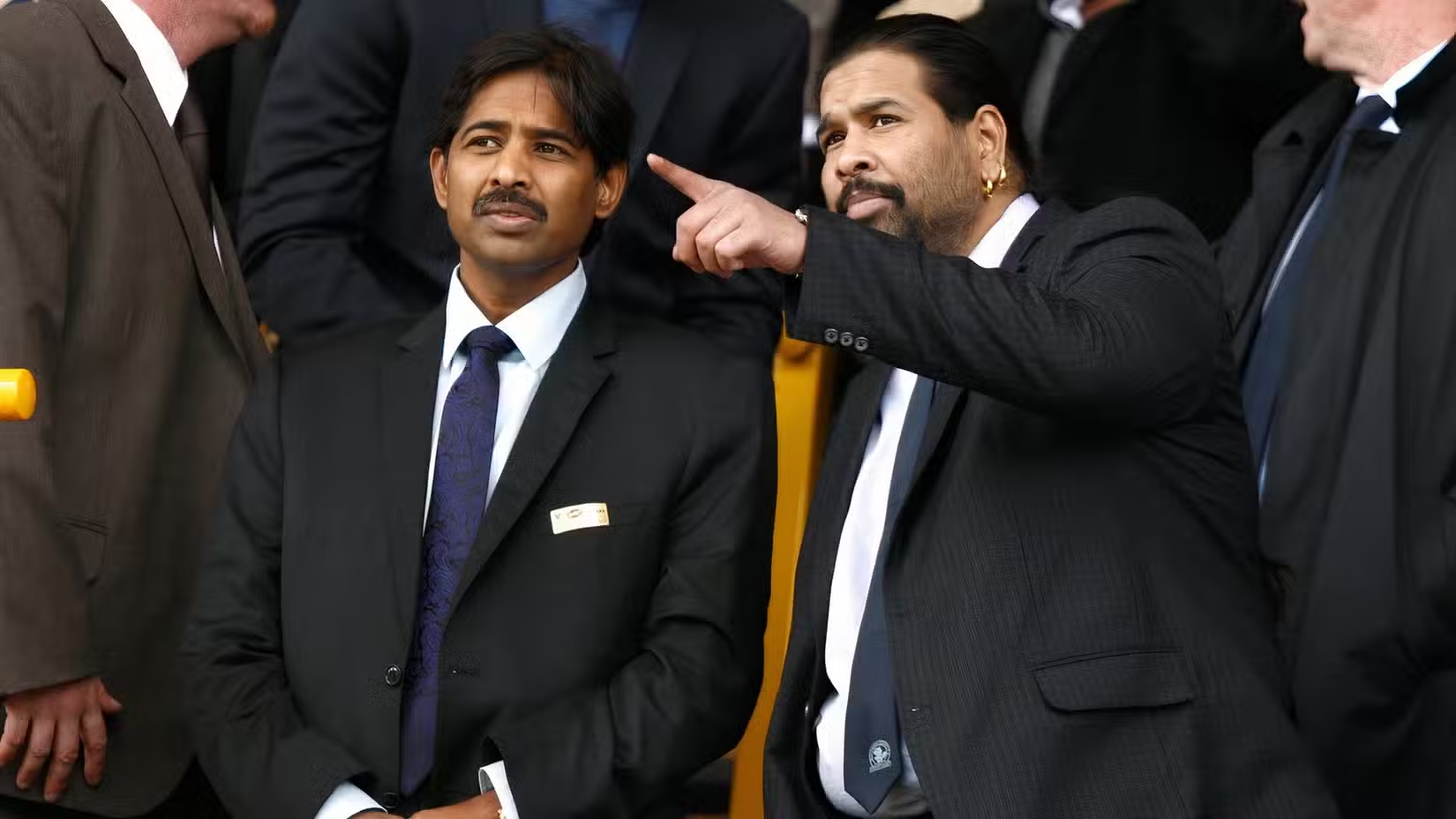
Blackburn Rovers were an established Premier League team when the Venkys secured their £23 million takeover in November 2010, but their stability was quickly broken when they replaced popular manager Sam Allardyce with Steve Kean shortly after.
Rovers were demoted from the top tier in the Venky’s first full season in charge, and they even dropped to League One in 2017 before returning to the Championship the following year.
The Venky’s are frequently the target of protests from Blackburn fans who believe they do not invest enough in the club or demonstrate enough ambition, and a number of managers, including Tony Mowbray, Jon Dahl Tomasson, and John Eustace, have left Ewood Park in recent years due to disagreements with the hierarchy.
However, despite the Venky’s management of the club leaves much to be desired, Rovers have consistently been among the Championship’s play-off candidates over the last seven years, missing out on a top six spot by two points last season.
7 Birmingham Sports Holdings Limited – Birmingham City
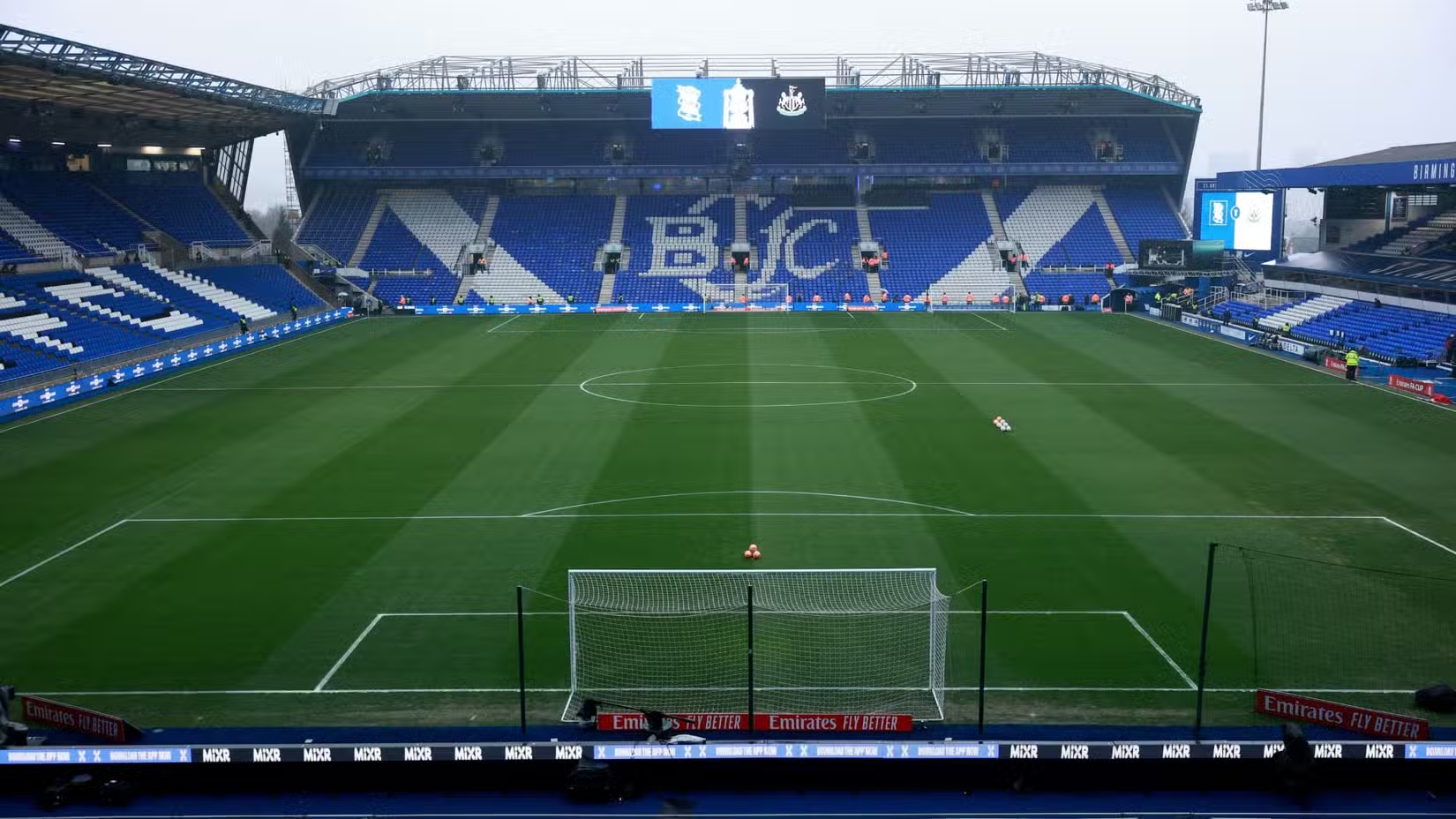
Carson Yeung, a Hong Kong-based billionaire, purchased a 29% share in Birmingham City in July 2007, and while the club was promoted back to the Premier League and won the EFL Cup in the following years, it was unable to maintain that level of success.
The Blues were demoted from the top division the same year they won the EFL Cup, and as they slumped to the bottom of the Championship, a Hong Kong court sentenced Yeung to six years in prison for money laundering in March 2014.
With Yeung gone, it was unclear for a long time who was in charge of Birmingham, and their fortunes continued to deteriorate on the pitch as they pulled off a number of last-ditch relegation escapes, while they were also penalized with a nine-point deduction in March 2019 for violating profit and sustainability regulations.
While BSHL still holds a 51% ownership in the Blues, it is apparent that Tom Wagner and Knighthead Capital Management have been in charge of events at St Andrew’s @ Knighthead Park since obtaining a 45.96% part of the club in 2023, and the Midlands team is now firmly back on an upward track.
6 Talal Al-Hammad – Wigan Athletic
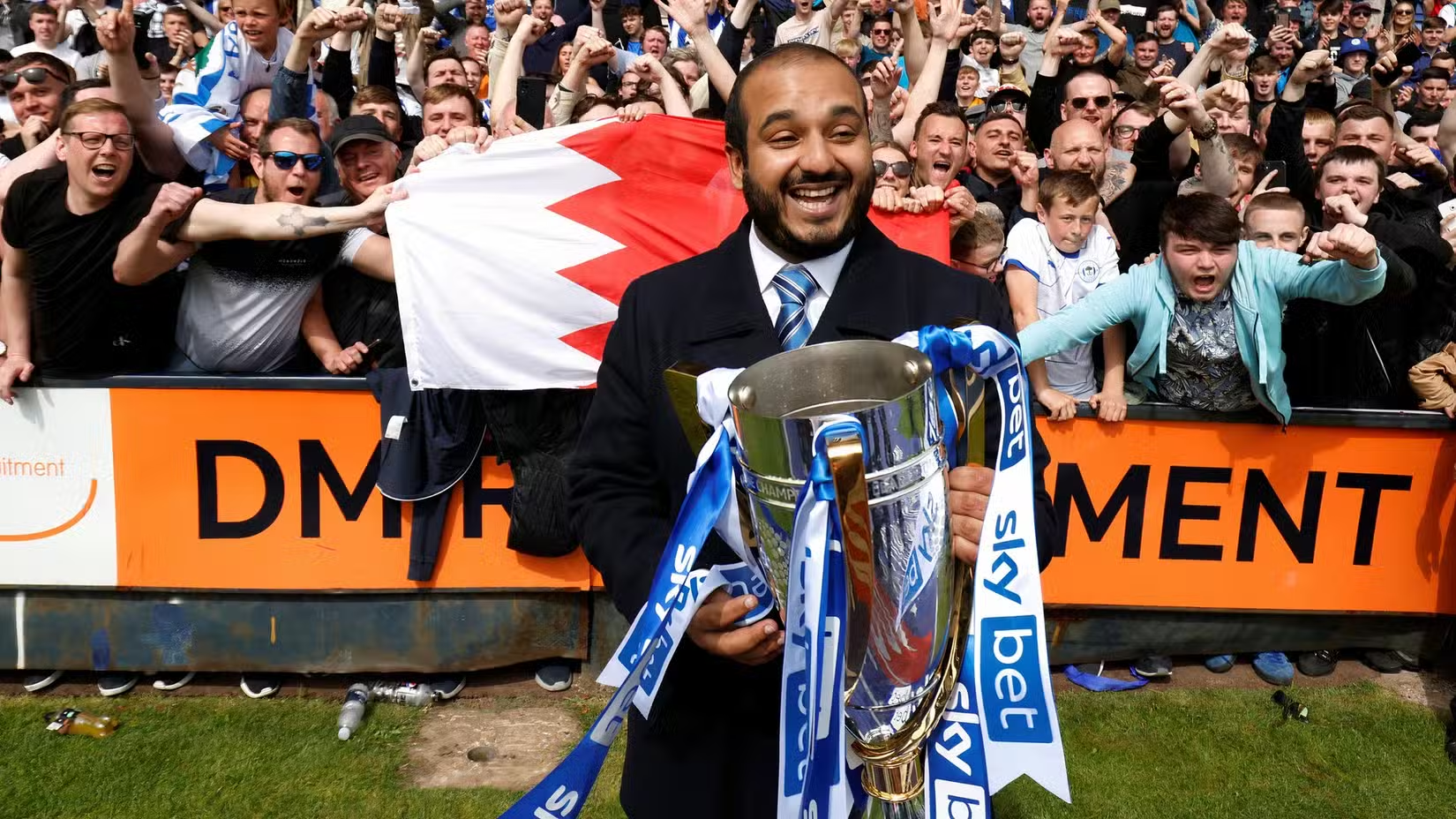
After a turbulent few years that saw the club enter administration and be relegated from the Championship after a 12-point deduction, it appeared that a bright new era had begun at Wigan Athletic when they were purchased in March 2021 by Bahraini-funded group Phoenix 2021 Limited, led by Talal Al-Hammad.
The early signs were all positive for the Latics, who stormed to the League One title in Al-Hammad’s first full year of ownership, but financial problems arose in the Championship, and they were immediately relegated back to the third tier after being docked three points for failing to pay players and staff on time, with another three points deducted from their total after the season ended.
Wigan’s off-field issues persisted into the summer, and the club began the 2023-24 season with an eight-point deduction due to additional financial breaches. Fortunately for the Lancashire club, local businessman Mike Danson completed his takeover of the club before the start of the campaign, and stability has been restored at the Brick Community Stadium over the last two years.
5 The Oyston family – Blackpool
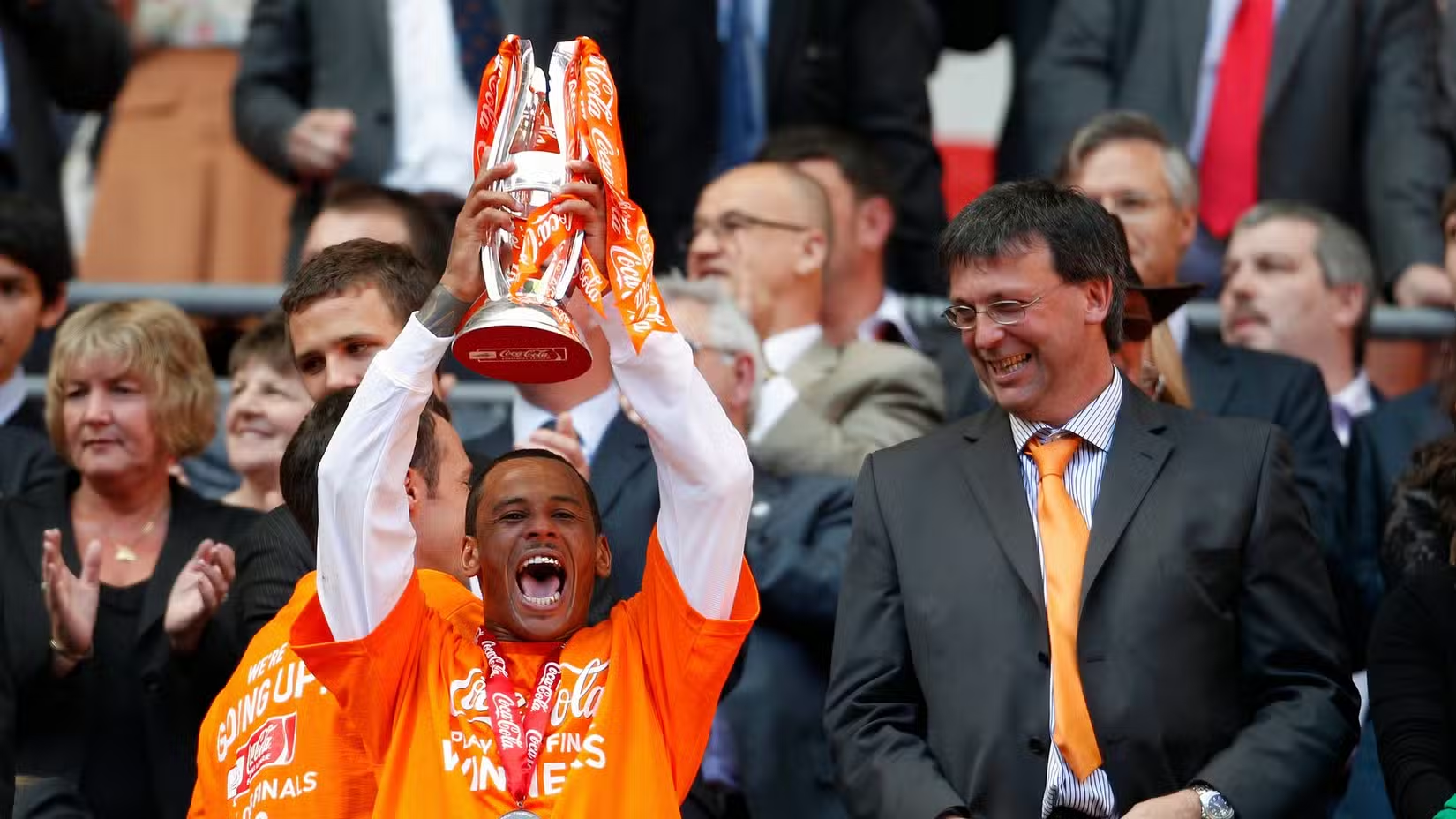
Owen Oyston bought Blackpool in 1987 and installed his son, Karl, as chairman 12 years later.
The Seasiders were promoted to the Premier League in the 2009-10 season, and they gained a lot of praise for their brave performances during their one-season stint in the top level under Ian Holloway, but that was the most the club could get under the Oystons’ ownership.
After the Oystons significantly reduced their investment, Blackpool were relegated to League One in 2014-15 before dropping to League Two the following season, and while they returned to the third tier at the first attempt, relations between supporters and owners were irreparably damaged.
Tangerines fans boycotted Bloomfield Road for years in protest of the Oystons, and after multiple court battles, their 32-year tenure ended in June 2019 when Simon Sadler purchased the club from receivership.
4Ken Anderson – Bolton Wanderers
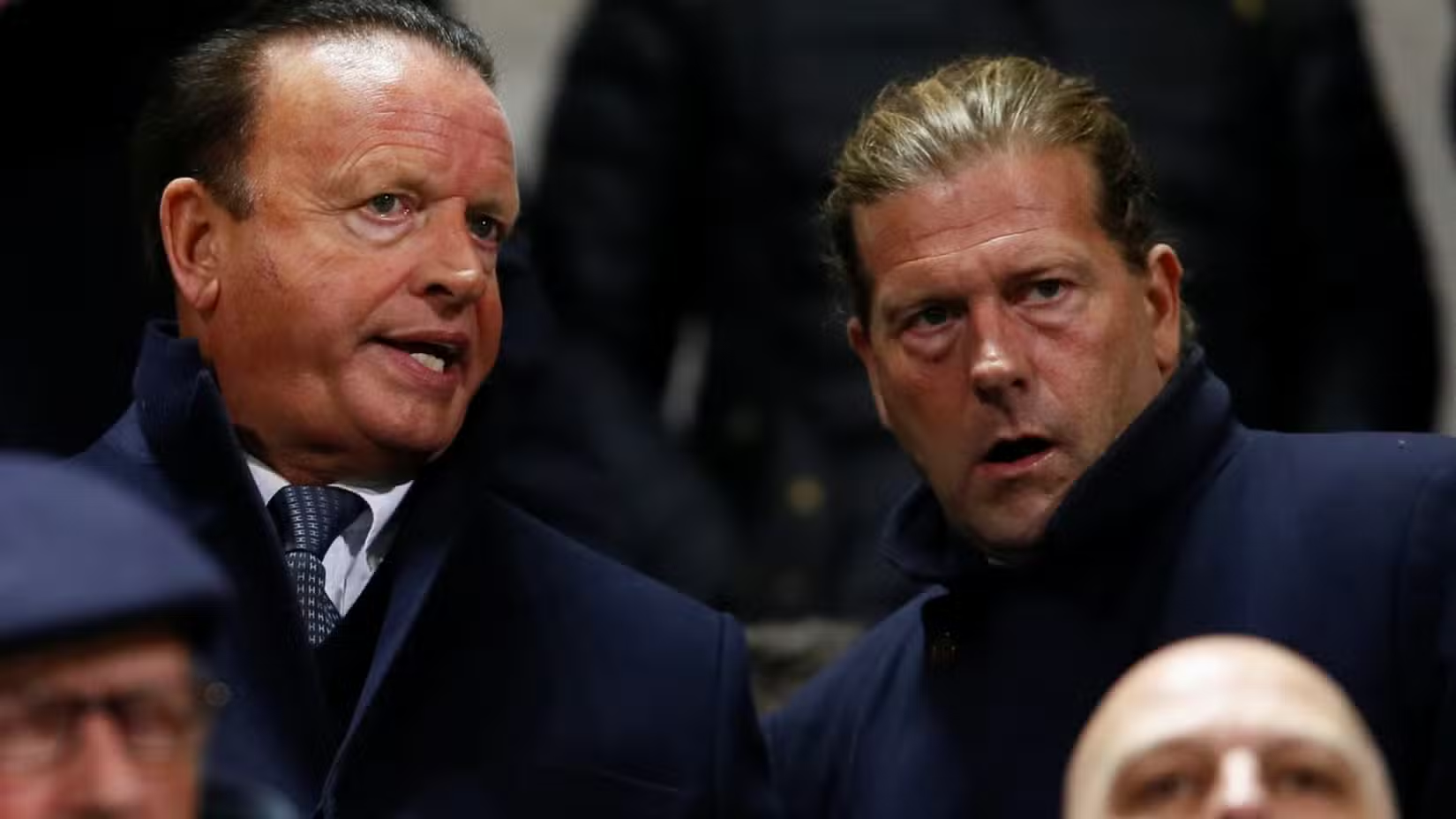
Ken Anderson and Dean Holdsworth purchased a share in Bolton Wanderers in 2016, before assuming full control of the club the next year.
Under Anderson, the Trotters quickly fell into serious financial difficulties, and the club was issued with two winding-up orders on their way to relegation from the Championship in the 2018-19 season, while their penultimate game of the season against Brentford was canceled after players refused to play due to unpaid wages.
Wanderers went into administration in the summer of 2019 due to an unpaid tax bill of £1.2 million, which resulted in a 12-point deduction ahead of the 2019-20 season, and after Football Ventures’ proposed takeover collapsed, the club was just hours away from being thrown out of the EFL, along with fellow League One side Bury.
While the Shakers were unable to be saved, Football Ventures eventually completed their ownership of Bolton, and after making significant progress under chairman Sharon Brittan, the club is now trying to return to the Championship.
3 Dejphon Chansiri – Sheffield Wednesday
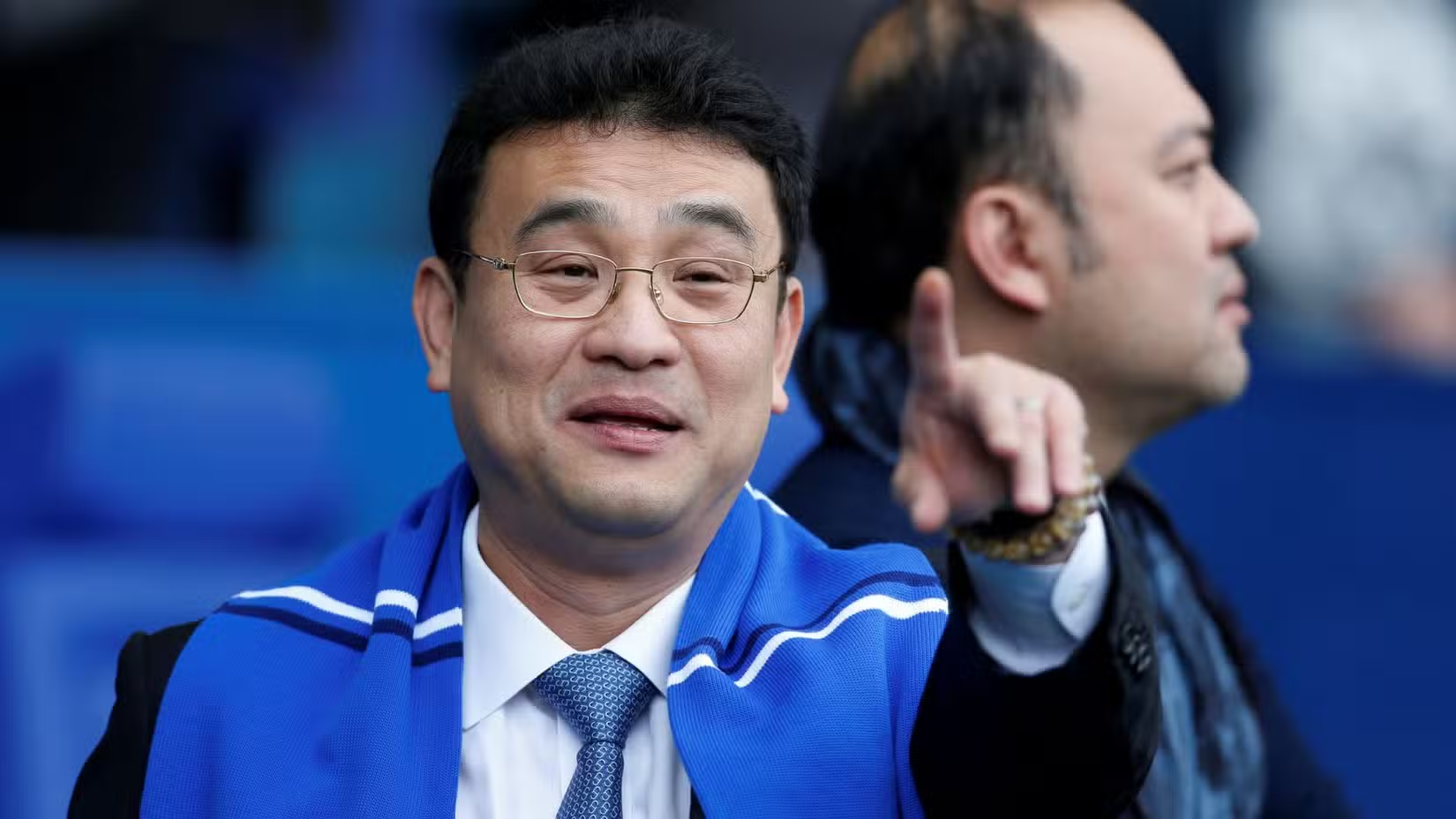
Dejphon Chansiri paid £37.5 million for Sheffield Wednesday from Milan Mandaric in January 2015, and after heavily investing in an attempt to reach the Premier League within his first two years of ownership, he came agonisingly close to doing so as the club suffered back-to-back play-off defeats under Carlos Carvalhal.
However, after failing to meet his self-imposed goal, Chansiri has lacked any kind of plan to move the Owls forward since then, and the club was hit with a 12-point deduction ahead of the 2020-21 season for breaking spending rules, which, despite being reduced to six after a successful appeal, saw them relegated to League One.
2 Dai Yongge – Reading
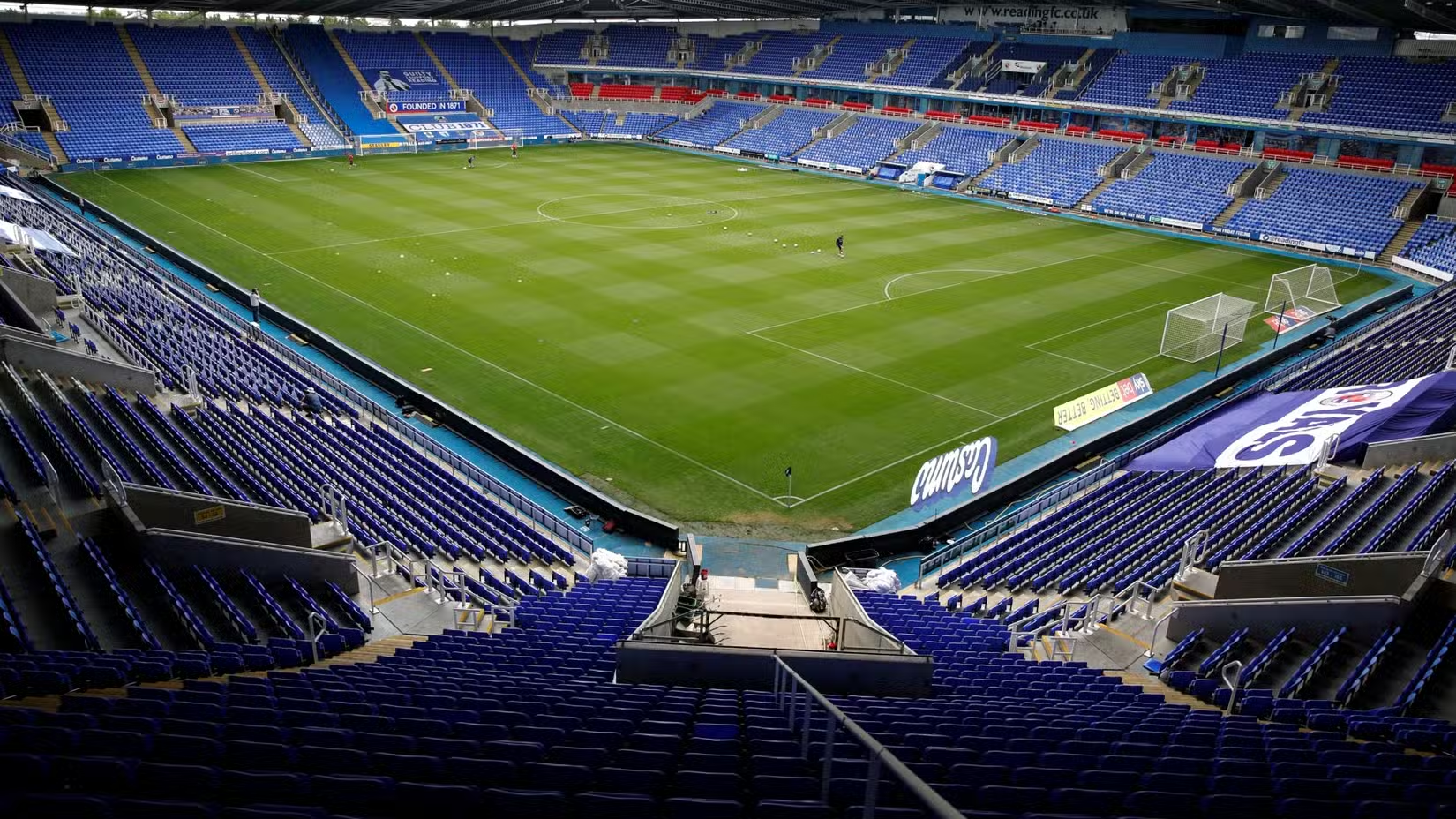
Dai Yongge completed his takeover of Reading in May 2017, and he spent heavily in the early years of his ownership, including reported £7.5 million fees for Sone Aluko and George Puscas, as well as directing the creation of the club’s cutting-edge Bearwood Park training facility.
However, Yongge’s investment did not provide the desired results on the pitch, and as he increasingly lost interest in events at the Select Car Leasing Stadium, the Royals found themselves in significant financial problems.
During Yongge’s tenure, Reading was demoted to League One, had 18 points deducted, and was subject to several transfer embargoes, among other off-field difficulties, and the Chinese tycoon was banned by the EFL in March and ordered to sell the club.
With the Royals on the verge of expulsion from the EFL, Yongge’s dismal reign came to an end in May when he sold the club to former Wycombe Wanderers owner Rob Couhig, much to the relief of the club’s long-suffering fan base.
1 Mel Morris – Derby County
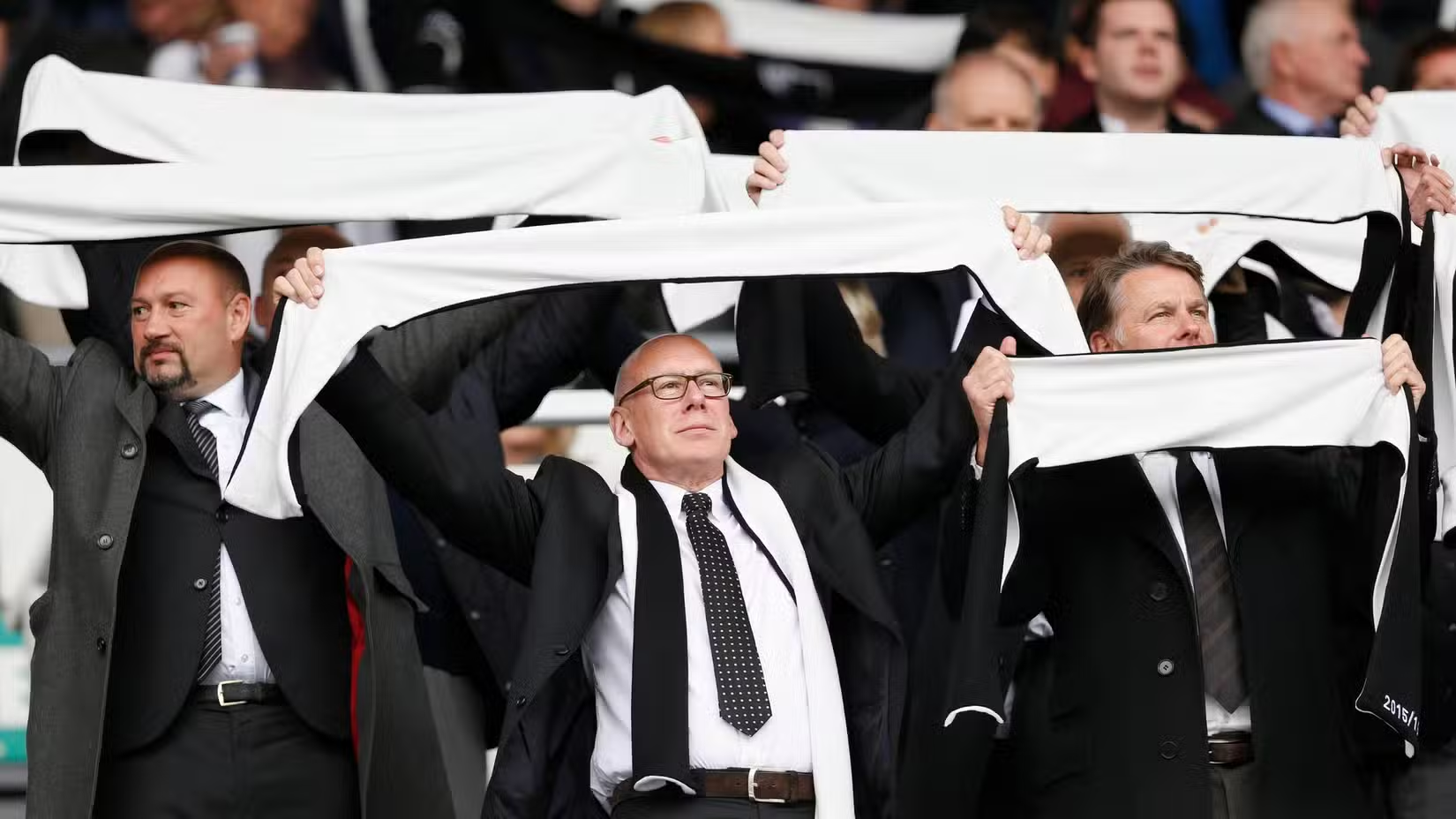
Mel Morris, a lifelong Derby County fan, bought a 22% share in the club in May 2014 before taking full ownership the following year.
Morris’ tenure at Pride Park followed a familiar pattern, and after significant squad investment, the Rams came close to promotion to the Premier League on several occasions, most notably in the 2018-19 season, when they were defeated by Aston Villa in the play-off final at Wembley Stadium.
However, Morris’ excessive spending would soon catch up with him, and after two unsuccessful takeover efforts, Derby went into administration in September 2021, incurring a 12-point punishment, with an additional nine points deducted for further financial violations.
After being relegated to League One, the Rams’ future was uncertain until local businessman David Clowes purchased the club, revealing later that they would have gone bankrupt within a week if he had not interfered.
xz