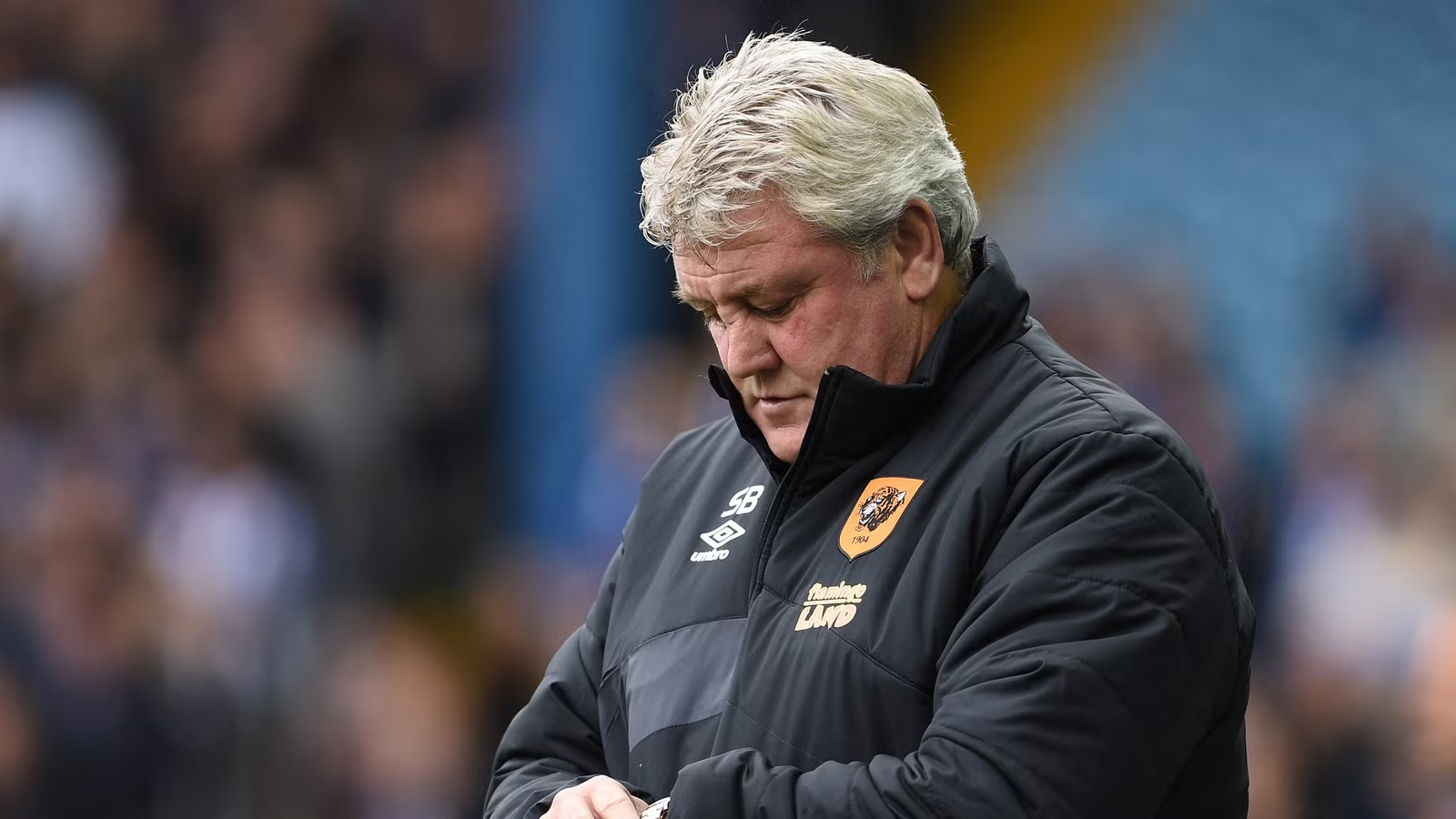
Steve Bruce has coached some of English football’s top clubs, and he has now hinted at the next stage of his career.
The 65-year-old had been managing League One team Blackpool, but after a terrible start to the season, he was fired by the club in late October.
Given his extensive CV, many expected the former West Brom, Birmingham City, and Aston Villa manager to return to the dugout soon, but he has yet to find work.
However, in recent interviews, Bruce has opened up about his future and provided a somewhat surprise answer about what he plans to do next.
Steve Bruce offers retirement and announces international talks.
Given Bruce’s experience at the highest level of English football, many would expect him to find a new job quickly, but this has proven to be a challenge.
His recent tenure with the Tangerines, combined with disappointing experiences at Newcastle United and the Baggies, has resulted in a slide in his reputation.
And, while 65 may appear to be the ideal retirement age, Roy Hodgson’s comeback to Bristol City demonstrates that managers can continue to work as long as they desire.
However, while appearing on The Overlap’s Stick to Cricket podcast, the former Sunderland manager made an unexpected statement concerning his future.
“I never say never, but I honestly believe that my time in management is up. I absolutely enjoyed it and still adore it to this day, but I believe there comes a point when you must call it quits.
The former Manchester United defender did not stop there, revealing that he has just held negotiations with two international teams about taking over the club.
“You never say never; maybe something like an international job,” he said.I spoke with Ireland a few years back, and believe it or not, before Steve McClaren, I spoke with the Jamaican Football Association. They ultimately chose Steve McClaren.
Inside Steve Bruce’s romantic relationship with the West Midlands
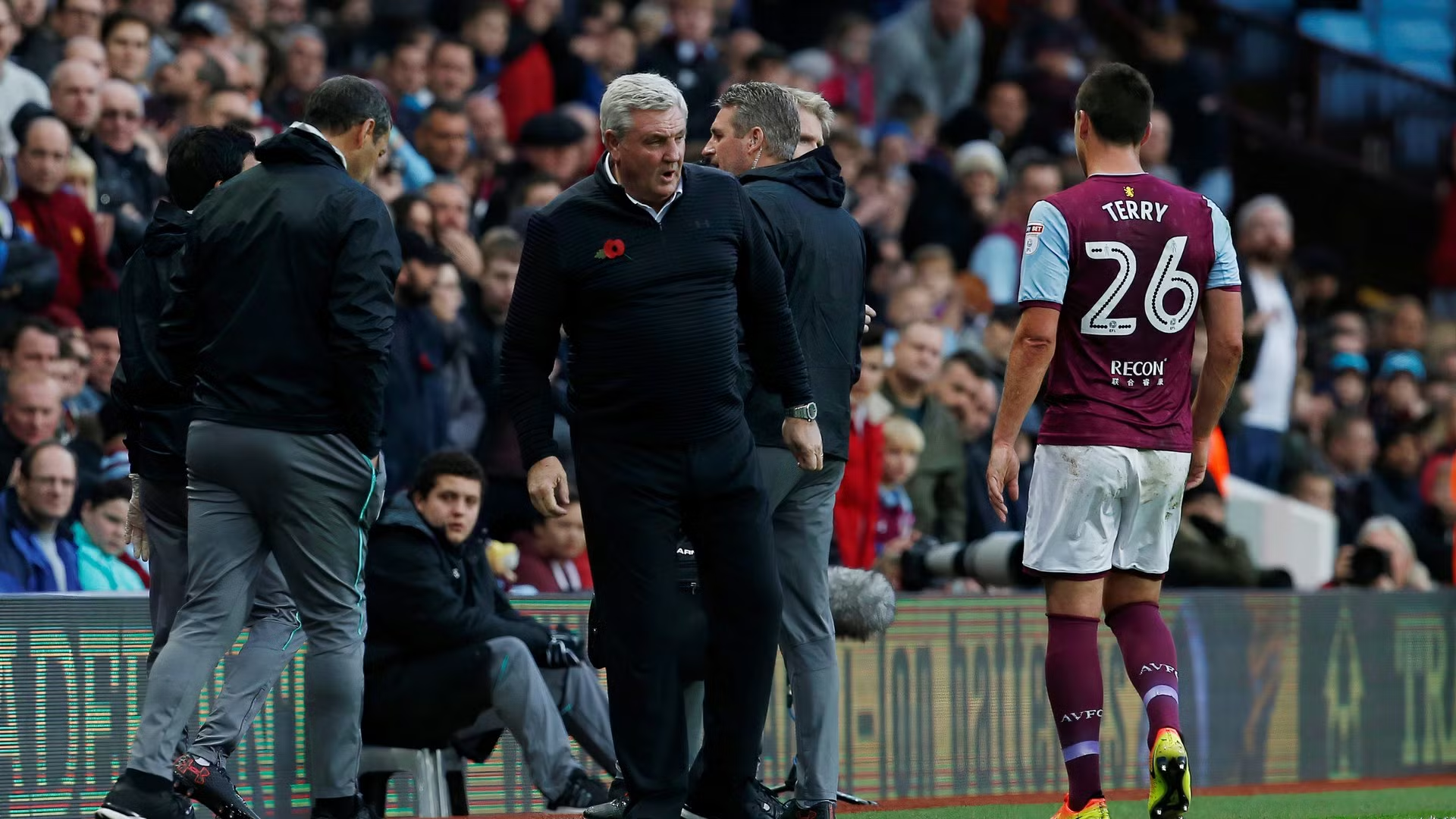
Bruce’s relationship with the West Midlands began in 2001, when he took over as manager of Birmingham City, and it remains his longest spell at a single club, having overseen 264 games. In 2002, he led the Blues to promotion to the Premier League via the play-offs, bringing an end to a 16-year hiatus. He then established Birmingham into a Premier League club, leading them to the League Cup final in 2002, only to lose to European powerhouses Liverpool on penalties.
However, with relegation in 2006 and a breakdown in ties with the board, particularly David Gold and David Sullivan, he eventually left for Wigan Athletic, but it is safe to say that he provided the club with some of its fondest memories during the last few decades. His links to Birmingham did not prevent him from taking over as Aston Villa manager in 2016, when the team was trapped in the Championship and anxious to return to the top flight.
As he did with the Blues, he led the Villains to the Championship play-off final after finishing fourth, only to lose 1-0 to 10-man Fulham. Fan dissatisfaction with his formulaic style of play and lack of growth, along with his failure to get Villa promoted, cost him his job in 2018, but he was not finished with the West Midlands just yet. Indeed, his most difficult period and management was at The Hawthorns,
where Bruce managed only 32 games with a points-per-match average of 1.13, according to Transfermarkt. To be fair to the 65-year-old, he had taken over a floundering Baggies side following Valerien Ismael’s stormy reign, but, as at Villa Park, supporters were dissatisfied with his style of play and results, which eventually led to his dismissal. While Bruce has intimated that his time in management is coming to an end,
he has not totally closed the door, so it will be interesting to see what happens next for him, particularly if he is offered a return to management. One thing seems almost certain: his time managing, particularly in the West Midlands, where he spent much of his career, is finished.
xz