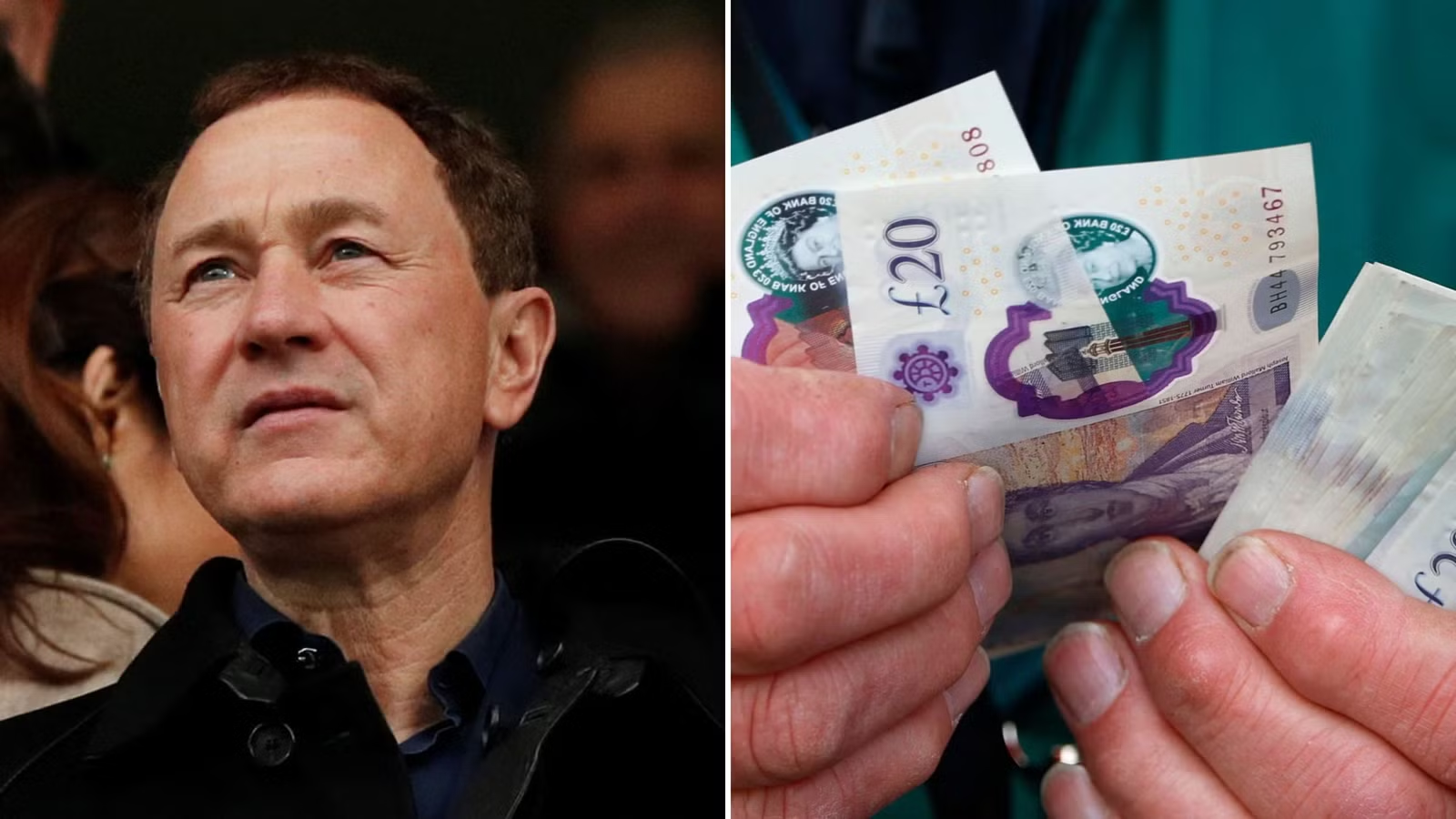
The 2026-27 Championship line-up has been finalised, with West Ham’s relegation and Bolton Wanderers’ League One play-off final victory guaranteeing the 24-team league.
New financial measures are also being implemented, with the removal of profit and sustainability rules (PSR) and the introduction of squad cost rules (SCR), under which owners can only invest £33 million in equity over a three-year period, while player and manager costs can only amount to 85 percent of a club’s annual turnover.
To bankroll a promotion-chasing club in the Championship, owners typically need substantial pockets; however, who are the nine wealthiest owners in the second division heading into next season? FLW takes a look.
9Mark Attanasio – Norwich City
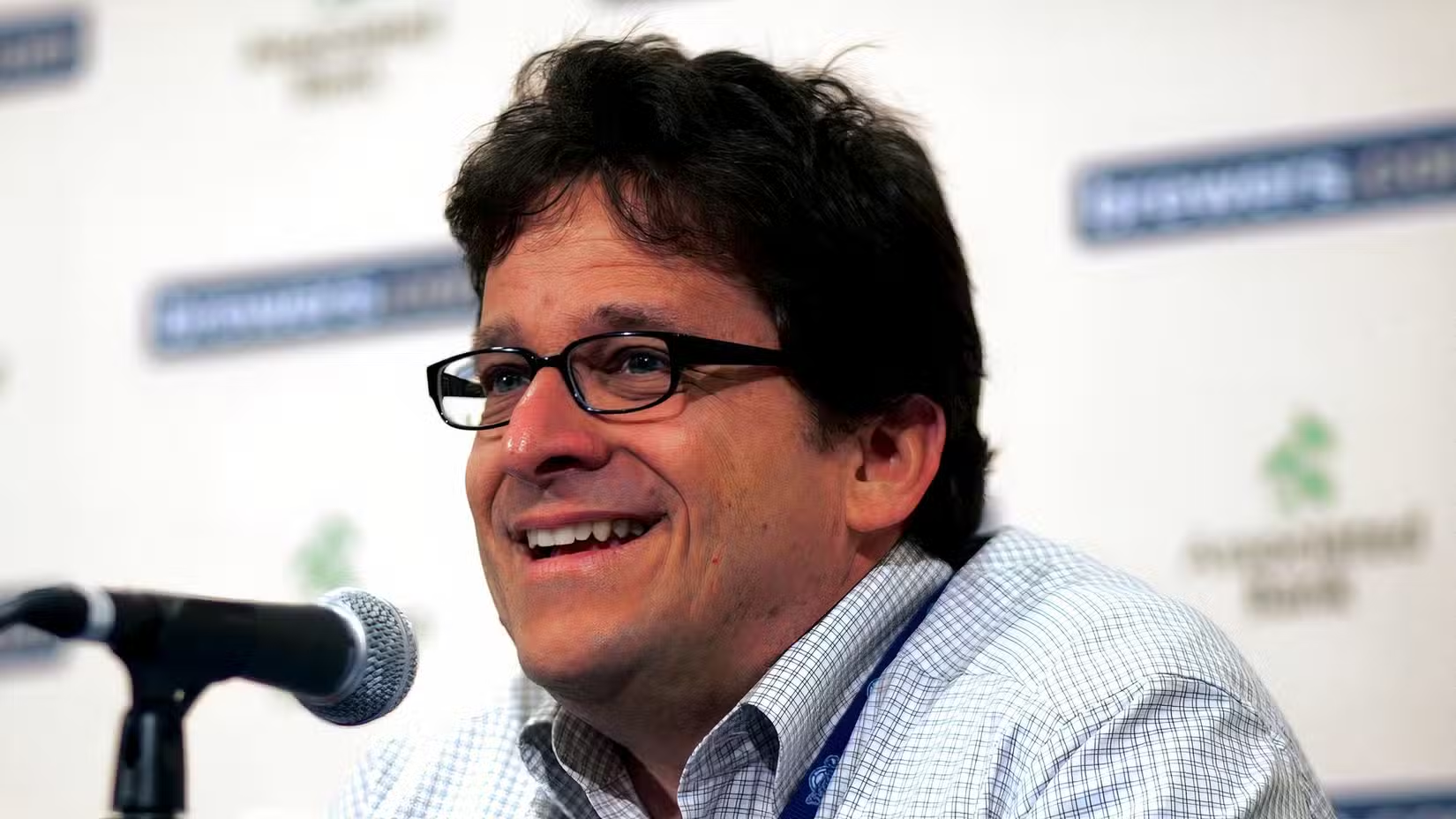
For the longest period, Norwich City was led by famous chef Delia Smith and her husband Michael Wynn-Jones, who joined the club’s board in 1996 before becoming majority shareholders in 1998.
Seeking outside investment from someone with far larger pockets than themselves, enter Mark Attanasio, who, after being appointed as a director at Carrow Road in 2022, became the majority shareholder in 2024, exactly like Smith and Wynn-Jones did 26 years before.
With prior experience and ownership at baseball club the Milwaukee Brewers, Attanasio was seen as an ideal fit to take Norwich to the next level, and he now owns 85% of the Norfolk outfit – with a net worth of $1.9 billion (£1.4 billion), according to Forbes, the 68-year-old certainly has the cash to try and get them back to the Premier League.
8 The Venky’s – Blackburn Rovers
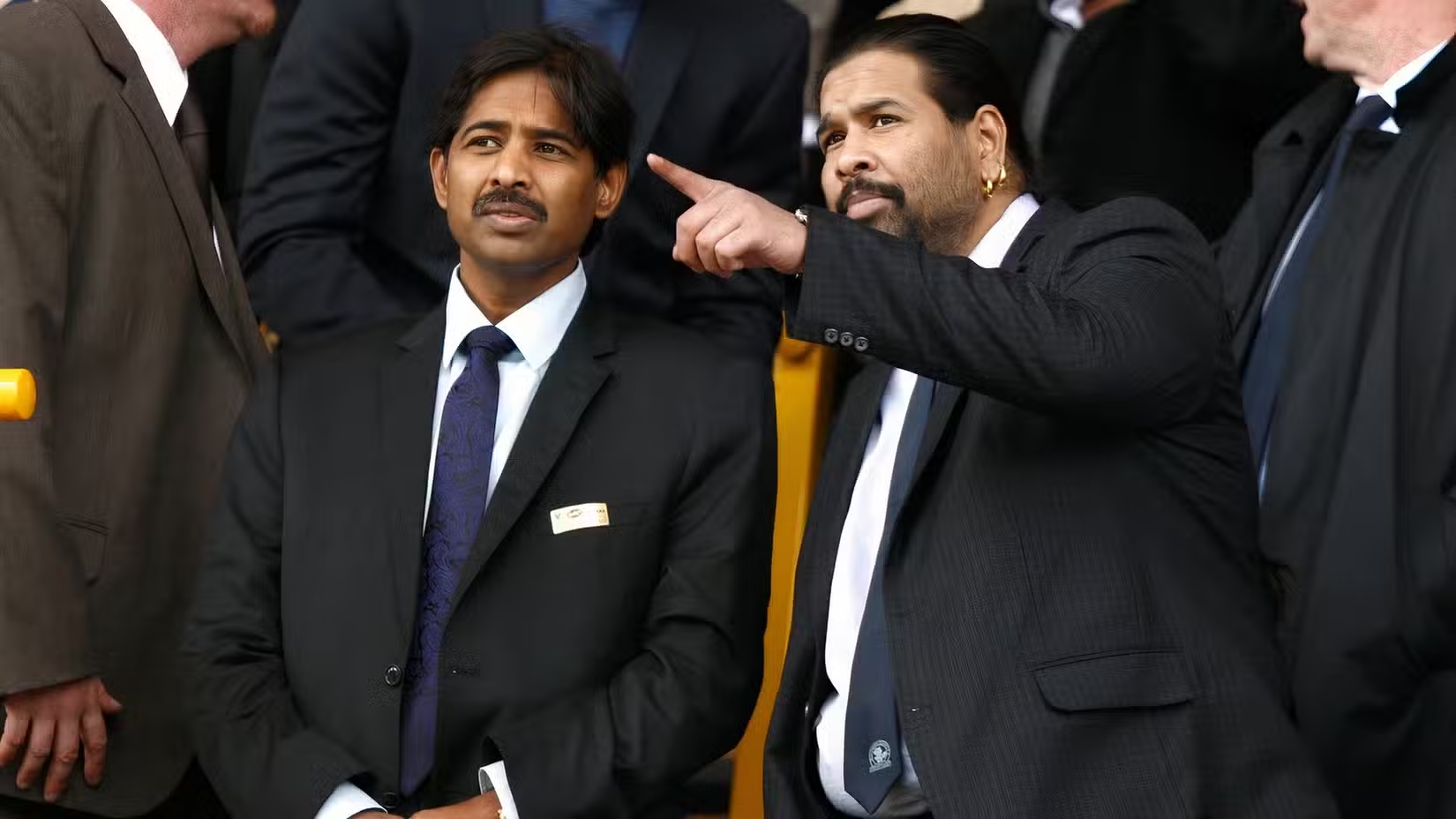
Blackburn Rovers are in their 16th year of Venky’s ownership, and to say things have been chaotic would be an understatement.
The glory days of Jack Walker’s ownership were long gone when the Indian poultry giants bought the Lancashire club from Walker’s trust in 2010, but under their leadership, the club was relegated from the Premier League in 2012 and has never recovered.
Despite not attending a match since January 2013, the Rao family continues to fund the club’s annual losses, even though there have been difficulties in getting money out of their native India and to the UK in recent years, but they have a lot of money, and according to a report from The News in 2025, the Venky’s were worth an estimated £1.56 billion.
With the High Court of Delhi’s restrictions lifted for 2026-27, may the Venkys be ready to invest more in the club’s team to keep them out of another relegation battle? Only time will tell.
7 John Coates – Stoke City
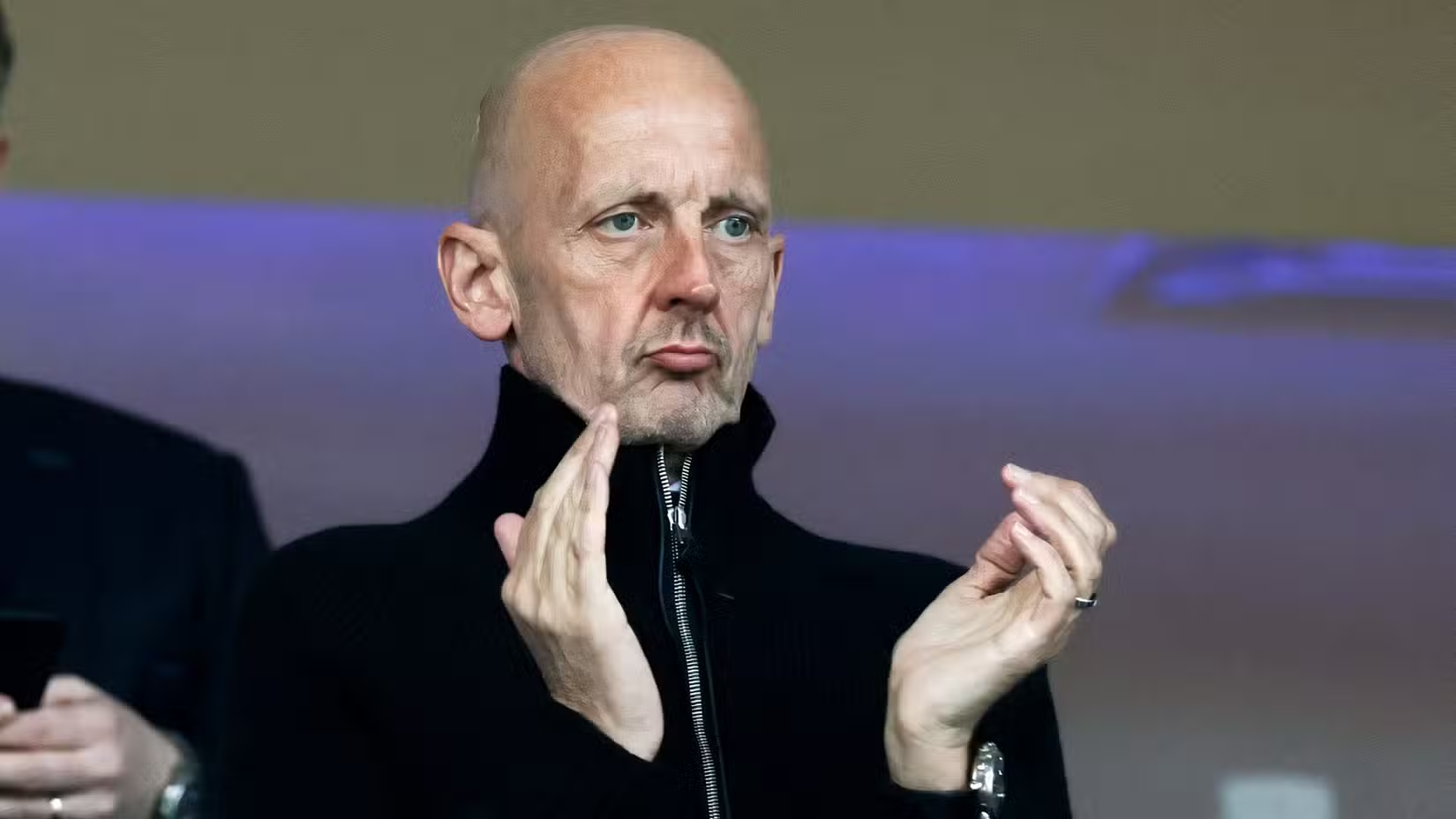
The Coates family has been engaged with Stoke City since 1986, when Peter Coates became majority stakeholder and chairman. After selling to an Icelandic consortium in 1999, he returned seven years later, and in 2015, his son John became vice-chairman.
Coates junior has worked his way up the ranks since, and in 2024, a change in the ownership structure saw John become the club’s sole owner, pulling the strings and making the important choices about who comes and goes at the bet365 Stadium.
Bet365 has been a major financial success for the Coates family, and according to Forbes’ real-time net worth research, Coates is worth an estimated £2.3 billion, and despite Stoke’s recent slump in the Championship, there appears to be no sign of the financing drying up at the Staffordshire club.
6Ruben Gnanalingam – QPR
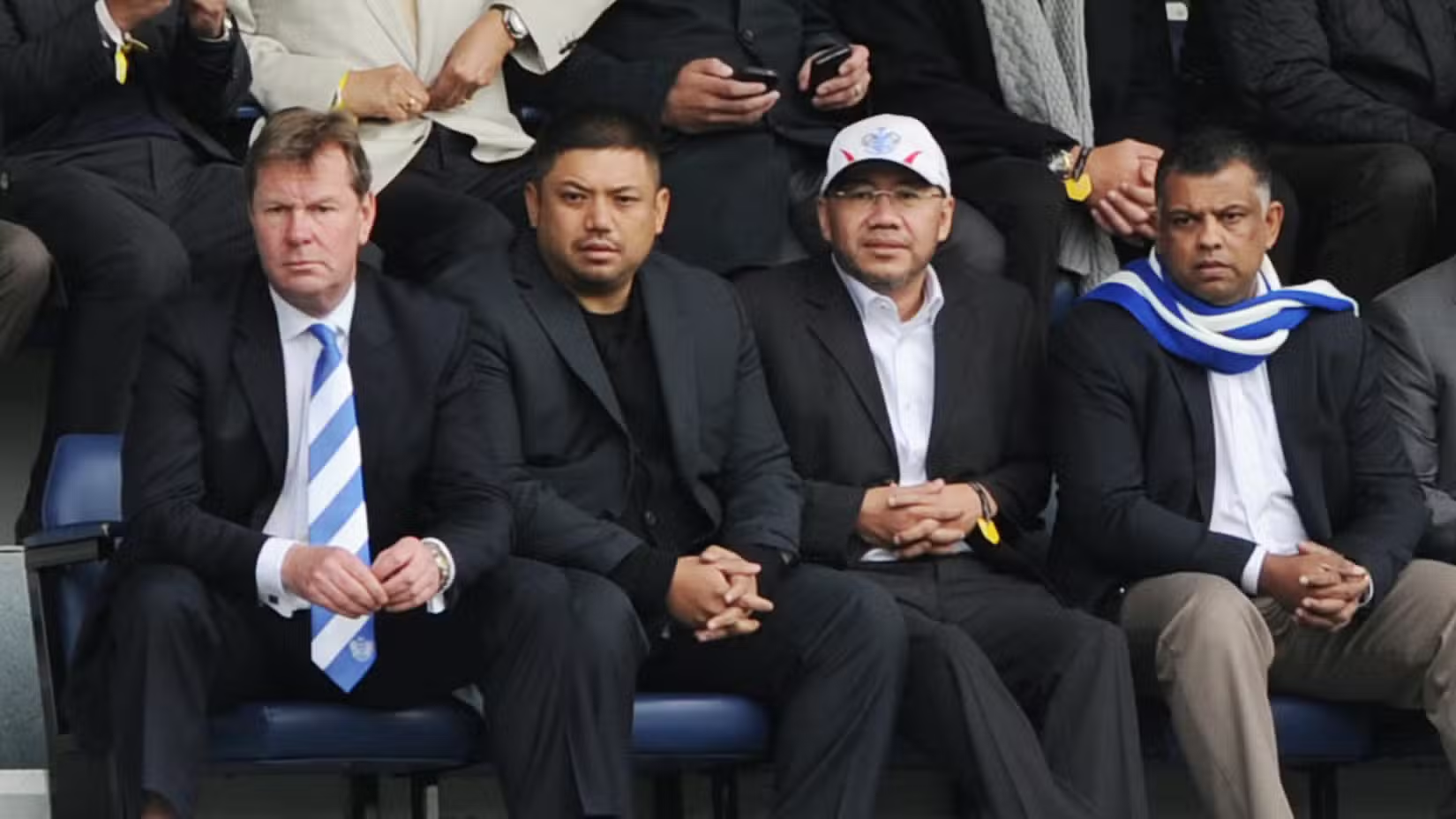
QPR has experienced dramatic ownership changes over the years, with the days of Flavio Briatore and Bernie Ecclestone, followed by Tony Fernandes, now a distant memory.
The current ownership group at Loftus Road is mostly led by Malaysian businessman Ruben Gnanalingam, who owns just under 60% of the Hoops. US investor Richard Reilly owns 21%, and former chairman Amit Bhatia owns 20%.
Whilst Gnanalingam’s personal wealth isn’t known, the family wealth sits at a healthy £2.3 billion, as per Forbes, with much of their successful business coming from the shipping industry in the form of Westports Holdings.
Gnanalingam is the company’s executive chairman and group managing director, and the 49-year-old has been a fixture in the QPR hierarchy since the Fernandes days in 2011 – that doesn’t appear to be changing anytime soon, and with recent signings such as Richard Kone and Ronnie Edwards, he’s certainly been putting his money where his mouth is.
5 Steve Lansdown – Bristol City
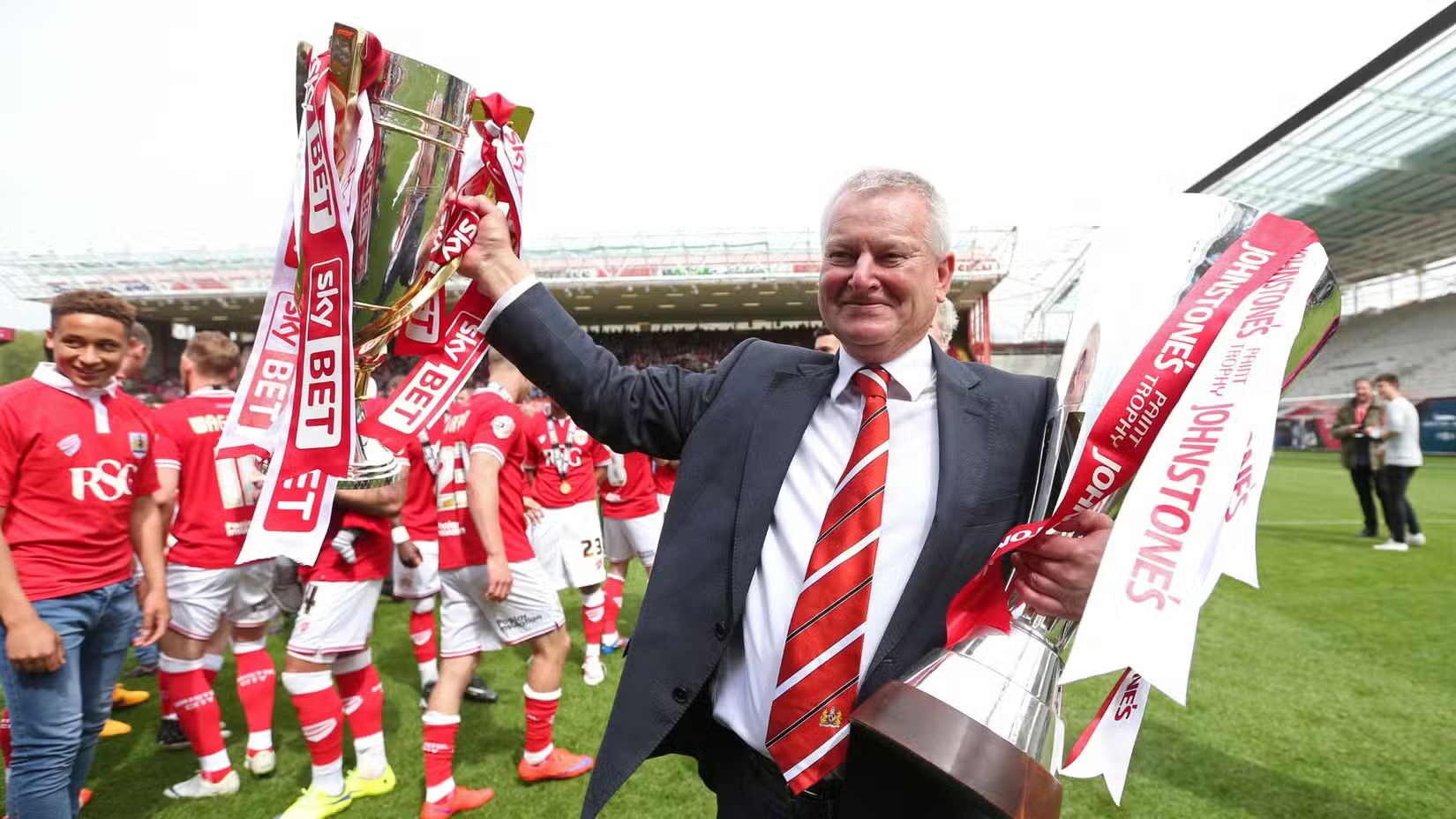
From the outside, it may seem surprising that Bristol City’s owner, Steve Lansdown, is the fifth-richest in the Championship.
The Bristolian has been the Robins’ chairman since 2002, and he founded Bristol Sport in addition to his duties at Ashton Gate. He is also a majority shareholder in the Bristol Bears and Bristol Flyers.
According to Forbes, Lansdown has a net worth of £2.38 billion. However, unlike his peers on and off this list, the 73-year-old’s personal riches has not translated into a sizable transfer warchest for the Robins to use throughout the years.
Lansdown has done significant work off the pitch to help Bristol City flourish, such as the magnificent £40 million reconstruction of Ashton Gate around a decade ago, but his lack of investment in the playing team has been a recurrent source of frustration for fans.
The Robins have significant potential, and all of the foundations are in place for that to happen, with one exception: you get the impression that they need to finally make a big splash on signings to get to the next level and threaten to enter the Premier League for the first time in the club’s long history.
4Michael Eisner – Portsmouth
When you consider how Portsmouth owner Michael Eisner has gained his billions, it’s no surprise that few second-tier clubs can boast a wealthier manager than the New York native – even if this isn’t always reflected in the club’s transfer activity.
According to the Los Angeles Business Journal, Eisner had a net worth of $3.8 billion (£2.83 billion) in 2024, having previously served as Disney’s CEO for more than 20 years before entering the realm of football ownership by acquiring Pompey nine years earlier.
John Mousinho hasn’t been totally without backing in recent years, and Pompey’s exile from the Championship has ended under Eisner’s ownership, but his investment continues to be patient and methodical without throwing everything towards bringing Premier League football back to Fratton Park.
3 Joshua Friedman – Charlton Athletic
We know far less about Charlton Athletic owner Joshua Friedman, who is the principal stakeholder of Global Football Partners, the group that completed a buyout to buy the South London club from Thomas Sandgaard in the summer of 2023.
Indeed, official net worth estimates for Friedman are limited. However, if claims of $5 billion (£3.72 billion) are to be believed, Charlton clearly has a wealthy board, as evidenced by recent events.
The Addicks’ investment has increased since their return to the Championship via the League One play-offs in May of last year, which preceded – according to Transfermarkt – a €11.62 million (£10.07 million) summer spending spree under Nathan Jones, with the likes of Rob Apter, Thomas Kaminski, Charlie Kelman, and Harvey Knibbs all making their way to the Valley and ultimately helping to keep the side afloat.
2 David Sullivan and Daniel Kretinsky – West Ham United

West Ham’s board of directors has a number of shareholders, the two largest of which are controversial chairman David Sullivan and his family and Daniel Kretinsky, who own 38.8% and 27% respectively.
Only one other Championship team has a higher collective net value than the recently relegated Hammers. That’s because, according to the Sunday Times Rich List of 2025 (via the BBC), Sullivan and his family are worth £1.11 billion, while Kretinsky is worth $10 billion (£8.68 billion), bringing their combined wealth to just under £10 billion.
Sullivan has made significant investments in West Ham over the years, much of which was done with the late David Gold, but he is not a popular figure at the London Stadium due to the decision to leave Upton Park and, more recently, a seemingly endless series of big-money signings who have failed to deliver, which is why the East Londoners will play Championship football next season for the first time since 2012.
1 Fosun International – Wolves
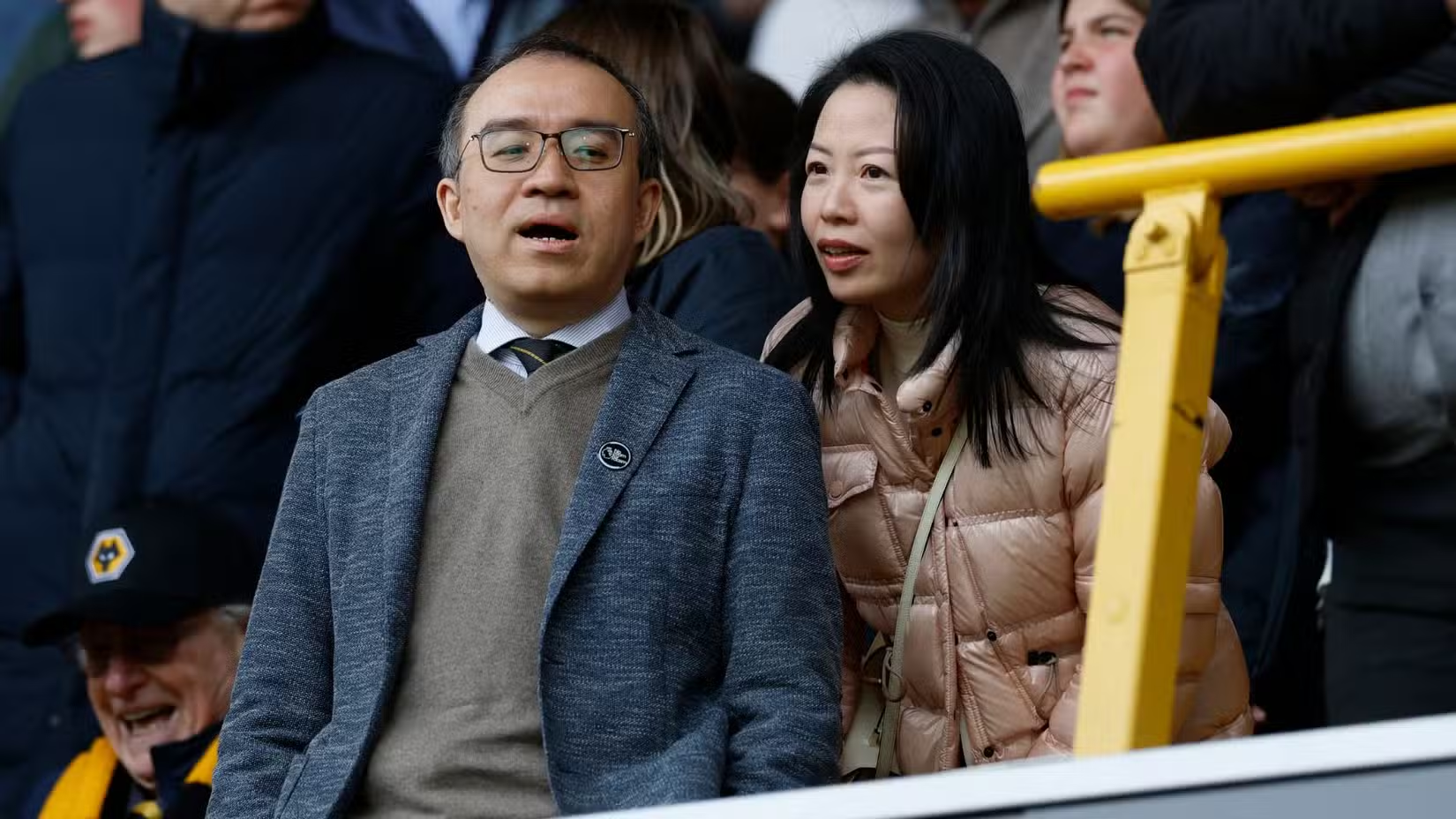
Wolves have the richest owners in the Championship, and the Old Gold has had a rollercoaster ride throughout the Fosun Group’s 10-year reign at Molineux.
The net worth of Fosun, which is made up of main investor Guo Guanchang, Fosun Group CEO Wang Qunbin, and interim executive chairman Nathan Shi, is not public. However, the Chinese conglomerate is extremely affluent, with a total net worth of £20.53 billion as of June 2025, according to Companies Market Capital.
Following a tumultuous couple of years in the Premier League, which saw Wolves relegated in dead last in 25/26, the Molineux faithful will now be hoping that Fosun can demonstrate the same level of investment and ambition in the Championship as they did when the club last graced the division, winning the title after signing the likes of Ruben Neves and the late Diogo Jota.
xz