Following the death of Pope Francis on April 21, the Catholic Church is preparing for a shift that will dictate its course for the near future. The first pope from Latin America was Francis. By emphasising social justice, the environment, and opening the Church to all, he brought about many changes while serving as Bishop of Rome.
At the Vatican, the College of Cardinals is preparing for a meeting that will determine the Church’s future. They will decide how the Church will teach, be open, and interact with its members in addition to selecting the next leader of the 1.37 billion Catholics worldwide.
Will the next pope continue Francis’s progressive reforms, or will the cardinals revert to theological conservatism? The answer will become evident when the Sistine Chapel’s white smoke rises.
The Impact of Pope Francis on the Election
Francis made decisions and adjustments that will affect the Church for the future pope. During his tenure, structures underwent significant alteration. For instance, more non-European bishops were appointed than at any previous time, and the Vatican’s authority was dispersed.
However, his management style has also caused confusion for the College of Cardinals. “He picked the majority of the cardinals who can vote,” said Ulrich Lehner, a theology professor at the University of Notre Dame.
Francis’s handling of sexual abuse cases, which has produced conflict among Church leaders, will be one of the summit’s most crucial topics. “The most crucial question is whether voters can have faith that the candidate they choose is not a sexual predator who might be caught.” We questioned Lehner.
According to Michelle Dillon, who oversees the University of New Hampshire’s College of Liberal Arts, Francis was constantly working to improve the Curia’s transparency and professionalism. According to her, some cardinals are still sceptical about his readiness to collaborate with the secular world because they fear the Church may become less distinctive.
How to Choose the Next Pope
The Vatican’s procedures for selecting a pope date back hundreds of years. Inside the Sistine Chapel, the College of Cardinals, which is composed of people under 80, will cast their votes in secret ballots. A new pope can only be elected with a two-thirds majority. In the event that no agreement is reached, more voting rounds will be held until a candidate with the required backing is identified. People at St. Peter’s Square and on television may observe that the conclave is still ongoing because black smoke emerges from the Sistine Chapel chimney when there is no consensus after voting. The votes are then burned.
When white smoke appears, a new pope has been chosen.
However, his style of leadership, which is typified by choices that are made unilaterally without consulting the College of Cardinals, has prevented them from developing a connection with one another.
The days leading up to the conclave will be crucial, according to Dillon.
During the mourning period, bishops and cardinals will have ample opportunity to engage in informal discussions with one another regarding their objectives and preferences for the conclave and its results.
Which candidates are the most likely?
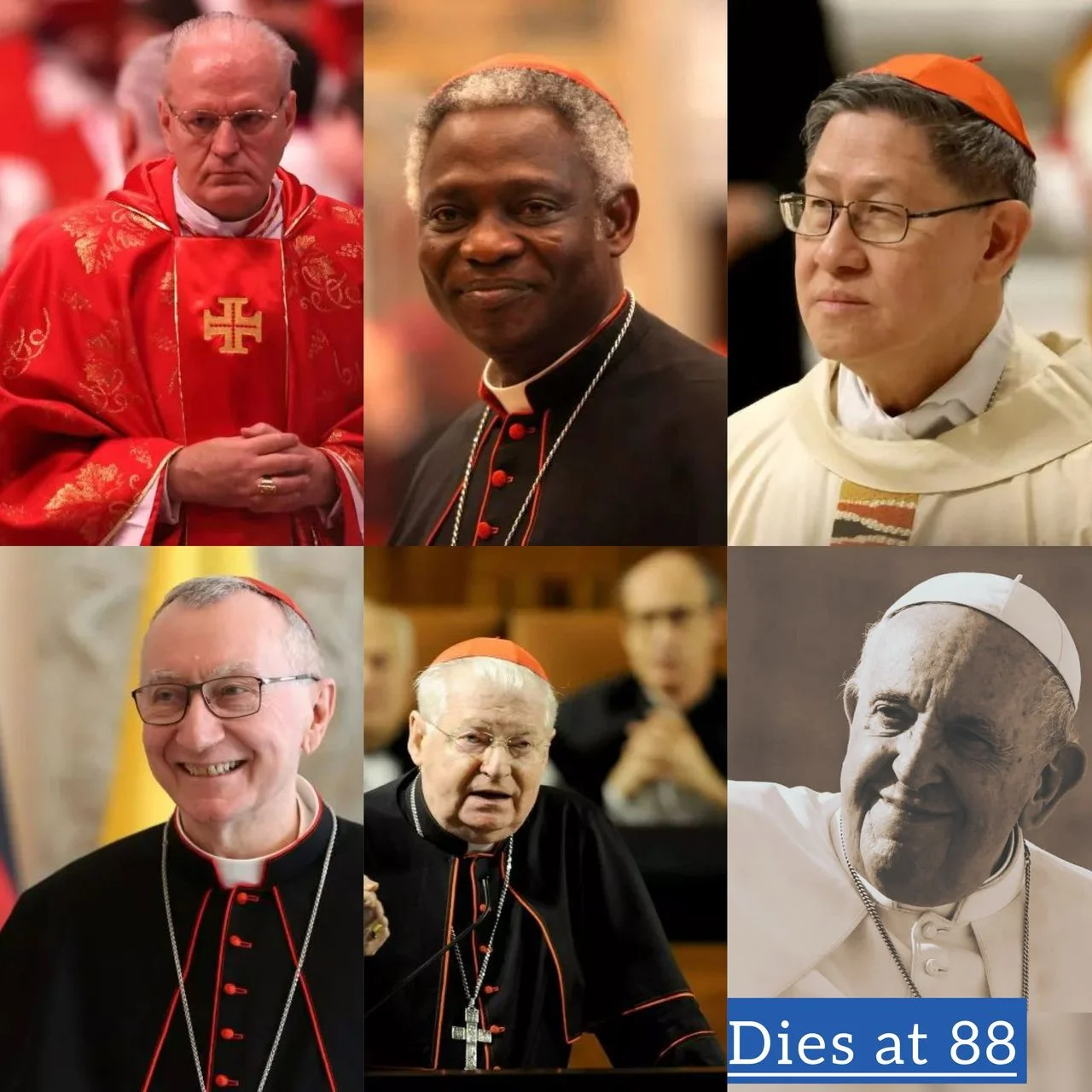
As rumours spread, a few senior cardinals have come to light as formidable contenders. The following contenders, according to Vatican observers and bookmakers, have the best chances. Let’s examine each one in more detail.
Filipino native Luis Antonio Tagle
With odds of 3:1, Cardinal Luis Antonio Tagle, 67, is now the frontrunner and is regarded as a formidable contender to continue Pope Francis’s progressive work. Tagle is in favour of inclusivity and evangelisation. He was a dependable member of Francis’ inner circle and long-time leader of the Congregation for the Evangelisation of Peoples.
“I believe that the outcome could be significantly affected by the fact that Francis selected over 100 of the eligible papal electors,” said Cristina Traina, a professor at Northwestern University. That is, we might not be able to swing the pendulum away from Francis’ priorities.
Given that Catholicism is rapidly expanding throughout Asia, particularly in the Philippines, Tagle’s Asian heritage further positions him as a formidable contender.
Italy’s Pietro Parolin
Cardinal Pietro Parolin, 70, is one of the most seasoned Vatican officials, with a 4:1 probability. As the Vatican’s Secretary of State since 2013, he has been heavily active in diplomatic affairs, including significant negotiations with China and Middle Eastern nations.
It would be remarkable if Turkson was elected since he would be the first African pope in hundreds of years. The final African pope was Pope Gelasius, who presided from 492 to 496 AD. Gelasius, who was born to African parents in Rome, was well-known for his substantial theological writings and fervent support of social justice and charity.
Erdő Peter (Hungary)
The odds are currently 6:1 for Cardinal Peter Erdő, 72, a strong conservative candidate. Erdū is a renowned and respected authority in canon law. He has consistently upheld traditional Catholic doctrines and doctrine. Since he was in charge of the Council of European Bishops’ Conferences, he has emphasised religious orthodoxy.
Angelo Scola, an Italian
Cardinal Angelo Scola, 82, has long been a contender for pope, according to 8:1. In the 2013 conclave that selected Pope Francis, he was a favourite. Scola is a deeply rooted theologian who favours a Church that is more hierarchical and centralised. He served as Milan’s Archbishop.
Because he is a traditionalist, he is a good choice for anyone who wish to reject Francis’s reforms, yet his advanced age may work against him.
What Will Take Place?
Typically, a papal conclave begins 15 to 20 days following a pope’s passing. The novemdiales, a nine-day period of mourning, and the funeral rites might take place at that time. Additionally, it allows cardinals from all around the world to visit Vatican City. Until a pope is selected in secret in the Sistine Chapel, the outcome will be unknown. The reason for this is because various factions within the Church will be considering whether to remain conservative or change.
xz