The Championship’s relative wealth disparity is becoming a hot topic as clubs throughout the division ramp up their expenditure in recent transfer windows in a desperate push to reach the promised land.
Whereas those receiving the Premier League’s generous three-year mandated parachute payment packages have always been able to summon that luxury and the welcome influx of cash from sanctioning high-profile sales, much is changing across the divisional sphere as a whole, with an increasing number of lower-league sides demonstrating their ability to splash the cash.
It’s no secret that the Championship has some extremely wealthy owners that are funding these initiatives, but who are the richest? How did they make their income in the first place? Football League World looks at…
7John Coates – Stoke City
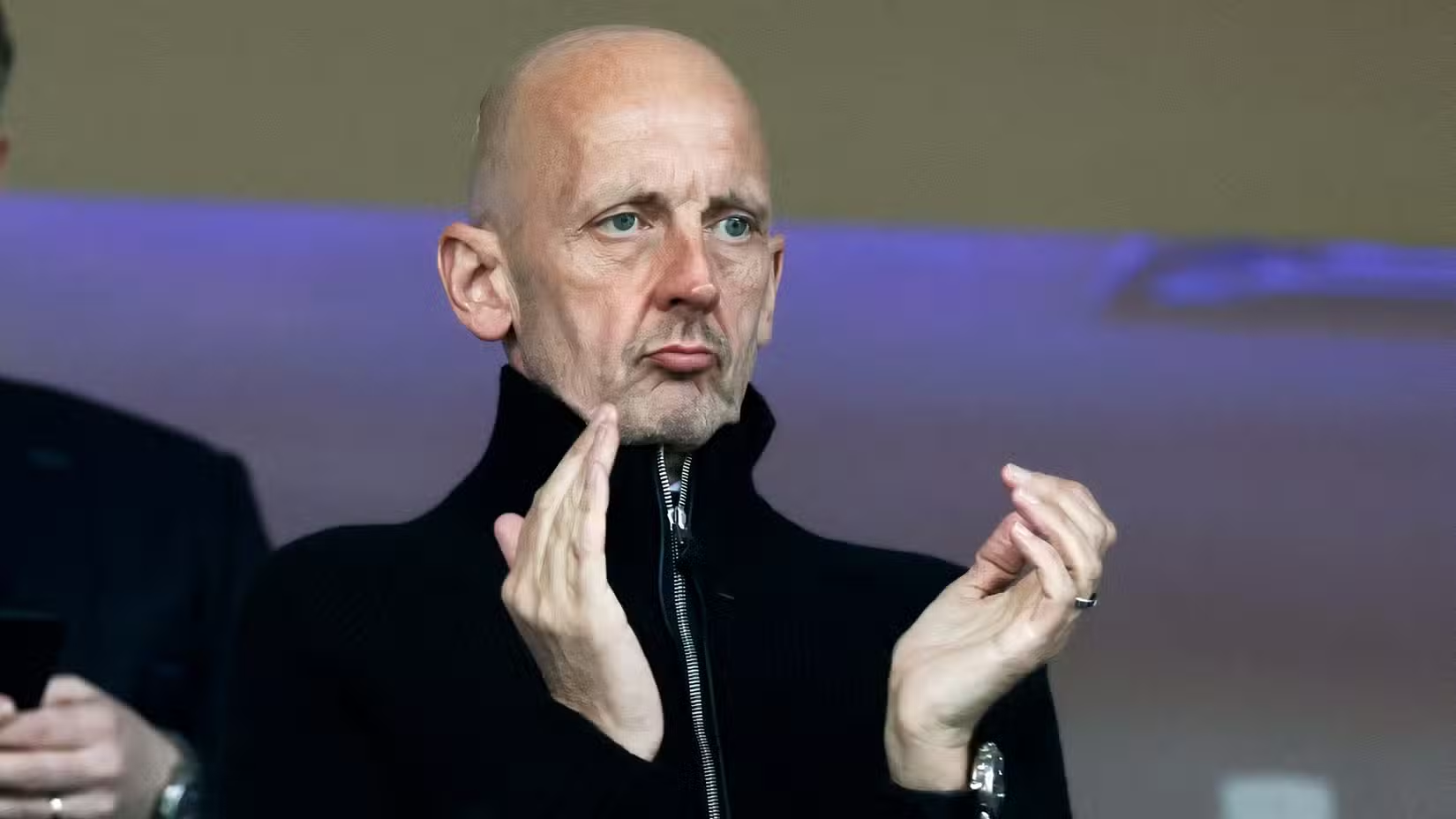
It’s much more surprising that John Coates is only the Championship’s seventh-richest owner, given what we know about his family’s vast wealth and the spending power that Stoke City has had in recent years despite long occupying mid-table mediocrity following relegation from the Premier League in 2018.
The Coates family has controlled the Potters for more over 20 years, and in 2024, John Coates succeeded his father Peter as the club’s sole owner.
Coates is reported to be worth £2.3 billion, with the great amount of his riches coming from co-founding renowned gambling company Bet365 with sister Denise in 2021 after first training as a lawyer.
He is now in charge of pulling the strings and making things happen at the Bet365 Stadium, and he has not shied away from making substantial investments, particularly in the transfer market.
6Ruben Gnanalingam – QPR
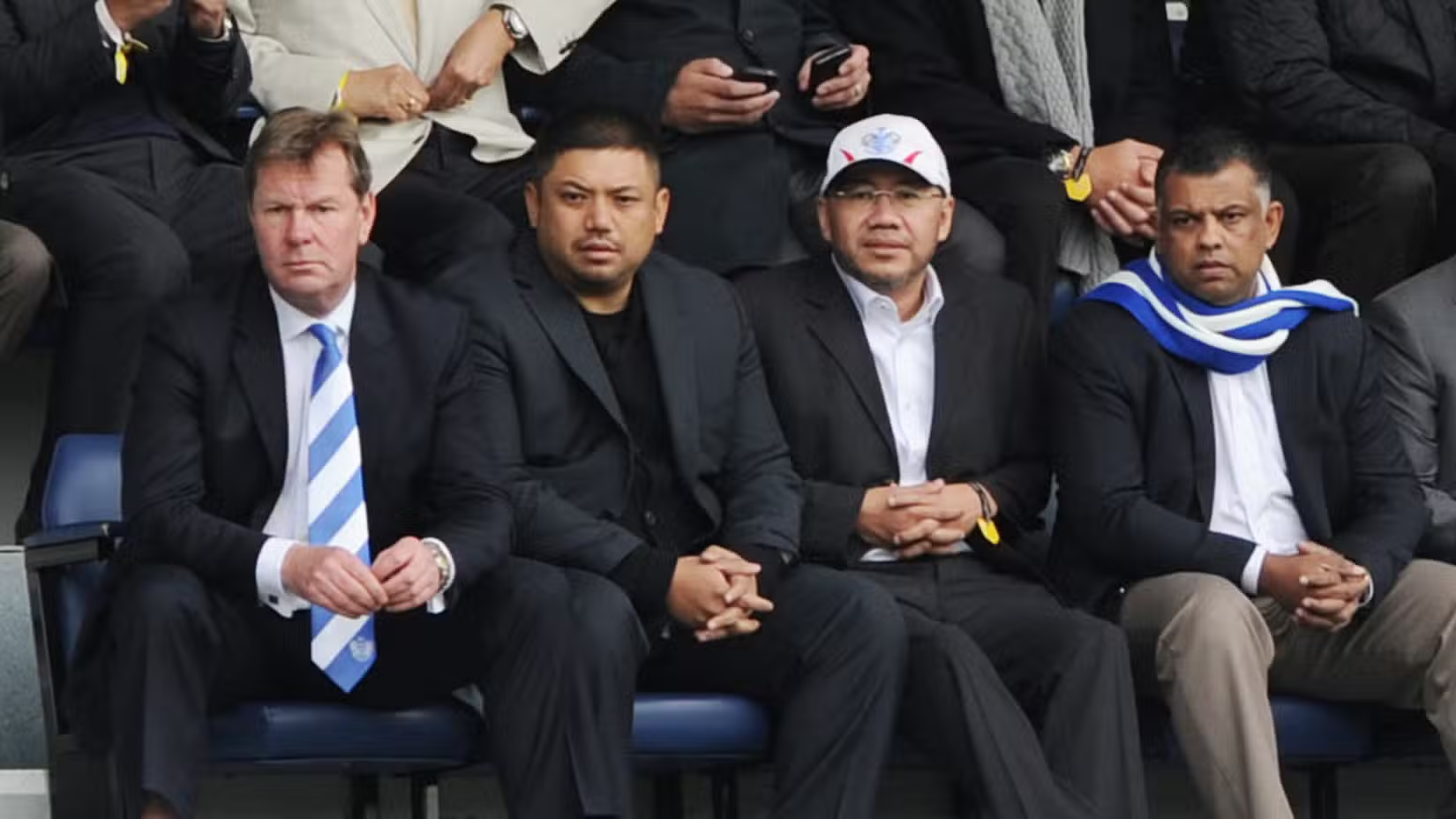
QPR has found stability under the current ownership group, led by Malaysian investor Ruben Gnanalingam, who is said to possess just under 60% of the club alongside smaller-scale partners Richard Reilly and ex-chairman Amit Bhatia.
Gnanalingam is a more enigmatic character than many Championship owners, and some aspects, including his personal wealth, remain unknown, despite the fact that he comes from a wealthy family, with Forbes estimating his family’s wealth at roughly £2.3 billion.
The Gnanalingam family’s wealth is courtesy of Westports Holdings, of which the QPR chief is executive chairman and group managing director. Westports Holdings, which his father co-founded, is headquartered in the Malacca Strait and controls one of Asia’s major ports, thus the level of wealth accumulated should come as no surprise.
Gnanalingam junior has been the company’s CEO since 2015, and QPR fans will hope that their expenditure in the market increases in the coming windows as Julien Stephan attempts to return the West London club to the Premier League after a long absence.
5Steve Lansdown – Bristol City

A more surprising inclusion is longtime Bristol City owner Steve Lansdown, who has vaster resources than many would expect despite scant and disputed investment in the Robins’ football team in recent years.as a
Lansdown, who had served as chairman of the West Country club since 2002 before founding Bristol Sport and combining his Ashton Gate ownership duties with majority shareholding roles with both the Bristol Bears and the Bristol Flyers, was able to buy his boyhood club outright after making billions in financial services entrepreneurship, contributing to an impressive net worth of £2.38 billion.
Lansdown, now 74, co-founded Hargreaves Lansdown in 1981, and the company went on to become one of Britain’s most successful investing services, listing on the London Stock Exchange before he shrewdly lowered his stake over time to collect some eye-watering sums of money.
That kind of riches hasn’t always been represented in the Robins’ transfer activity, but Lansdown has been critical to the club’s long-term prosperity by overseeing the remarkable £40 million rebuilding of Ashton Gate and investing in a now-thriving academy system.
4Michael Eisner – Portsmouth
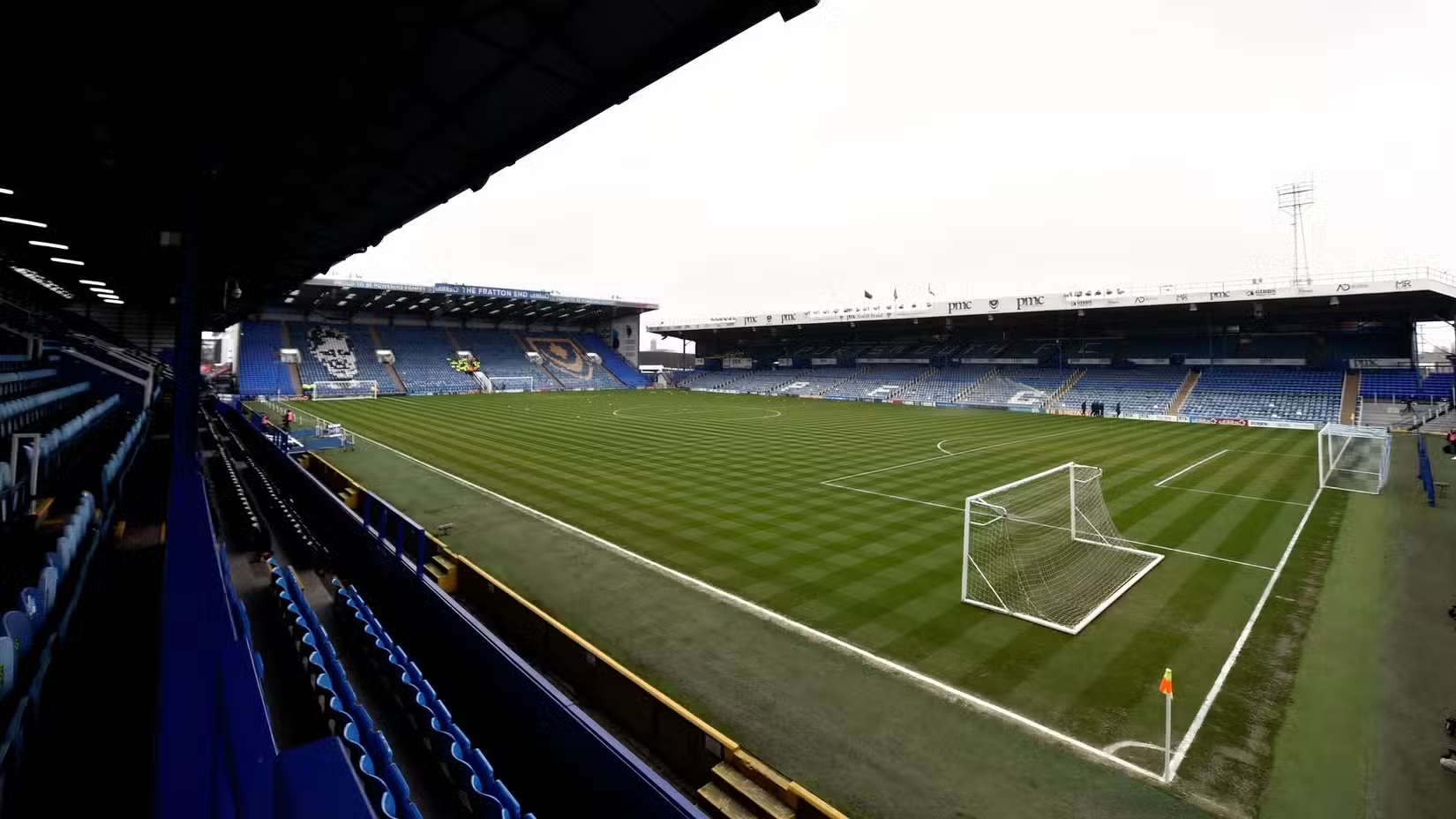
Michael Eisner’s financial origin story is perhaps the most intriguing of the Championship owners, with the American businessman having a massive fortune that Portsmouth are now seeing reflected in the market following increasing investment in the most recent window.
According to the Los Angeles Business Journal in 2024, Eisner has a net worth of $3.8 billion (£2.83 billion), which should come as no surprise given the 84-year-old’s former roles.
Eisner worked his way up the television industry, taking on lucrative high-profile posts at NBS, CBS, and ABC before becoming president of Paramount Pictures from 1976 to 1984.
Then, Eisner would leave for the glamour of the Walt Disney Company, where he served as chairman and CEO for more than 20 years, overseeing a well-documented revitalisation of the company’s animation studios with big hits like The Little Mermaid, Beauty and the Beast, Aladdin, and The Lion King over a five-year period while also expanding their domestic and global theme park franchises.
He left Disney in 2005 and subsequently made a surprise purchase of Portsmouth in 2017, with the club rising from strength to strength under his ownership, returning to the Championship two years ago.
3Joshua Friedman – Charlton Athletic
Joshua Friedman, however, is the primary stakeholder of the Global Football Partners consortium that finalised a takeover of Charlton Athletic from Thomas Sandgaard in the summer of 2023, making him one of the Championship’s wealthiest owners.
Official net worth figures for Friedman are difficult to come by, but there are credible claims of a $5 billion value, and Charlton has demonstrated their boardroom riches since returning to the second tier last year.
Friedman amassed income by co-founding the hedge fund Canyon Pateners in Los Angeles in 1990, where he eventually received honours for his efforts.
It’s a similar commercial and financial trajectory to many American figures in the EFL ownership scene, with Friedman bringing one of the most substantial fortunes.
2Daniel Kretinsky – West Ham
As we move on to West Ham, we see a huge increase in wealth due to recent changes in the club’s ownership structure.
With ex-chairman David Sullivan abandoning his position amid well-documented issues and legal battles outside the boardroom, Kretinsky and his consortium’s stake increased from 27% to 43%.
The Czech tycoon also has big assets behind him, with an estimated net worth of $10 billion, making him the Championship’s second-richest owner right now.
Kretinsky began his career as a lawyer before becoming a 40% shareholder in Sparta Prague in 2004. He also served as chairman of Czech energy business Energetický in 2009. He then took on the same role with EP Industries two years later and went on to invest in a variety of firms, including French daily Le Monde, Sainsbury’s, and Foot Locker, after originally acquiring a stake in West Ham five years earlier.
1Fosun International – Wolves
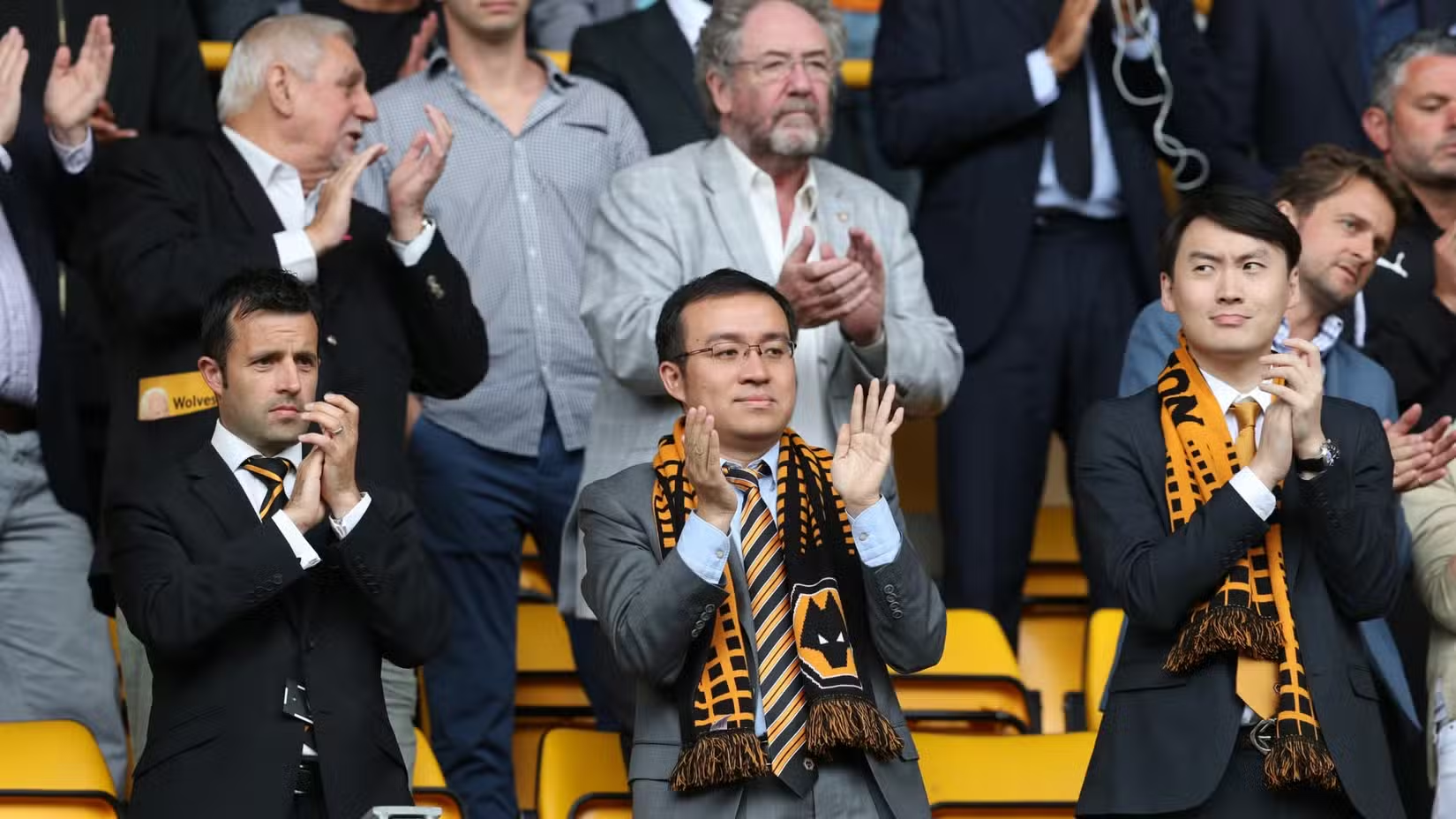
Wolves, on the other hand, have the title of richest ownership in the Championship, despite the fact that the club’s owning group remains overwhelmingly unpopular with Old Gold supporters.
Fosun International’s decade-long reign of power at Molineux has been a rollercoaster ride, with eye-watering investment propelling the club into the Premier League under now-Hammers manager Nuno Espirito Santo, followed by top-half finishes in the top flight and European competition.
However, a lot has happened since then, and Wolves will be anxious to maintain their position in the Championship table as they are among the wealthiest second-tier owners.
Wolves’ league finishes by season under Fosun International.
Division
Position
Pts
In 2016/17, the EFL Championship finished 15th with 58 points, while in 2017/18, the EFL Championship finished first with 99 points. In 2018/19, the Premier League finished 7th with 57 points, followed by 7th with 59 points in 2019/20, 13th with 45 points in 2020/21, and 10th with 51 points in 2022.
Premier League: 20th
Fosun, which is made up of main shareholder Guo Guanchang, Fosun Group CEO Wang Qunbin, and executive chairman Nathan Shi, has no public net worth, but sources suggest that the Chinese conglomerate is valued at £20.53 billion.
Fosun built its wealth by starting as a small market research firm in the 1990s and growing into a massive global conglomerate – one of the largest of its kind in China – through a series of domestic and international investments, with the company now operating in over 35 countries.
xz