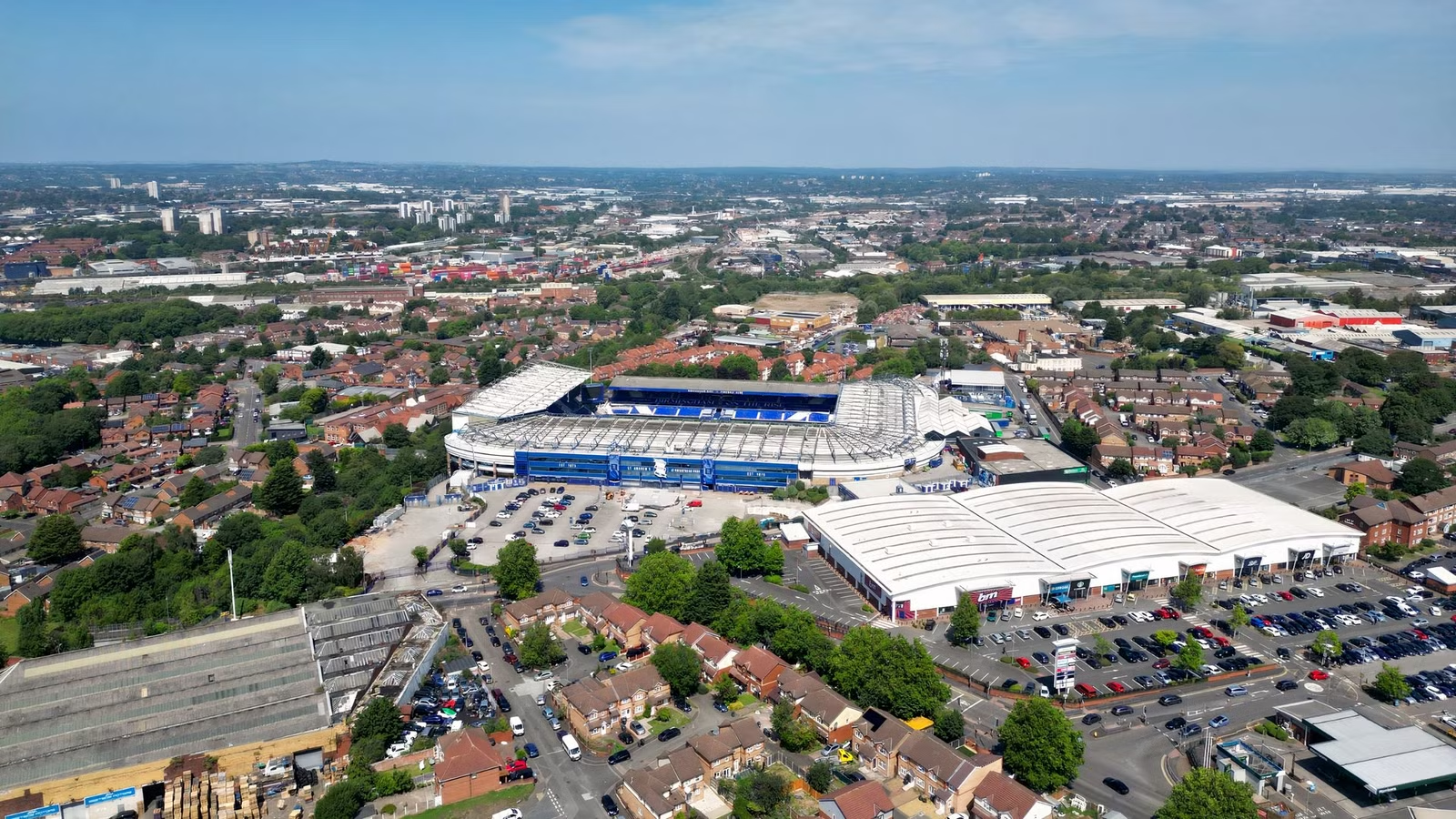
Birmingham City have played their home games at St. Andrew’s for the past 120 years of their 150-year history, with the historic stadium serving as the setting for both good and terrible drama on the pitch.
In recent years, Blues fans have begun to pack the stadium most weeks after a brief period when only the Main Stand and Gill Merrick Stand were fully operational, with mandatory foundation repair work required for the Tilton Road and Kop stands, both of which were renovated in the mid-1990s.
Bluenoses, of course, are notorious for being some of the most vocal in the country, with it well documented that during their EFL Cup victory over Arsenal at Wembley Stadium in February 2011, they recorded the greatest decibel levels at the national stadium.
According to local journalist Tom Ross, Sir Alex Ferguson famously compared the level of hatred in B9 to that of Galatasary supporters in Türkiye, and such enthusiasm has largely worked in the club’s benefit when it comes to gaining results during Tom Wagner’s ownership.
St. Andrew’s will, of course, be no more in its current form in a few of years when Birmingham moves their history and ambitions to the 62,000-seater Powerhouse stadium.
As a result, when the time comes, fans will be left to reflect on their favourite games and players at the approximately 30,000-capacity stadium.
However, few people appear to be aware that such stories may not have taken place in the stadium due to terrifying circumstances during World War II.
Birmingham City laboured hard to maintain St. Andrew’s following World War II bombings.
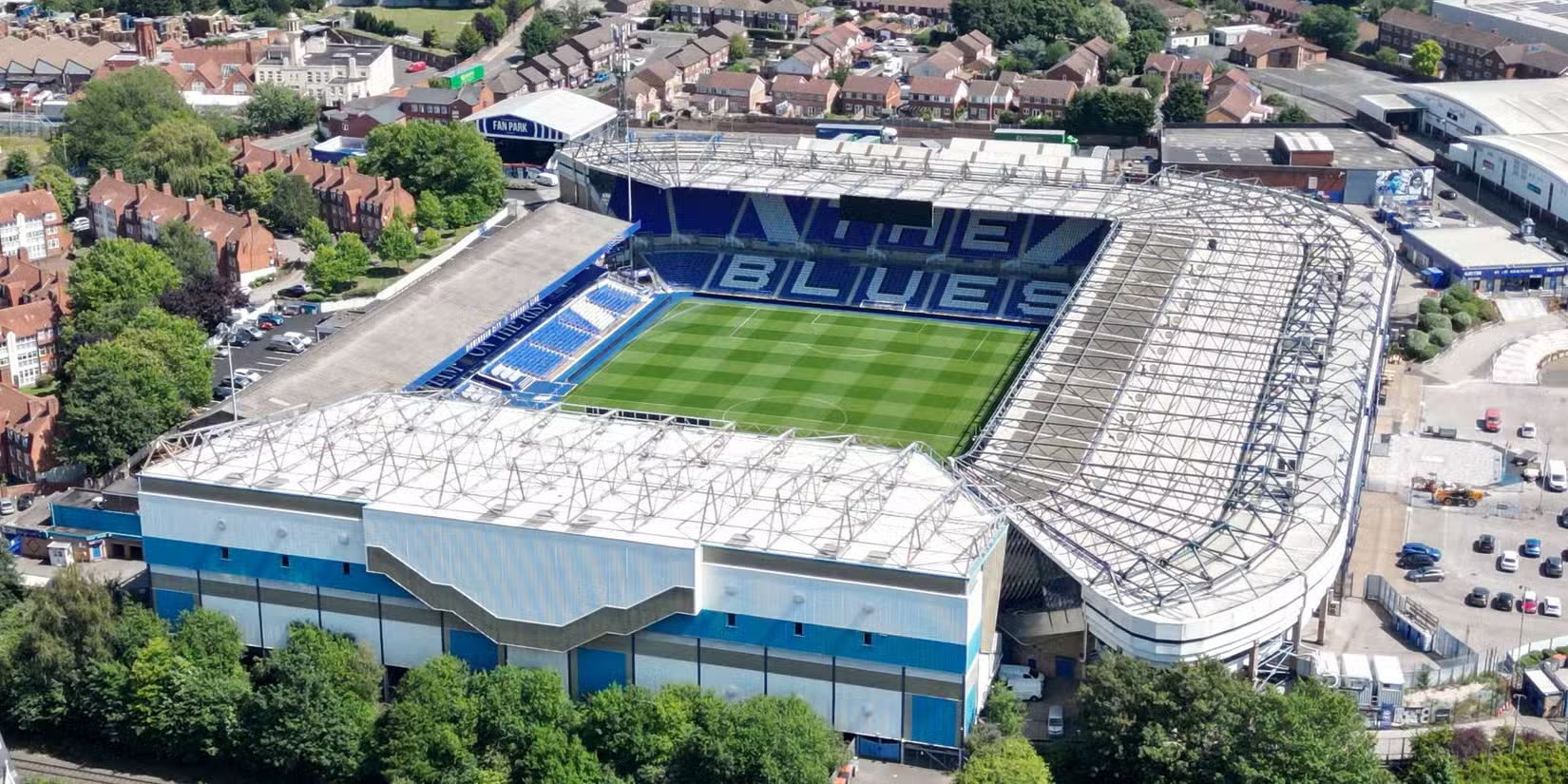
After moving from Muntz Street in 1906, Blues had already achieved a lot of history at St. Andrew’s by the time the war broke out in 1939, including a maiden FA Cup final in 1931, albeit they were defeated by West Midlands rivals West Bromwich Albion.
In actuality, throughout this time, the club was still officially called as ‘Birmingham Football Club’, with the ‘City’ suffix added after World War II, when they returned to activity as a Second Division team after being relegated in 1938/39.
Birmingham, known as the ‘workshop of the world’, was also the second-largest city by population in the United Kingdom, therefore it was predictable that the Luftwaffe targeted it.
Almost three years of assaults on the city resulted in over 2,200 deaths, leaving only London and Liverpool as the most heavily bombed cities, while Blues were almost forced to assess the costs of such horrific devastation.
Indeed, in 1941, the Main Stand was destroyed as a result of a combination of German bombing and an unintentional fire ignited by a firefighter mistaking petrol for hot water.
Because of its proximity to munitions industries in East Birmingham, the pitch was damaged in a total of 20 attacks, with Blues supporter and former Royal Navy member Sid Jackman displaying photos of the site in 2012.
Birmingham City experienced a golden era following wartime St. Andrew’s destruction.
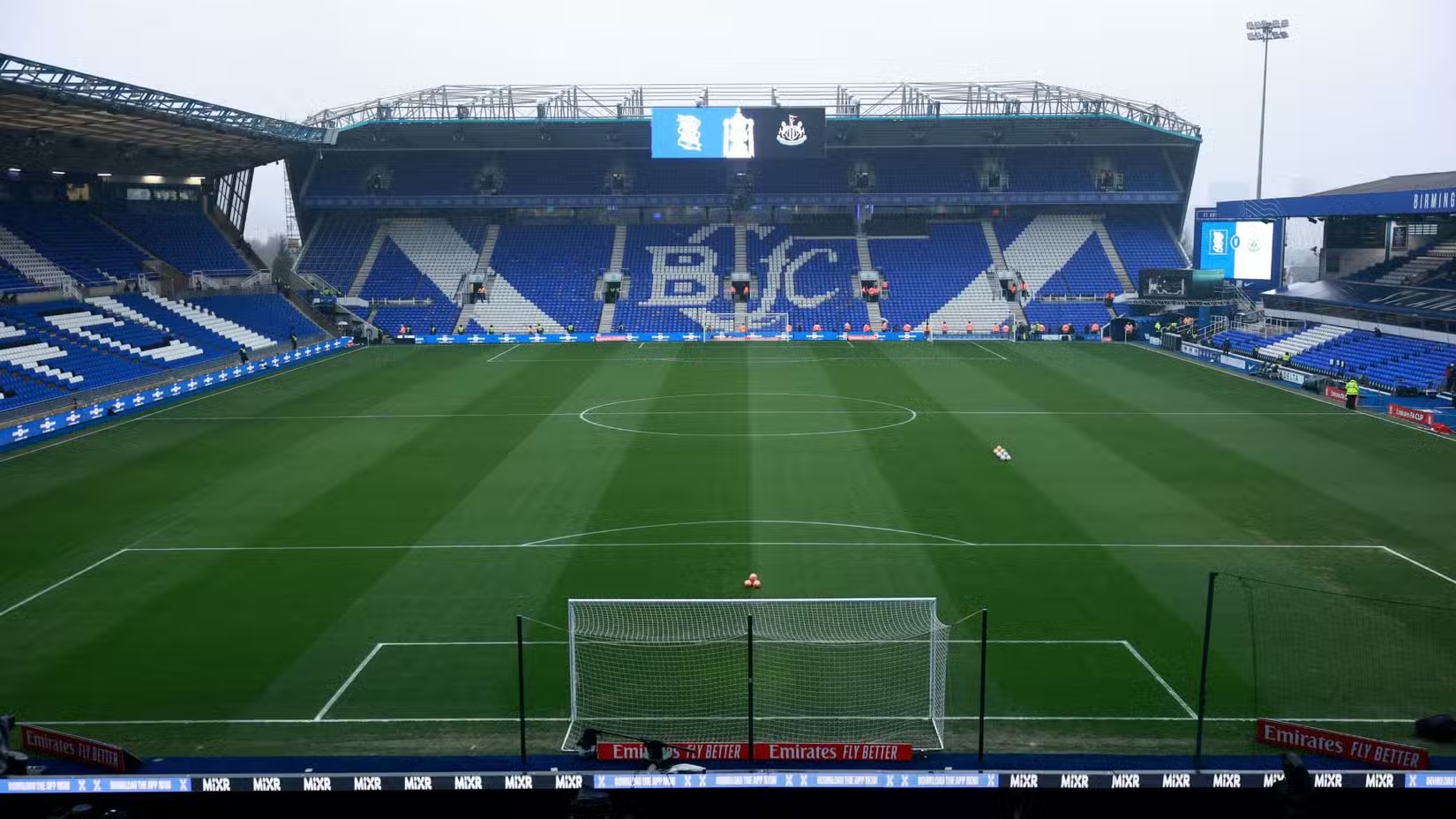
Although the club’s current record attendance of 67,341 occurred before the onset of World War II, the Blues were eventually able to respond to concerns about their home stadium on the pitch in a ‘golden period’ of sorts.
Indeed, following a mixed period of promotions and relegations, Arthur Turner’s appointment in 1954 saw them return to the First Division just months later, before reaching a second FA Cup final in 1956, where they lost to Manchester City in a game infamous for opposing goalkeeper Bert Trautmann playing the final stages with a broken neck.
In 1959, the Second City club achieved its highest-ever Premier League position of sixth place while also being the first English team to participate in Europe.
Although the team has won two major titles since then, significant potential remains untapped.
While supporters can be proud of the ideals Birmingham represents as a club and a city in general, they will hope Wagner and Co. can eventually overcome such ceilings at the Powerhouse.
xz