Sheffield Wednesday’s long-running collapse into administration has entered its most significant phase yet, as the name of the club’s next owners begins to emerge.
After months of uncertainty, creditor pressure, and regulatory scrutiny, administrators are now considering a shortlist of bids to save one of England’s most historic institutions from financial catastrophe and competitive decline.
At the core of that process is a phenomenon that has both intrigued and concerned Owls fans: two American-led companies that were previously pursuing separate takeover bids have suddenly united into a single joint proposal.
The agreement brings together US billionaire John McEvoy, whose sports investments include the Colorado Rockies and Nashville Predators, and the Storch family, a private organization with past ties to Plymouth Argyle. Both had made individual proposals earlier in the process.
Their choice to pool resources has added new complexity to a sale that administrators anticipated would be nearing completion by now. Instead, the timescale has been extended to reflect both the level of interest and the scope of the due diligence necessary.
This is no ordinary acquisition. Any new owner inherits a club anchored in the bottom of the Championship with a points record that hardly resembles a competitive platform, burdened by deductions, hollowed out on the pitch, and operating within a crumbling infrastructure.
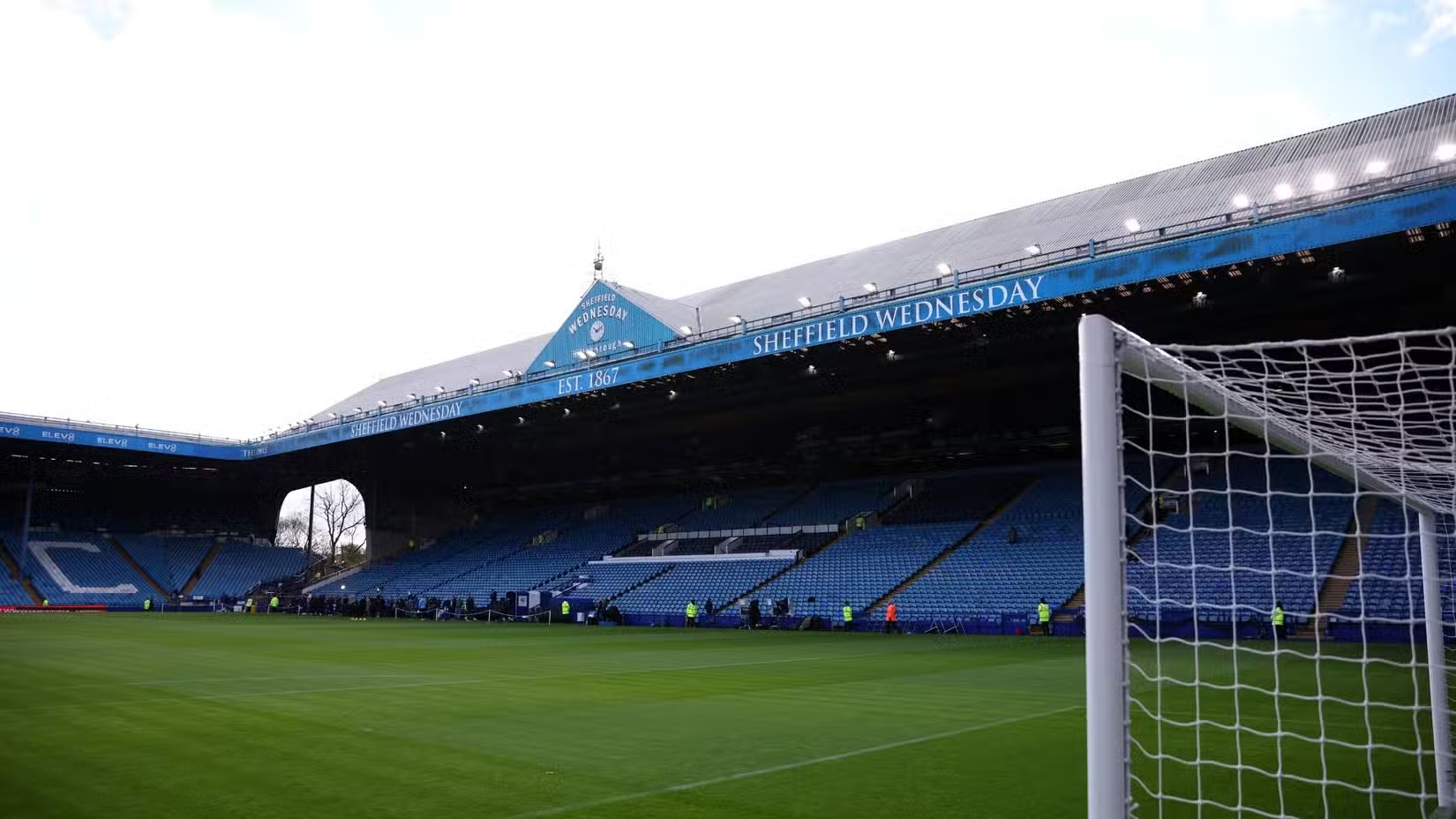
Hillsborough and Middlewood Roads require major investment, while years of mismanagement under Dejphon Chansiri have left profound financial and cultural scars.
Against this environment, the formation of a united bid poses fundamental concerns about power, governance, sustainability, and intent. Is this a realistic pooling of resources to confront a particularly difficult situation in Sheffield Wednesday?
Or does it present additional concerns in terms of control, responsibility, and leadership clarity at a club that has recently suffered from top-level instability?
Reaction mixed after two American groups combine offers for Sheffield Wednesday.
For Wednesday fans tired by years of instability, the identity and structure of the future ownership group are as important as the size of the check.
Within that background, Football League World spoke with Owls specialist Patrick McKenna on the joint proposal.
“So in terms of a combined bid, it just seems strange,” McKenna told FLW.
“If both were able to raise £15 million, you’d think they’d be confident enough to go it alone.
“I suppose we don’t know why they’re going in for a joint bid; nonetheless, the disturbing part is that it appears like both of them will fall short and will have to pool their resources.
“I also believe that, while we do not want a situation in which one man runs the club, there could be a clash of personalities and decision-making – there could be too much dispute.
“I’m just thinking, not gazing across the city at the size of the consortium at Bramall Lane.
“Yeah, to be honest, the whole idea doesn’t appeal to me, but I could be prejudging it based on limited information; my preference would be for a solo bid.”
“But I have every faith that the administrators aren’t gonna choose someone who isn’t suitable for the football club.”
Modern football economics shape the future of Sheffield Wednesday’s ownership.
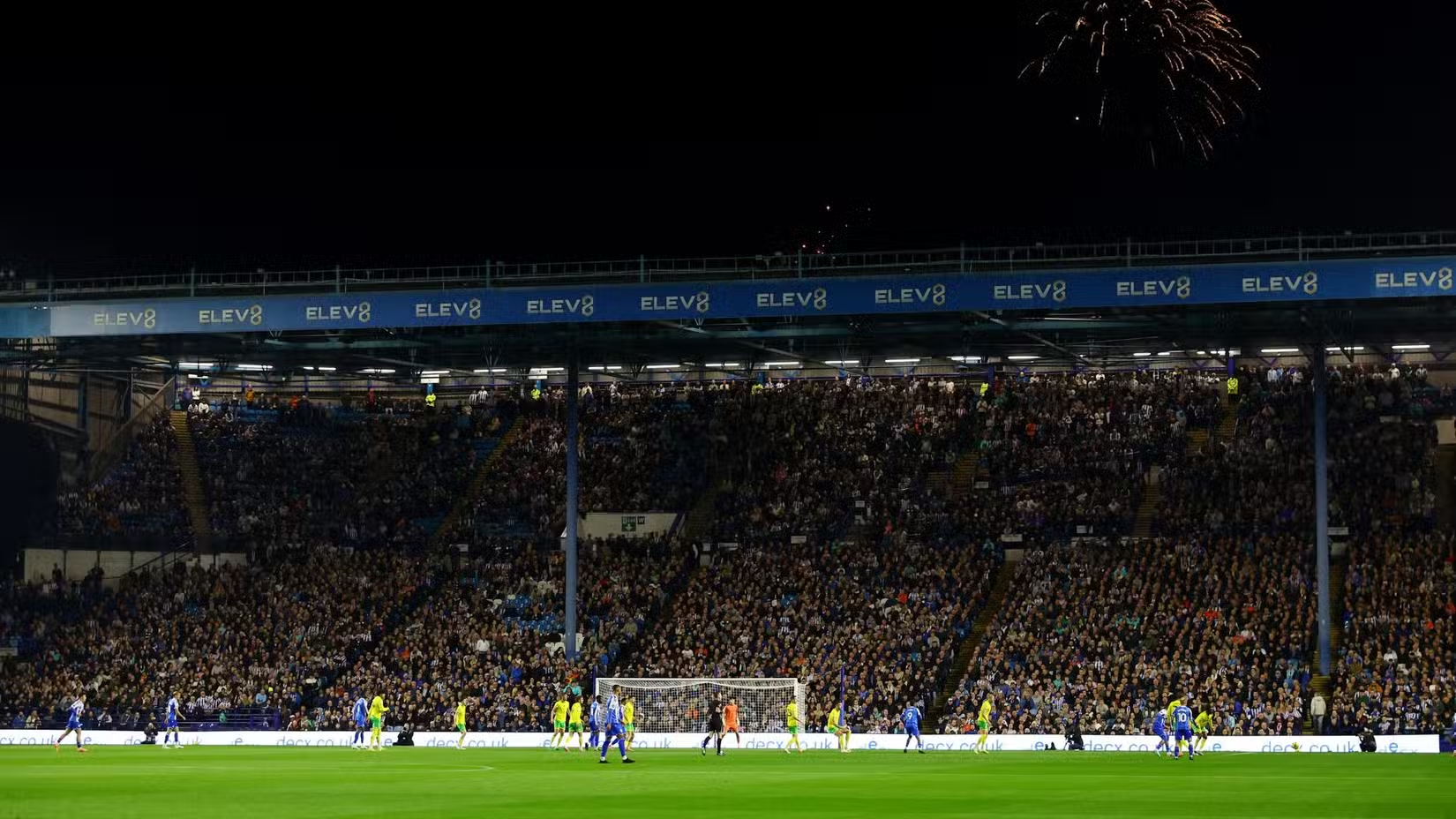
The reaction to the notion of a combined proposal reflects a broader ambivalence among Wednesday fans: satisfaction that genuine money appears to be on the table, balanced by concern about what shared ownership may entail in practice.
After a decade of opaque decision-making, financial risk-taking, and strategic drift, the need for clarity and accountability is understandable.
Many fans want a clean break from the uncertainty that has so often plagued Wednesday under previous ownership. However, the modern football ownership landscape is increasingly resistant to such simplicity.
Consortia are becoming the rule rather than the exception, especially in transactions of this size. The sheer amount of money required to stabilize the Owls – from covering operating losses and satisfying creditors to redeveloping facilities and restoring a competitive squad – makes the concept of a lone savior increasingly improbable.
Pooling resources may not indicate weakness, but rather an awareness of the magnitude of the undertaking. Wednesday is a long-term, loss-making endeavor that requires patient and organized investment.
Financial muscle is important, but so are operational clarity, transparency, and a realistic long-term strategy that goes beyond survival.
Billionaire status and transnational investment portfolios will not suffice to reassure fans. It will only occur if a preferred bidder is identified, governance mechanisms are defined, and a clear vision for the football club is presented.
Until then, the united bid of McEvoy and the Storch family will remain as it is: a symbol of both hope and trepidation at a watershed time in Wednesday’s modern history.
xz