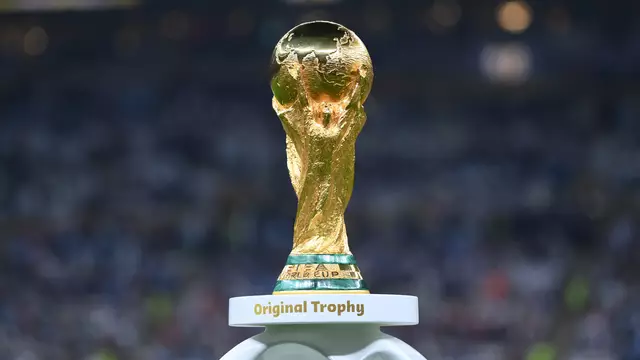
As a result of political considerations, FIFA has declared that three countries are not permitted to participate in the World Cup.
There will be a maximum of 48 qualifying teams for the 2026 edition, which will be held in the United States of America, Canada, and Mexico. The previous number of eligible teams was 32.
A total of sixteen groups consisting of three teams each will be formed, with the top two teams from each group advancing to the knockout stages.
The modification of the format has been met with some criticism; nonetheless, it does make it possible for countries to qualify that would not have been able to do so under the previous system under any circumstances.
A technical ban has been placed on the participation of two countries in the competition. The invasion of Ukraine that Russia carried out in February 2022 has resulted in the country’s current suspension from participating in competitions sanctioned by FIFA.
Instead, they compete in international friendlies against countries that are primarily located outside of Europe. During the most recent international window, they played friendly against Zambia and Grenada.
While everything was going on, FIFA decided to ban FECAFOOT, which is the governing body of the Republic of the Congo, because of this “third-party interference in its affairs.”
Following the announcement of the suspension, FECAFOOT decided to cancel the remaining qualifying matches for Congo, despite the fact that the country is not officially barred from participating in the World Cup.
In the past, two additional countries were excluded from the most prestigious event in the world of football owing to political considerations.
A suspension of South Africa by FIFA was issued in 1961, during the time that the country was still under the rule of racial apartheid.
The ban would be overturned some years later, in 1963, with Stanley Rous, who was serving as President of FIFA at the time, showing his support for the South African Football Association during the apartheid era.
Additionally, FIFA placed South Africa in an Asian qualifying group in order to avoid them having to compete against African nations; nonetheless, other African nations were successful in their efforts to have the country suspended once more.
Following Joao Havelange’s replacement as president of FIFA in 1976, South Africa would be completely kicked out of the organisation. That same year, other sports would also decide to completely boycott the nation.
1992 was the year that they were restored, and in 1996, they triumphed in the African Cup of Nations. In 2010, they hosted the World Cup matches.
Because to the sanctions imposed by the United Nations against the country, the Federal Republic of Yugoslavia was not allowed to participate in international football competitions in the year 1992.
In spite of the fact that Serbia and Montenegro were a part of Yugoslavia until 2003, they continued to use the term FRY after the dissolution of Yugoslavia.
After that, the two countries would compete on the international stage under the names Serbia and Montenegro, with the goal of qualifying for the World Cup in 2006. The month of June 2006 marked the full independence of both countries.
xz