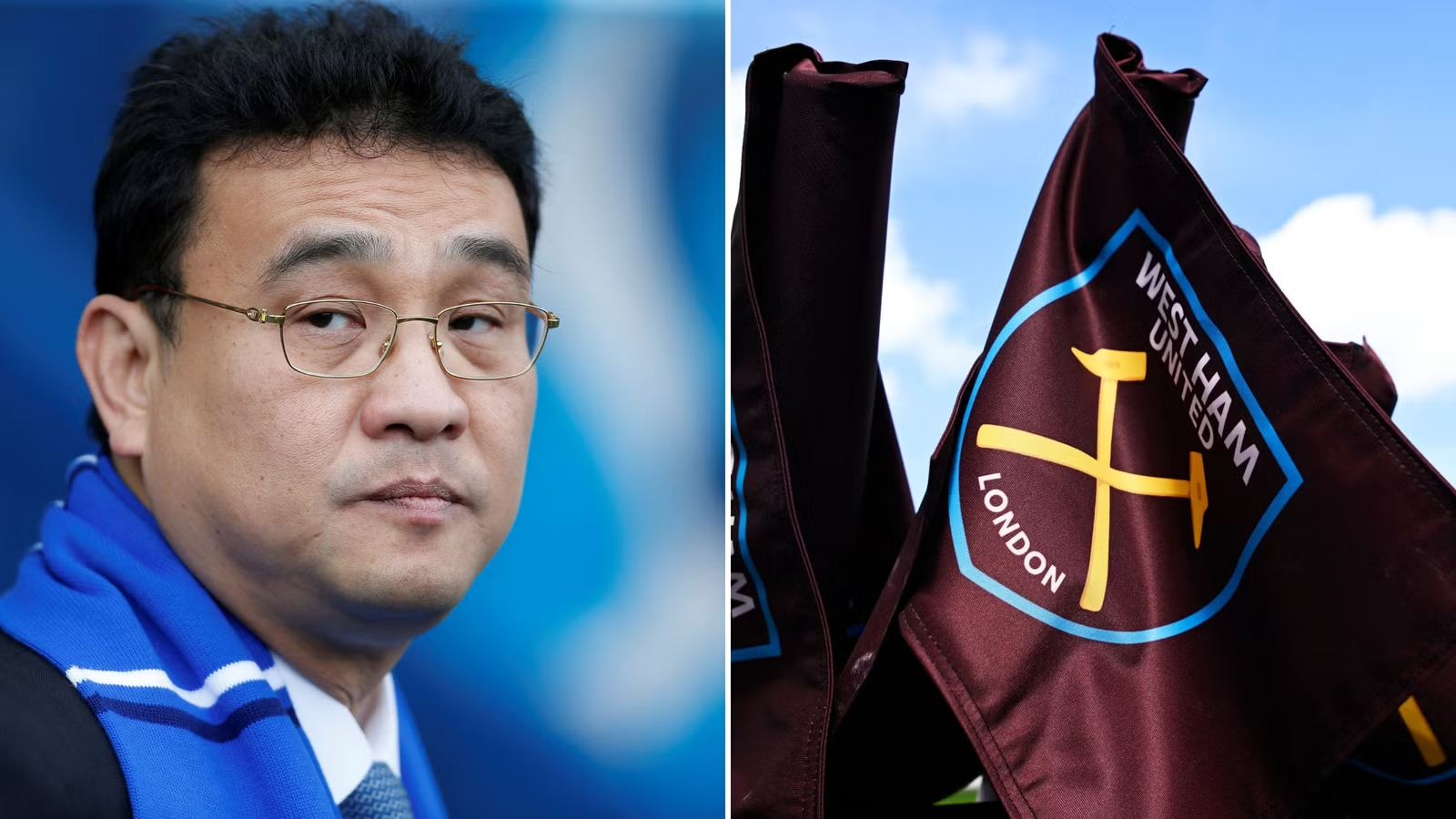
Simon Jordan has exploited Dejphon Chansiri’s dismal tenure as Sheffield Wednesday’s manager to highlight the importance of ownership in English football.
The former Crystal Palace owner discusses the behind-the-scenes changes at West Ham United, including Daniel Kretinsky, who is expected to become the club’s largest stakeholder.
Following Amanda Staveley’s failed effort to purchase into the Hammers, Kretinsky has reached an agreement to expand his interest to 46%, ahead of David Sullivan’s 40%.
On TalkSPORT, host Jim White questioned whether greater transparency in the boardroom at the London Stadium would lead to stability, but Jordan quickly pointed to Hillsborough as proof that these do not always go hand in hand.
Simon Jordan brings up Dejphon Chansiri during the West Ham talk.

Jordan was asked on TalkSPORT if having a clear hierarchy in East London would be beneficial.Moshiri owned and controlled Everton. How did that work for them? Jordan added that Chansiri’s boardroom was stable because he controlled it.
Chansiri took over in South Yorkshire in 2015, and the team went through straight play-off campaigns, nearly missing out on promotion in 2016.
However, as is well documented, his time ended dramatically, and the Owls were relegated to League One at the end of the previous season, leaving them to pick up the pieces.
Dejphon Chansiri’s stint at Sheffield Wednesday ended in administration.
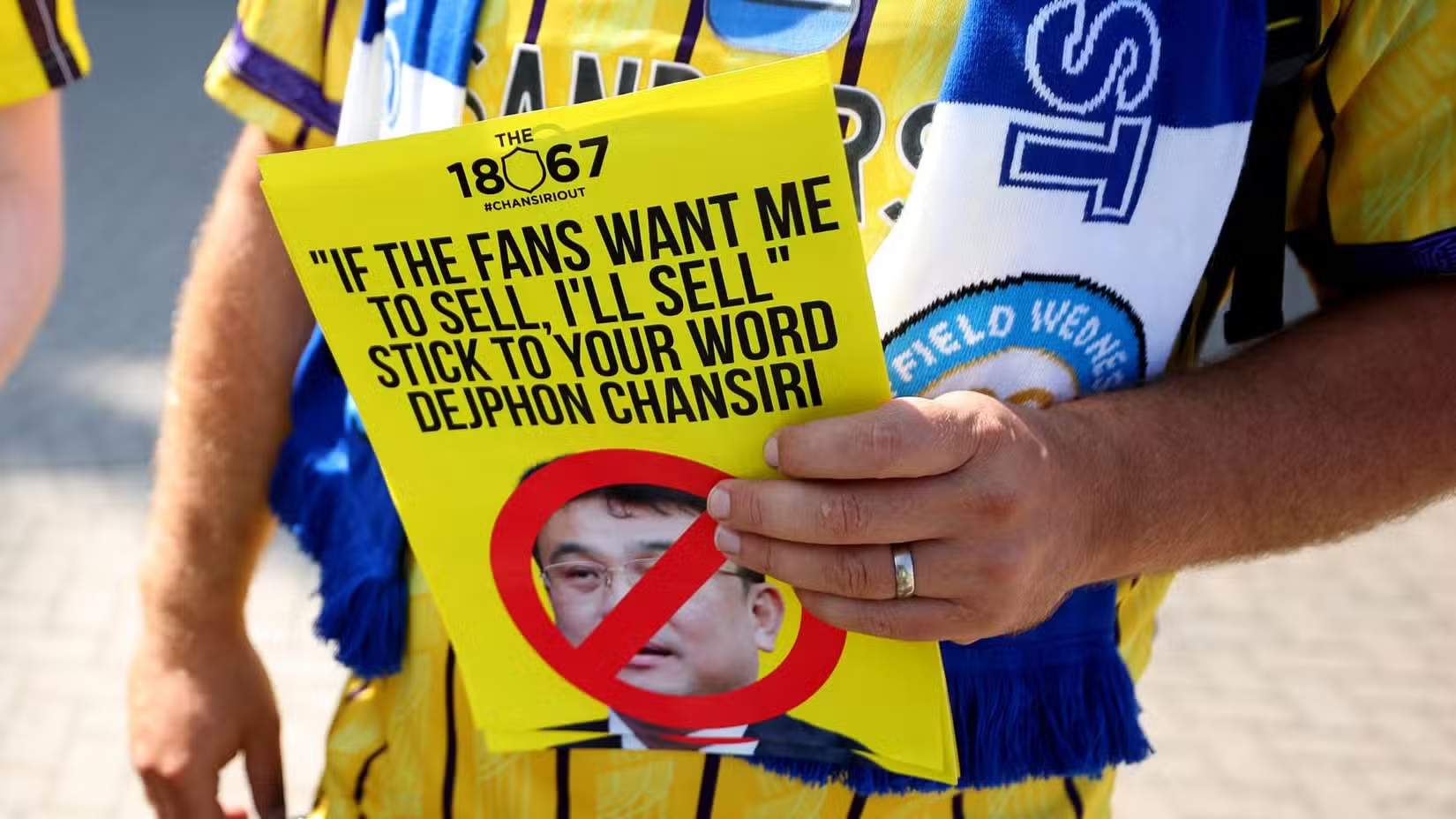
The Thai businessman joined in January 2015, and his early investments helped Wednesday become a danger at the top of the Championship.
They made the play-off final in his first full season and returned to the play-offs in 2016/17, but promotion never came.
In the following years, things became even more tough at Hillsborough.
Wednesday were demoted to League One after being deducted six points during the 2020/21 season due to a breach of the EFL’s financial rules, while Chansiri’s final years at the club were marred by transfer restrictions and financial issues.
These troubles would escalate in 2025, as players and staff were delayed paid, HMRC debts piled up, and supporter demonstrations against him grew stronger before Sheffield Wednesday officially entered administration on October 24, ending his ownership of the club.
Sheffield Wednesday under Chansiri.
Takeover finished.
January, 2015
Championship play-off final
May 2016
Relegated to League One.
May 2021
Entered administration.
October, 2025
The Chansiri period comes to an end.
May 2026
Following the October 2025 announcement, the administration implemented an immediate 12-point deduction, followed by further six points for financial infractions.
The Owls’ 2025/26 season was disastrous, as they became the first EFL club to have relegation mathematically confirmed in February, before finishing with zero points.
In May, Arise Capital Partners, led by American billionaire David Storch, completed the takeover, bringing the Chansiri chapter to an end.
Sheffield Wednesday are an excellent illustration of Simon Jordan’s ownership.
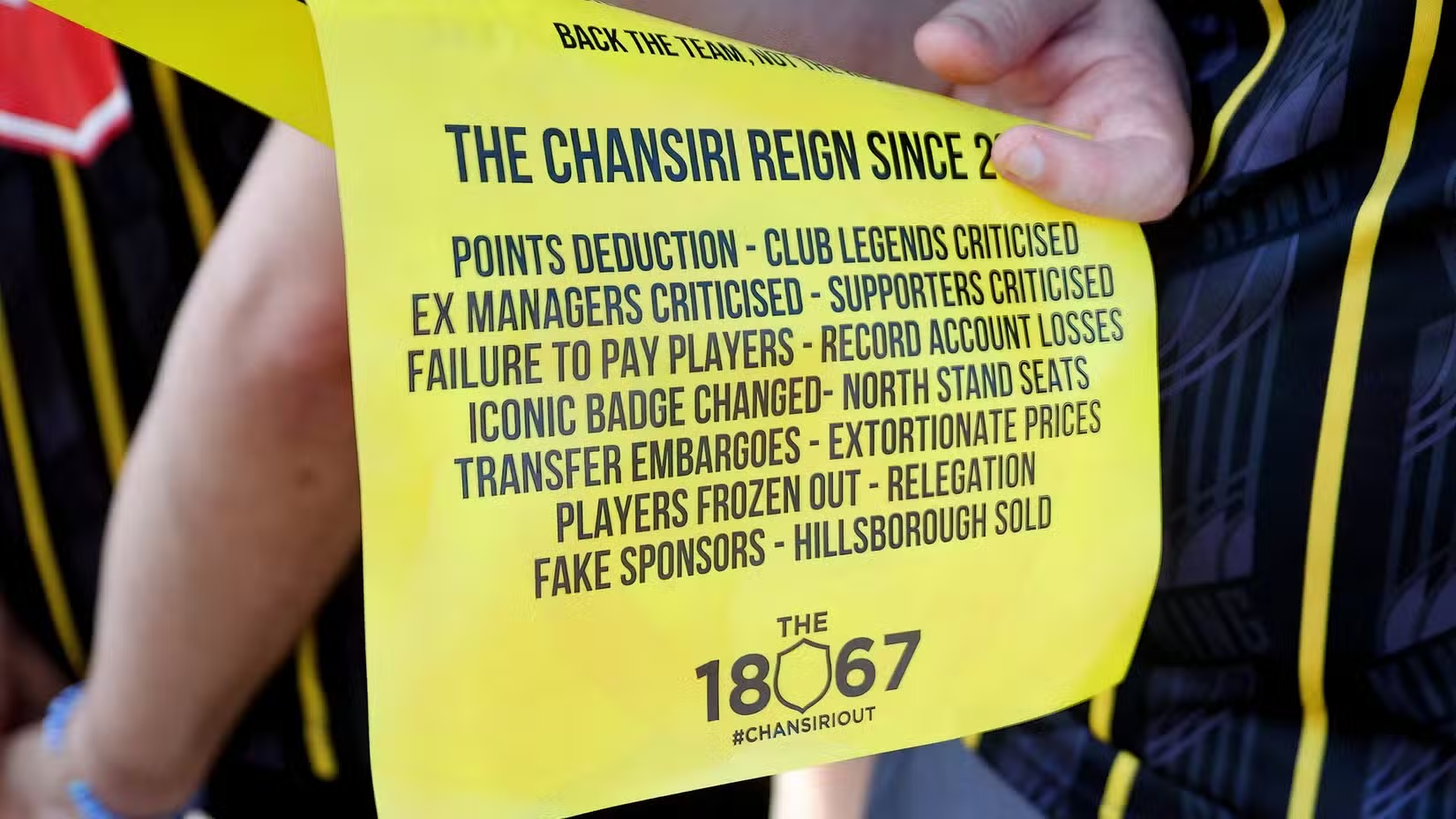
Of course, there is a clear distinction between the scenarios at Sheffield Wednesday and West Ham, but the point is that a club may remain unstable even when a recognisable person is in charge.
For much of Chansiri’s ownership, there wasn’t much of a tussle for control, as choices were ultimately his.
This resulted in point deductions, embargoes, unpaid bills and wages, relegations, and finally administration.
Owls fans spent much of the final years expecting a change that never arrived until May, when the buck eventually stopped with him.
West Ham may be more stable as a result of the changes, but having only one person in charge does not always yield the desired results.
xz