Many Birmingham City supporters in this section of the West Midlands are excited about the club’s future, despite the fact that the recently concluded Championship season elicited mixed sentiments.
The ambition of Blues’ American investors, Knighthead Capital Management, has been well chronicled, both on and off the pitch.
Tom Wagner has only overseen the start of a big reconstruction project at Birmingham, where he intends to return the club to the Premier League for the first time since May 2011, after previously playing in League One.
Their relegation to the third division was tackled head-on by Wagner, his recruitment team, and Chris Davies, as the club obliterated a slew of records, including 111 points and a return to the Championship at the first attempt.
Unsurprisingly, in a bid to become yet another side capable of achieving back-to-back promotions from League One to the Premier League, as Kieran McKenna and Ipswich Town did two years ago, Blues invested heavily in two major squad reshuffles over the summer and transfer window.
However, Davies’ squad was never really in the promotion debate, whether through the automatic or play-off routes, for an extended period of time, as they finished the season in 10th position, nine points behind play-off winners Hull City.
However, the burden on Davies’ shoulders has increased during the season, despite Wagner’s apparent support for the 41-year-old.
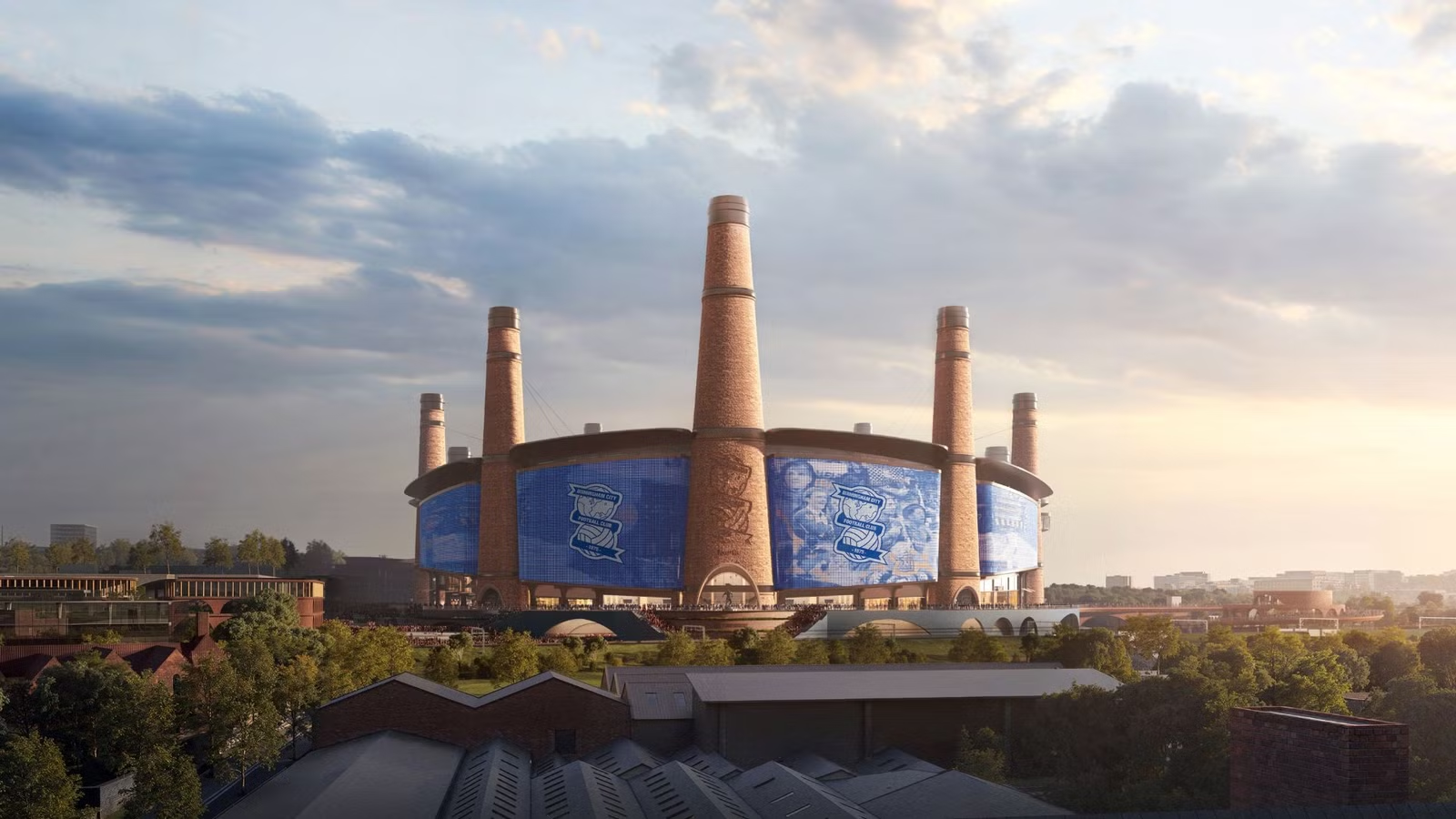
Naturally, expectations have skyrocketed in this region of the Second City, which was only heightened in November when photos of the new 62,000-seater Powerhouse stadium were published.
A new Birmingham City update has emerged relating the 62,000-seater Powerhouse stadium.
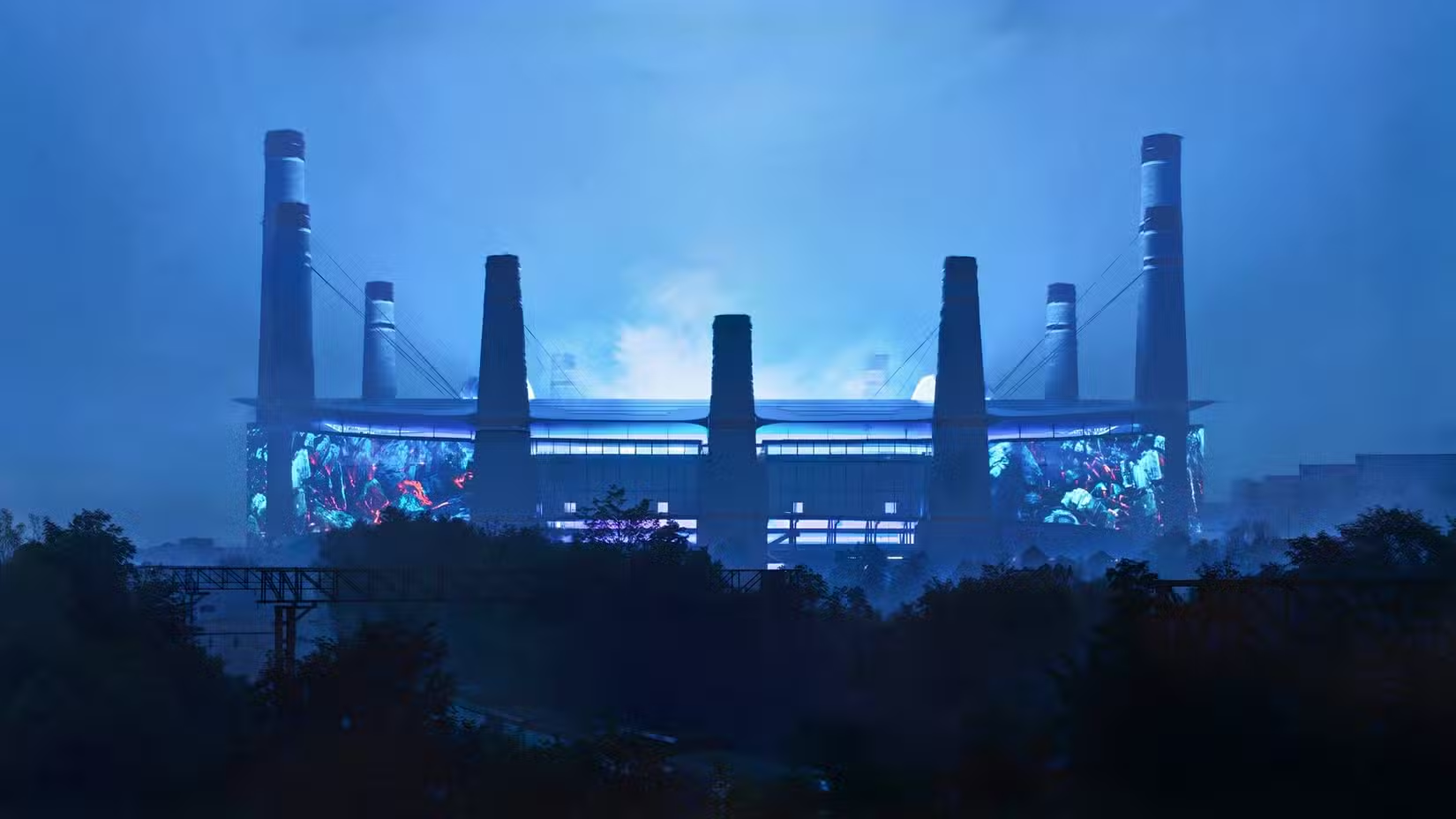
Plans for the new stadium were originally discussed in April 2024, little than a year after Wagner took first control of Blues from BSHL, with the goal of transforming the currently defunct Birmingham Wheels BMX track, which is just a stone’s throw away from St. Andrew’s at Knighthead Park.
In November, ahead of the club’s official 150th anniversary game against Norwich City, which ended 4-1, those dreams became somewhat real at Digbeth Loc Studios, when a 12-chimney design was revealed to the world in a video featuring former Blues and current Real Madrid star Jude Bellingham.
Since then, opposition supporters have frequently targeted Blues fans, citing a future ‘inability’ to fill the new stadium, which is at the heart of a £2-3 billion regeneration project that will include retail and commercial units as well as new training facilities for the club’s men’s, women’s, and academy teams.
After the season ended, Blues staged their first consultation series, ‘Built By Us,’ in which additional stadium renders were shown.
Since then, the club’s head of infrastructure, Nick Smith, has offered the most recent timeline for breaking ground on the Powerhouse project.
Smith indicated that they expect to submit for planning in March of next year.”We’ve already worked with the council to ensure their readiness,” he continued.This will significantly reduce the time it takes to obtain planning clearance, which was previously a year.Before we begin designing, we will prepare the land. This implies that once we gain approval, we can begin straight away,” Smith explained.
Birmingham City will attempt to maintain their identity at the Powerhouse Stadium.

One of the most pressing concerns when a club moves stadiums, particularly to one that is twice the size of their current home, is if their identity will be preserved.
Throughout history, St Andrew’s has been one of the most daunting venues for opponents to attend, especially when full and regardless of the Blues’ overall success.
Everton has been able to maintain their atmosphere at the brand-new Hill Dickinson Stadium, which the Powerhouse will surpass in terms of steepness, whereas West Ham United has been widely mocked for the atmosphere and design of the London Stadium, despite the fact that the club moved in four years after the 2012 Olympics for which it was originally built.
However, no one can seriously question the Birmingham board’s continued goals, especially if they can deliver.
xz