Coventry City, Middlesbrough, and Ipswich Town are leading the Championship in 2025/26, with promotion to the Premier League a real possibility.
Frank Lampard’s Coventry City have led the way for the majority of the season, while Ipswich Town have had to chase Middlesbrough down in recent months. The trio has been setting the pace for quite some time now.
Of course, this implies that three of the teams receiving parachute payments are currently out of the running. Leicester City, Southampton, and Sheffield United have been off the pace for the bulk of the season.
Since 2018/19, at least two of the teams who were promoted have received parachute payments in each of the previous six seasons. However, 2025/26 appears to be the first season to deviate from the norm since Norwich City, Sheffield United, and Aston Villa were promoted.
If Coventry and Middlesbrough are promoted, they will join a group of teams benefiting from the Premier League’s wealth. They would also benefit significantly from parachute payments if they did not produce top-tier football sticks.
Championship promotion reward money, Premier League TV coverage, and commercial perks

The question is, how much can Coventry and Middlesbrough hope to receive? The financial disparity between the Premier League and the Championship is staggering.
It’s no secret that EFL clubs want to go up from the second division, not because of the Championship’s low prize money, but because of the dizzying riches available in the Premier League.
The average wages-to-turnover ratio in the second tier exceeds 100 percent because owners are willing to take risks in order to reach the promised land. Coventry and Middlesbrough have gotten themselves into this situation through a series of deliberate risks.
In terms of the money they can receive, there are three interwoven answers: EFL prize money, greater Premier League income, and commercial gains.
The domestic TV deal is worth £6.7 billion over the next three seasons, according to the BBC. That is split among top-flight clubs based on appearances, but we don’t know what the facility costs will be under the new TV contract.
In addition to facility fees, they will get consolidated commercial fees and merit rewards. That is all while being eligible for two-season parachute payments if they are promptly demoted back to the Championship.
All 20 teams in the division apparently earn an equal share of approximately £95 million for domestic and international broadcasts. Across all of those sectors, they will receive an additional £200 million in income – at a minimum.
The money Championship clubs can collect by winning the play-offs at Wembley
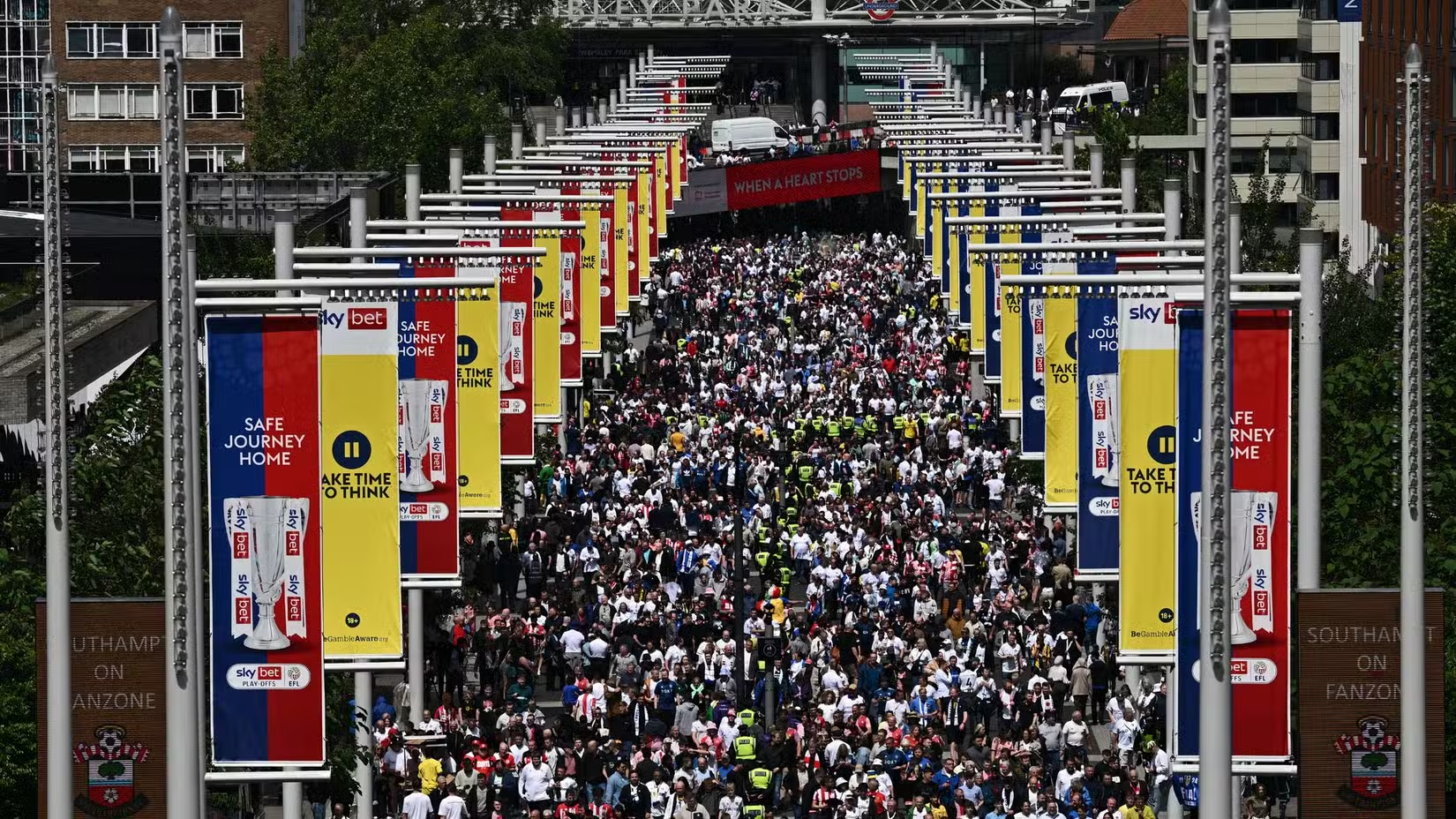
Coventry and Boro will be desperate to avoid the play-offs, but Ipswich will be relentless in their pursuit. However, the Championship play-off final is commonly referred to as ‘the richest game in football’.
Based on historical data, the enormous money that victory beneath the arch at Wembley gives Cov, Ipswich, Middlesbrough, and approximately 12 more clubs with a genuine chance of making the top six is nothing short of game-changing.
While people may assume that the league winners would receive the greatest money for promotion, this is not the case. Deloitte predicted that the winner of last season’s play-offs will enjoy an increase in income.
That amounts to at least £170 million over the following three seasons. This figure might climb to as much as £290 million if they survive their first season in the Premier League. However, whether promoted immediately or through the play-offs, the money would be transformative for both clubs.
Boro last played Premier League football in 2016/17, but it’s safe to argue that the league’s wealth has risen to new heights since then. Meanwhile, Coventry has been without it since 2000/01, demonstrating how transformative it may be for Doug King and his team.
xz