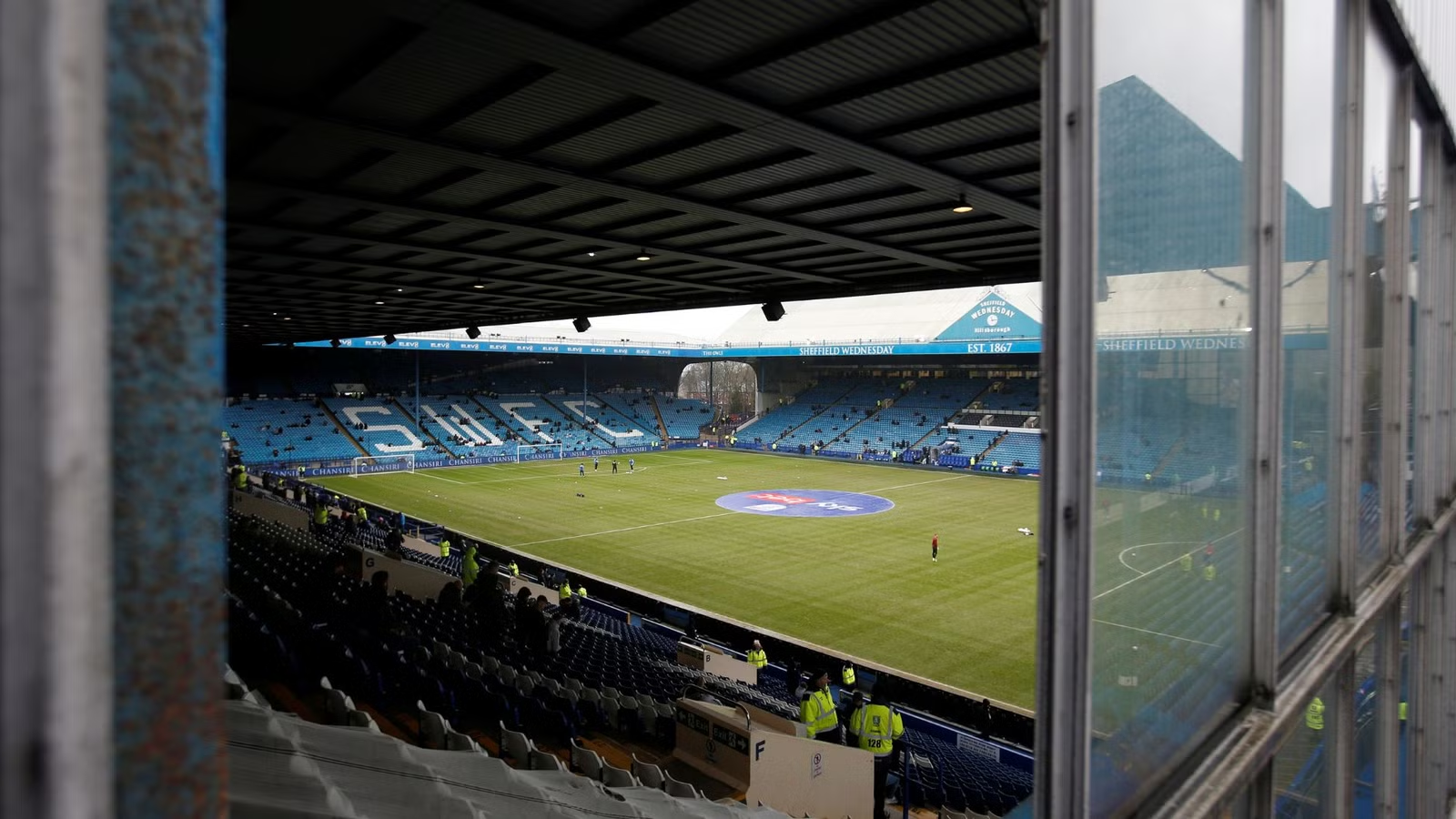
The Sheffield Wednesday takeover rumbles on.
It appears that the race to buy Sheffield Wednesday will continue into 2026. Talks of declaring a preferred bidder fell through, and the team is still in limbo, with no idea what their future holds.
Even as the holiday season approaches, there is still a constant stream of speculation about what will happen next, so here’s a round-up of the latest news from Hillsborough as 2025 comes to a close without a new buyer for the club.
Sheffield Wednesday Price Drop
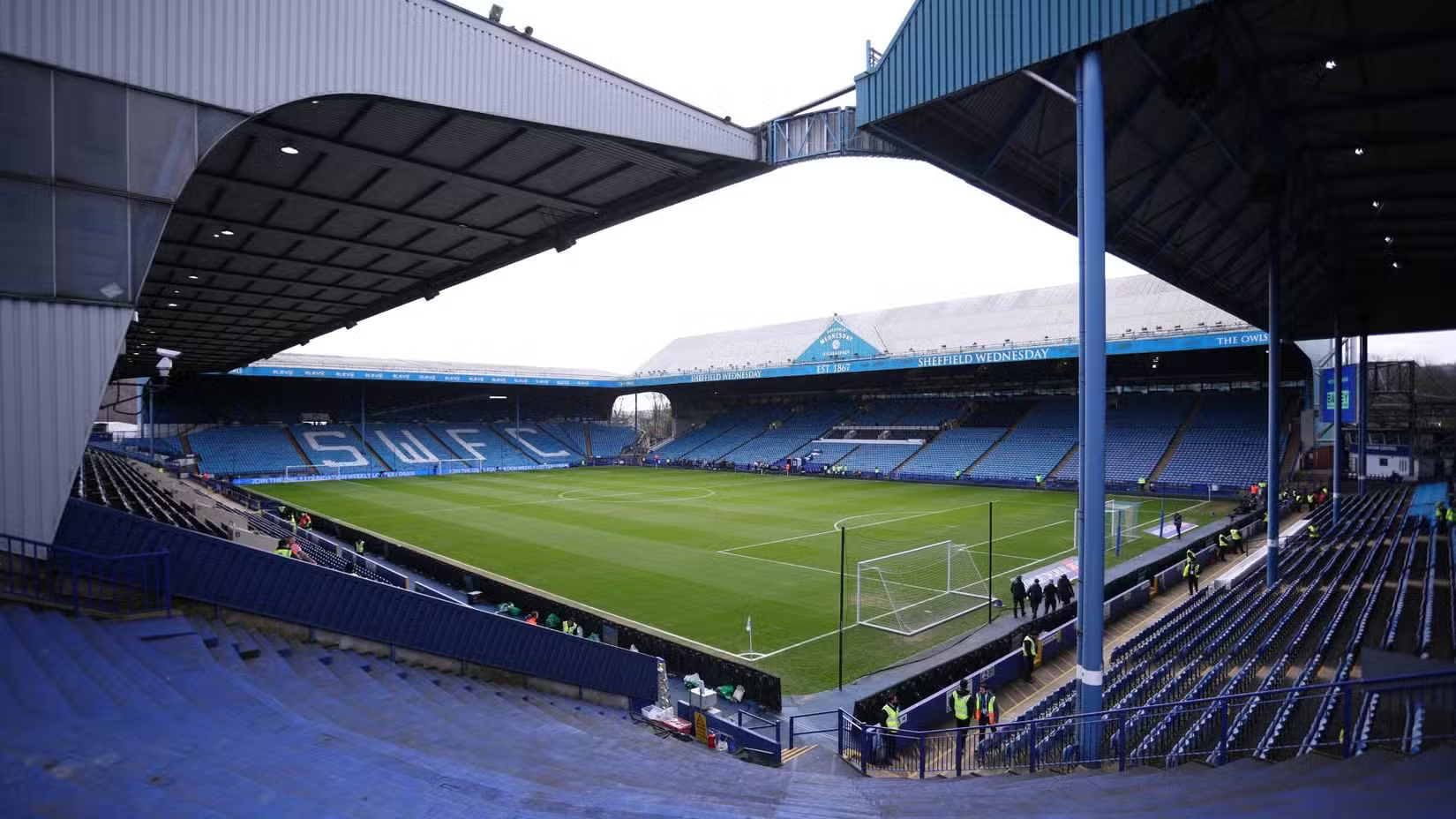
One of the hot topics in recent weeks surrounding Sheffield Wednesday’s sale has been avoiding the 15-point deduction that would be imposed if bids were deemed insufficient by the EFL.
Under League rules, any team that exits administration without unsecured creditors agreeing to 25p in the pound on what they owe will be fined an additional 15 points at the start of the 2026–27 season.
However, new reports from the Sheffield Star suggest that this may not be the case. They have since revealed that the club “is now likely to be available for less than the original £30 million figure that was originally mooted” and that bids as low as £15-20 million may be sufficient to win ownership.
The editors state that “there have now been suggestions from interested parties that the punishment could be discretionary, both in terms of the timing of it and whether it is implemented at all” , but they follow up with the caveat how “no precedent of that has been found, and this publication has been unable to get any confirmation of it being the case” .
They also say that some bidders may be “willing to accept the 15 points and instead invest the money saved into the club and squad if there is no way to avoid the deduction.”
Sheffield Wednesday administrators are waiting on a new Storch bid; Ashley bid fears
According to journalist Alan Nixon’s Patreon post, “Sheffield Wednesday’s administrators are waiting on a new breakthrough bid from the American Storch family”.
In recent weeks, there has been much conjecture about the Storch family, who are thought to have merged their interests with American industrialist James McEvoy. However, with McEvoy’s departure, this merger has now demerged, and Nixon writes that the family may make another proposal.
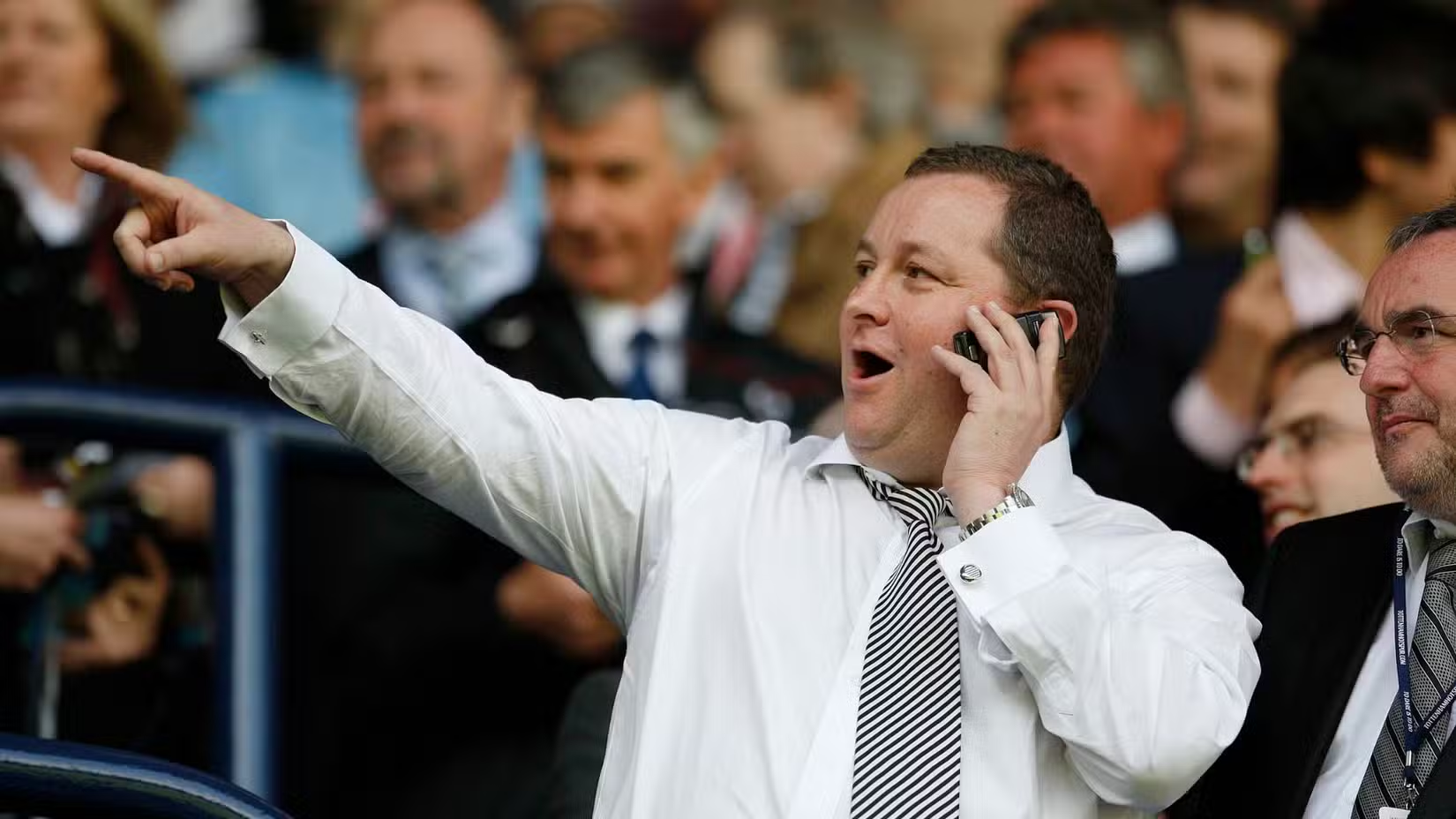
Nixon also suggested that the administrators may be concerned with Mike Ashley’s lack of a proposal, despite being widely regarded as the front-runner in the battle to buy the club.
“Mike Ashley is also in the race, but with the lowest bid, and there is no guarantee he will not go even lower if he is made preferred bidder,” Nixon claimed, adding that the administrators are also concerned about their fee. If Ashley is given the opportunity to clinch a deal, he may try to negotiate lower demands.”
This might be a huge issue for admins. Administration is an expensive process, and the insolvency practitioners will seek to be paid in full from the club’s sale price. If Begbies Traynor believes Ashley’s proposal will undercut them, it may jeopardize his bid to buy the club, even if the sale price is decreased.
Sir Dave Richards speaks out about the Wednesday takeover process.
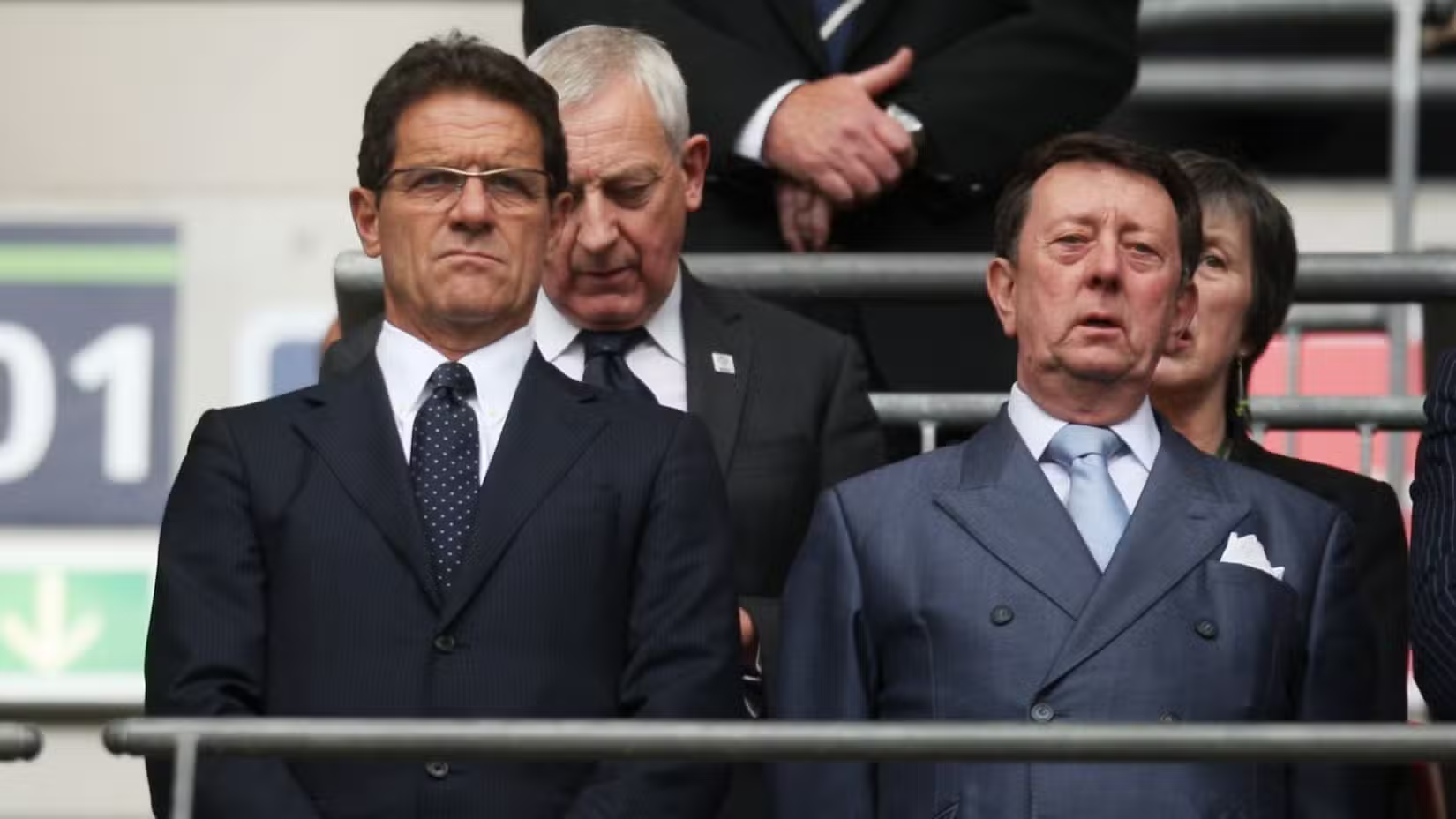
Sir Dave Richards, former Sheffield Wednesday chairman, has spoken out about the Sheffield Wednesday takeover, stating why football club ownership in the twenty-first century is a billionaire’s game rather than a millionaire’s.
Richards, who ran the club when they were last in the Premier League and resigned in 1999 after becoming the Premier League’s chair, describes modern football club ownership as “brutal,” going on to explain that the costs of running a club mean that only the mega-rich can truly afford to get involved these days:
“Owning a club like Sheffield Wednesday does not imply being wealthy. It concerns asset mix, liquidity, and infrastructure risk. A feasible overall commitment ranges between £100 and £150 million. This comprises the purchase price, stabilization cash, squad investment, pay increases, operating losses, and infrastructure.”
He then goes on to explain that the costs can be much greater than most people believe: “Any reputable owner need 30 to 40 percent of the total commitment available in cash on day one. Not property. Not shares. Cash. That means £30 to £60 million is readily available to absorb shocks.
Importantly, he adds that “only 5 to 10 percent” of the truly wealthy’s wealth is liquid, noting that “this is why serious football owners are usually worth five to ten times what they commit.” A £1 billion balance sheet demonstrates durability. It enables infrastructure to be funded quietly, losses to be absorbed calmly, and errors to be repaired without panic.”
The reality of many billionaires’ positions is that someone reported as being “worth” £1 billion may only be able to get their hands on £50-£100 million of that wealth at any given time, and that this is the type of money required to stabilise and move a football club forward without having to worry about the ramifications if anything goes wrong.
With the holiday season approaching, it remains to be seen whether considerable progress will be made toward securing a new owner for Sheffield Wednesday before the end of 2025.
xz