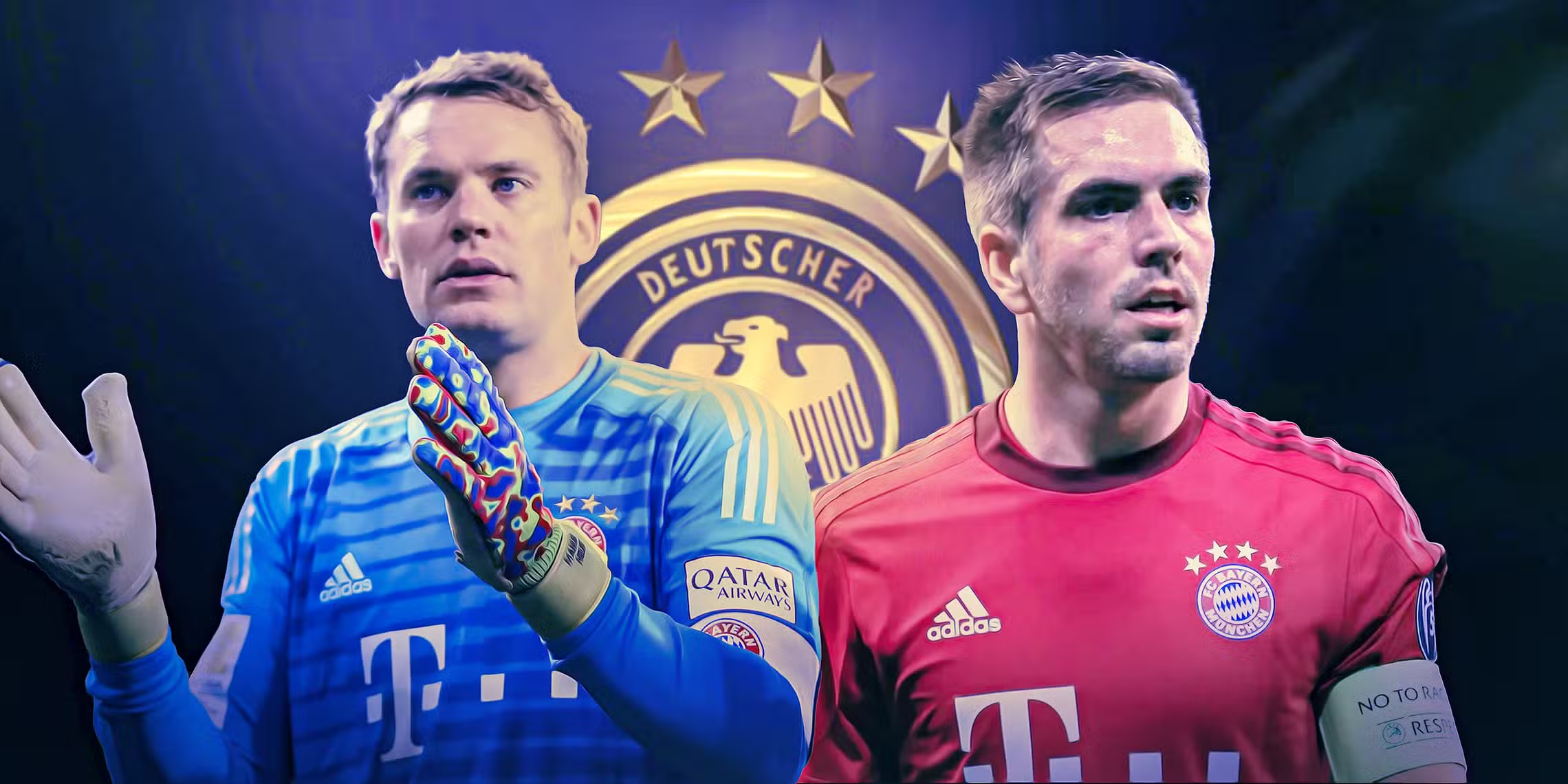
In brief
Lothar Matthaus, Gerd Muller, and Franz Beckenbauer are some of the best football players in German history.
As a player and manager, Beckenbauer won the World Cup and was a defensive prodigy.
Toni Kroos played his final game for Germany at Euro 2024 after a trophy-filled playing career at Real Madrid and Bayern Munich.
With football legends from every age bursting from Die Mannschaft’s ears, Germany is among the most successful countries in football history. Even though the 2024 crop has been comparatively lacklustre, it always looks that Germany, a talented country, will soon win another championship on the largest stage in sports.
After winning the World Cup four times already, Julian Nagelsmann will try to increase that number at FIFA’s 23rd tournament in 2026. After winning their first World Cup in 1954, they went on to win more in 1974, 1990, and 2014, but they haven’t been able to bring home that coveted trophy for ten years.
Over the years, the global powerhouse has produced some of the most striking players in sports, from imposing goalkeepers to vicious finishers to tempo-dictating operators in the engine room. Here is a look at the best players Germany has ever produced, taking into account the following.
Factors that rank
Longevity: Achieving success is one thing, but maintaining it is even more remarkable.
Silverware: A player’s trophy cabinet provides a tangible memento of their accomplishments.
Overall influence: At the club and international levels, the best players have established their dominance.
17–11
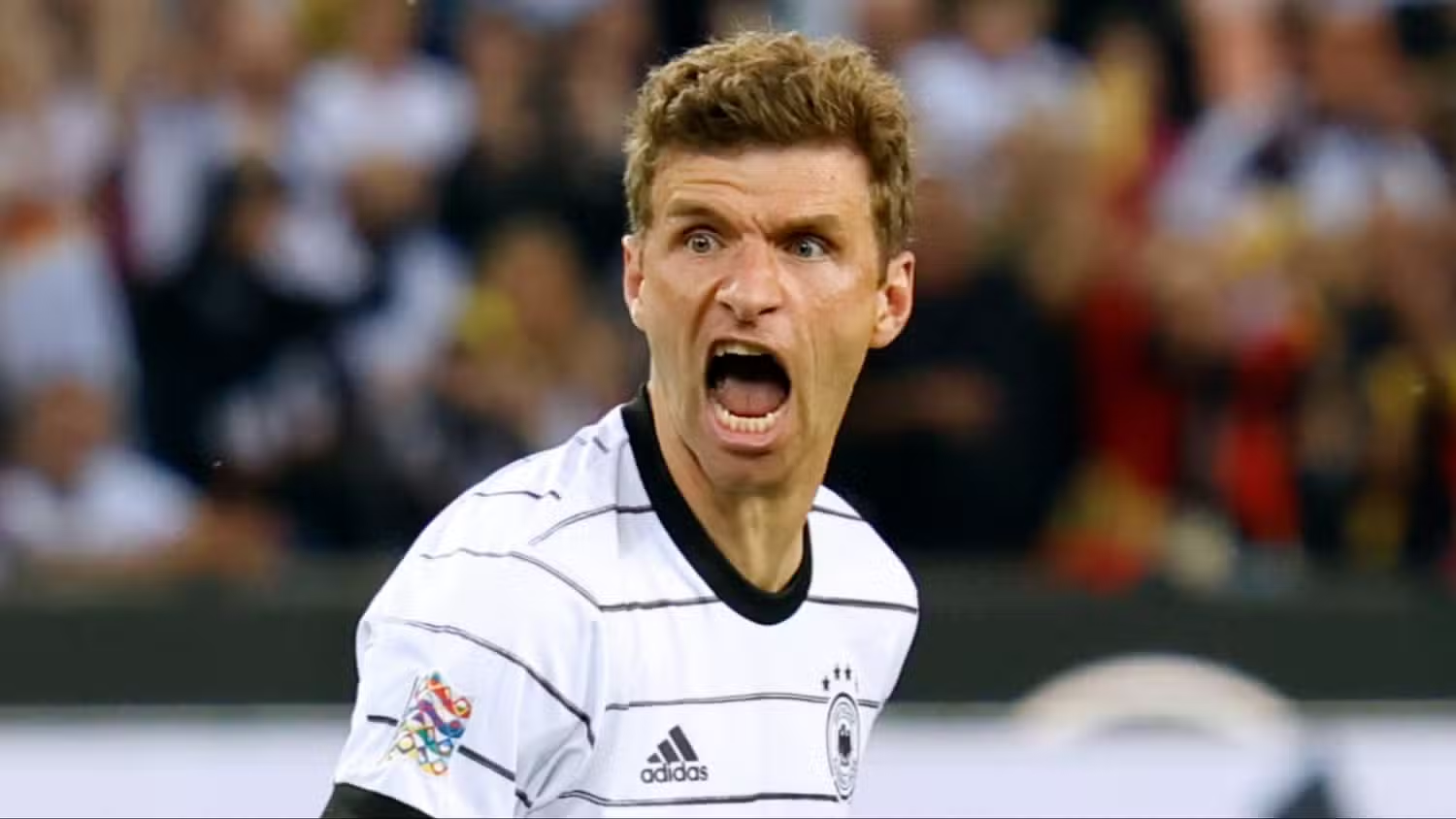
Bastian Schweinsteiger, who spent the majority of his playing career at Bayern Munich, is ranked 17th. The former World Cup champion, who made 670 appearances for his country during his career, was a major contributor to its success on the international front.
It’s safe to say that Uwe Seeler was the big man of German football in the 1960s, winning three German Footballer of the Year awards in 1960, 1964, and 1970. He was scoring a tonne of goals before it was hip and fashionable.
Even if Gunter Netzer’s brilliant talent was obscured by time, the graceful playmaker was always keenly conscious of his high calibre. In the 1970s, Netzer was the creative centre of Borussia Monchengladbach, the dominant Bundesliga team at the time and the German equivalent of Johan Cruyff.
As the finest players in their country’s history, Mesut Ozil, Matthias Sammer, the winner of the Ballon d’Or, and Thomas Muller are ranked 14th, 13th, and 12th, respectively. The latter is a seasoned player who is still making a living at Bayern Munich. His huge trophy cabinet serves as a testament to his talent. Muller, a 35-year-old Weilhelm native, has spent decades in Munich embodying intelligence and adaptability, and he has come to represent the “Raumdeuter” character.
All Miroslav Klose needed to do was get in. Klose, a goal machine who is admired globally for his unwavering efficiency, leads the World Cup finals in goals scored with 16 goals in 24 games and holds the record for most goals scored in his country with 71.
The greatest German football players in history (17–11)
Rank
The player
Years of Activity
Famous Clubs
17.
Schweinsteiger, Bastian
From 2002 to 2020
Manchester United and Bayern Munich
16.
Seeler, Uwe
1953–1978
Liverpool SV and Cork Celtic FC
15.
Netzer, Gunter
From 1963 to 1977
Real Madrid, Borussia Monchengladbach
14.
Mesut Ozil
From 2005 to 2023
Schalke, Werder Bremen, Arsenal, and Real Madrid
13.
Sammer, Matthias
From 1985 to 1998
Borussia Dortmund, Inter Milan, and VfB Stuttgart
12.
Muller, Thomas
2008 to the present
The Bayern Munich
11.
Klose, Miroslav
From 1997 to 2016
Lazio, Bayern Munich, and Werder Bremen
10 The career span of Karl-Heinz Rummenigge was 1974–1990.
Karl-Heinz Rummenigge, who was under a lot of strain when he first joined the international team, knows that it is not easy to follow in the footsteps of Germany’s long line of renowned strikers. But rather of waning, the 95-cap German, who is currently playing for Bayern Munich, rose to become one of the nation’s most prolific goal scorers.
He scored 45 goals for his country because of his natural knack for scoring goals. Naturally, he has improved since his comeback, but Rummenigge had a certain grace and composure that he possessed from within. He scored nine goals in three World Cup campaigns, including a hat-trick in 1982. But like many others on this list, he was never able to experience World Cup glory, just like Seeler.
9 Oliver Kahn’s Work History: 1987–2008
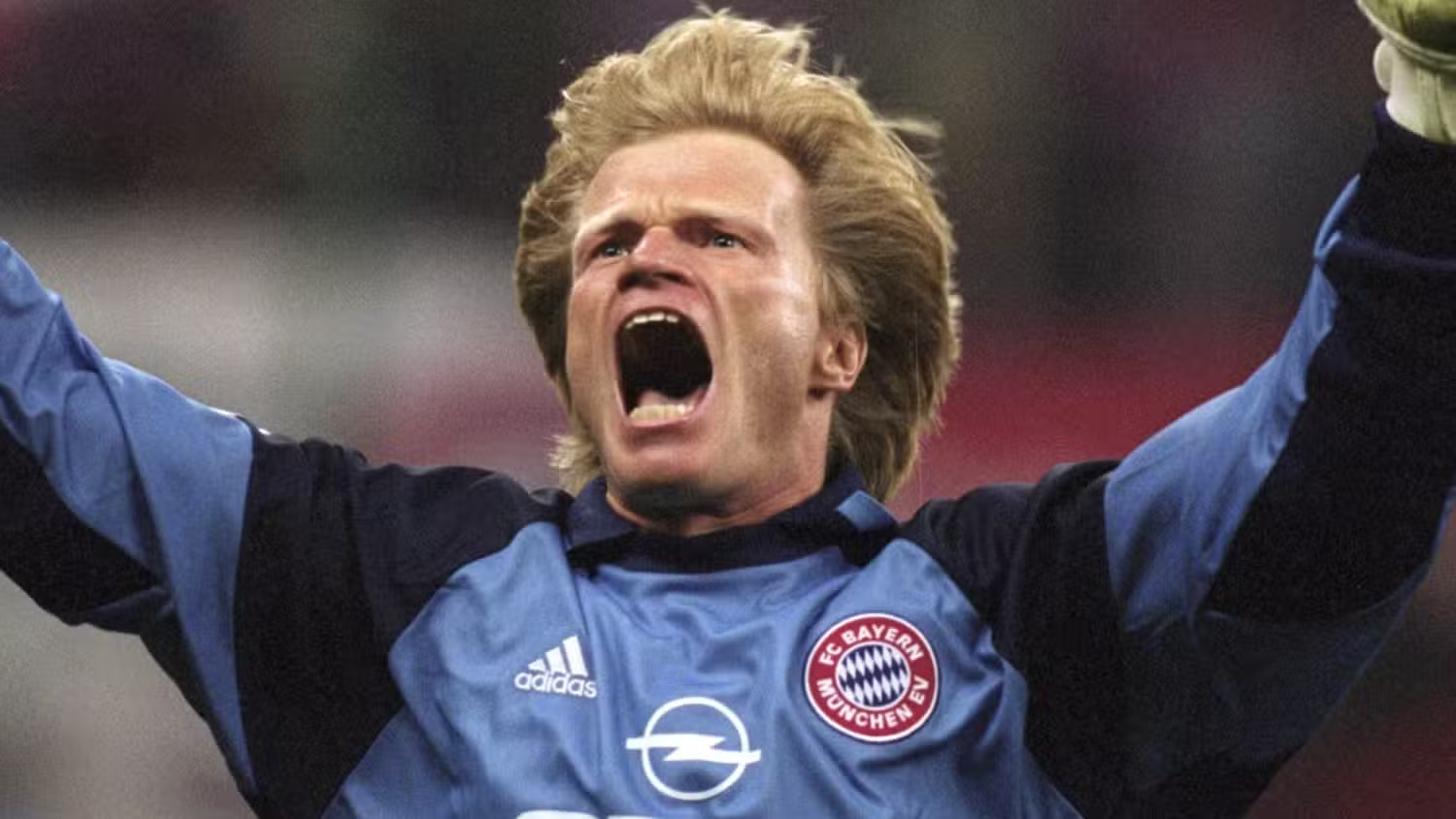
8 Toni Kroos Career Span: 2007–2024 Known as Der Titan for obvious reasons, the Karlsruhe-born Kahn stood imposingly firm between the posts for Bayern Munich over a 632-game period, intimidating even the most formidable of attackers with his imposing frame and unmatched shot-stopping ability. He also won eight Bundesliga titles, six DFB-Pokals, and the lone Champions League for the German powerhouses, all while playing a crucial role in his country’s Euro 96 victory and their run to the World Cup final six years later, where they finished as runners-up.
8Toni Kroos
Career Span: 2007 – 2024
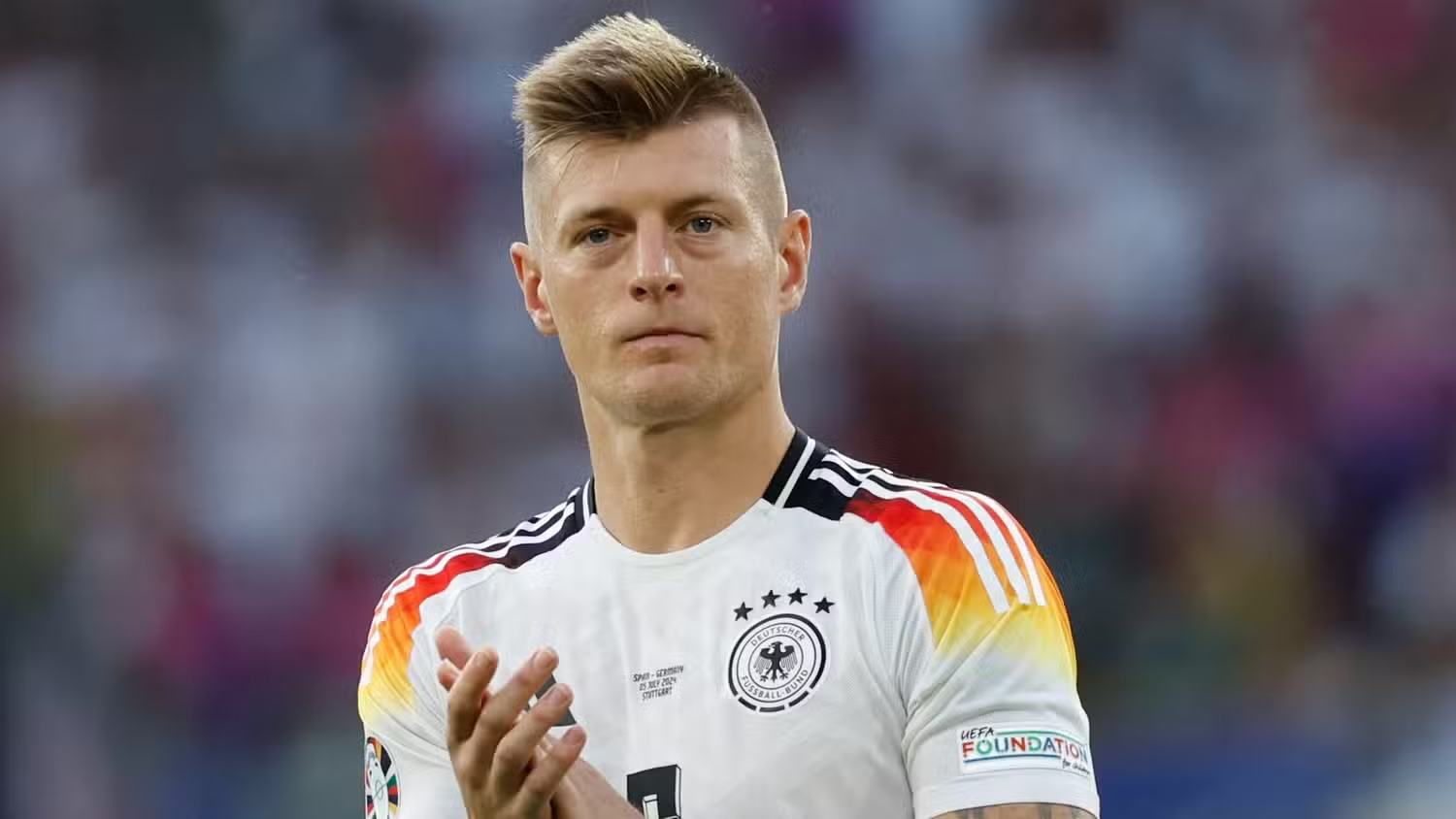
Toni Kroos lacked the swagger of the World Cup-winning Real Madrid Galactico, who had the unrestrained talent to match his ranking as one of the best players in the Champions League since 2003. To be honest, Kroos’ boots required extra care when he defied his sponsors to wear the same white pair for the final 11 seasons of his playing career. He also claimed that the German technician was the only Madrid player to polish his own boots every day.
Even Johan Cruyff, the most famous Dutch football player in history, praised Kroos as “nearly perfect” despite his notoriously difficult personality. Almost. The larger football community was astonished when the former Bayern Munich midfielder announced his retirement when it was appropriate for him. He always played the game at his own pace. Even while his legacy is safe, he may not have died the way he had hoped when Germany was eliminated from the Euro 2024 quarterfinals.
7Manuel Neuer
Career Span: 2005 – Present
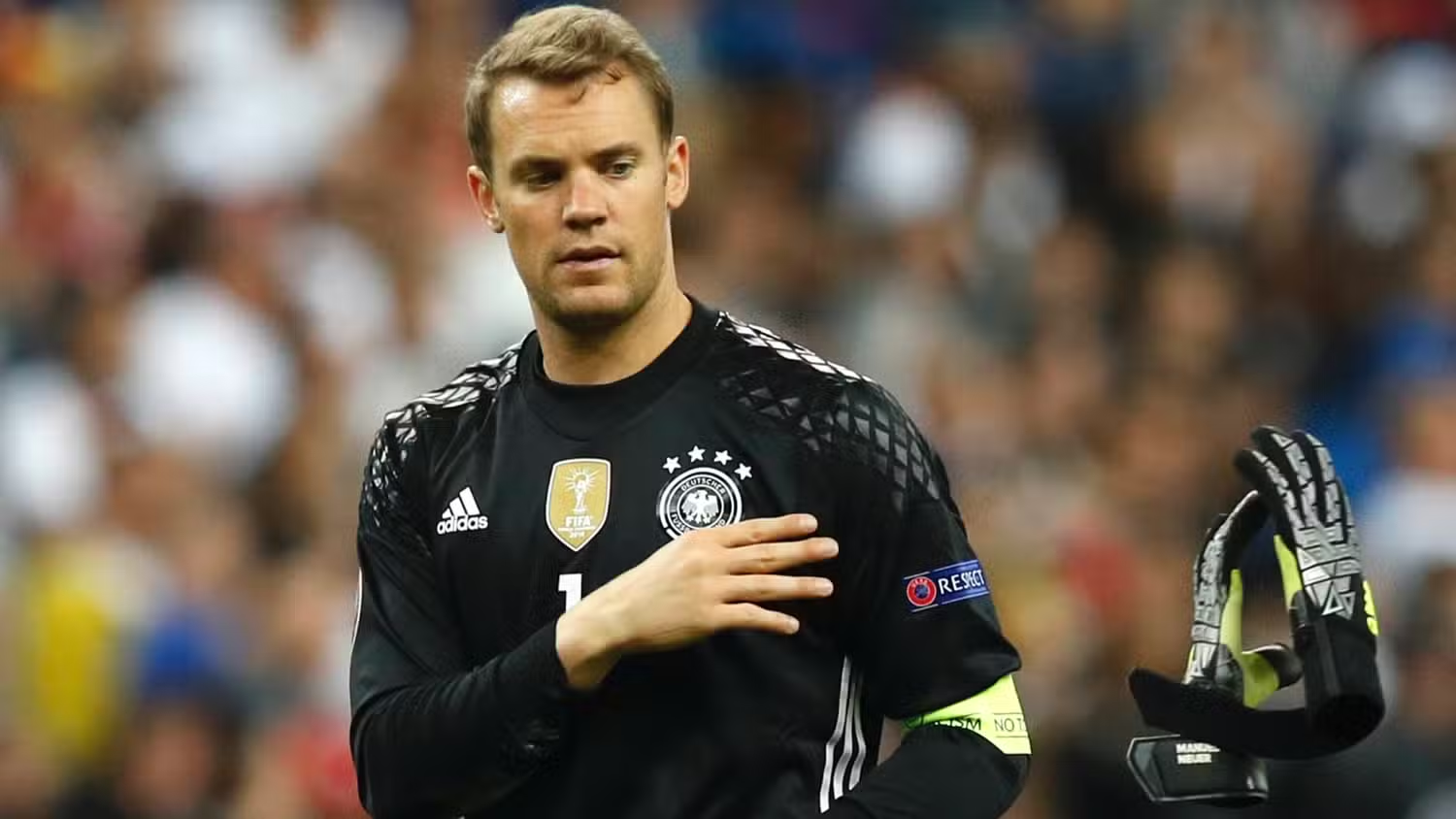
Manuel Neuer is still going strong in his late 30s and, surprisingly, isn’t showing any signs of slowing down. He is not just a fantastic goalie but also a very skilled player with the ball at his feet. Naturally, goalkeepers tend to stay on the field for a little while longer, but it takes a unique kind of skill to remain this good at such a young age.
Nobody could match his exploits at the height of his abilities, particularly given his involvement in the sweeper-keeper role. Naturally, Neuer, the highest-paid goalie in football, was not the creator but rather a master of the game who went on to become a pioneer. He is without a doubt one of Die Mannschaft’s all-time greats, but his international career ended following Germany’s elimination from Euro 2024.
6 Fritz Walter Work History: 1937–1959
The fact that Fritz Walter led (West) Germany to their first World Cup victory in 1954 while wearing the armband around his bicep is enough to make him one of the nation’s greatest, isn’t it? The attacking midfielder demonstrated his ability with 33 goals in 61 international appearances, frequently picking up gaps behind the target man.
Walter was born in Kaiserslautern, and the only team he earned his stripes for was his childhood and local club, where he scored an incredible 357 goals in 364 games. The prize, which is given to the best young football players in all of Germany, is now named after the beloved German.
5 The career span of Sepp Maier was 1962–1980.
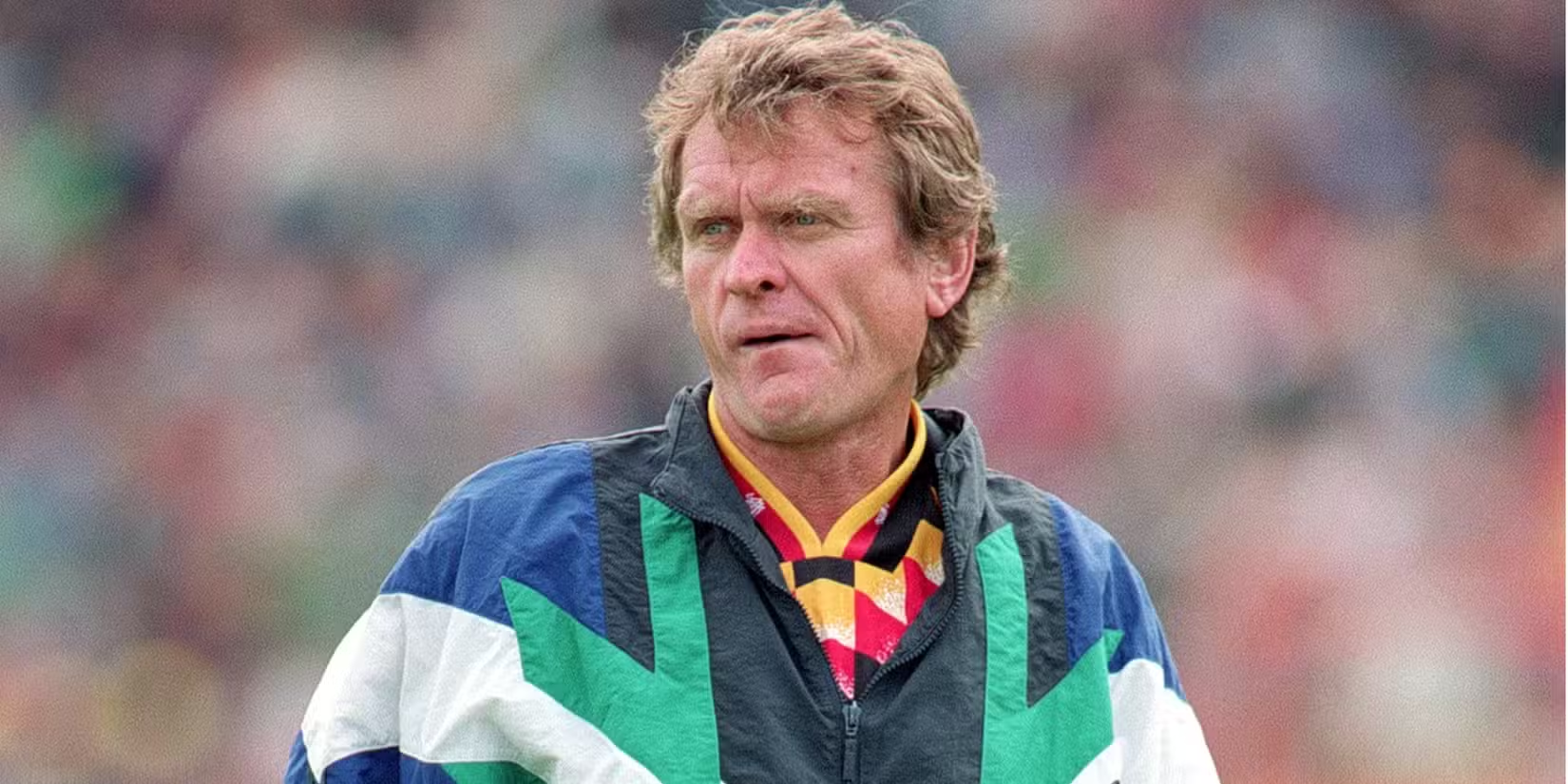
Although Manuel Neuer and Oliver Kahn are both well-known names in the football world, Sepp Maier was the first to jump on the German goalkeeping talent conveyor belt. He set the bar extremely high for the two goalkeepers in question, which is why he is known as “The Cat.”
As evidence of his genius, Maier, a one-club guy with Bayern Munich, earned the German Footballer of the Year award three times throughout his 18-year career in goal with the German powerhouses. He was regarded as one of the greatest goalkeepers of all time and recorded four clean sheets when West Germany won the World Cup in 1974.
4 The career span of Philipp Lahm: 2002–2017
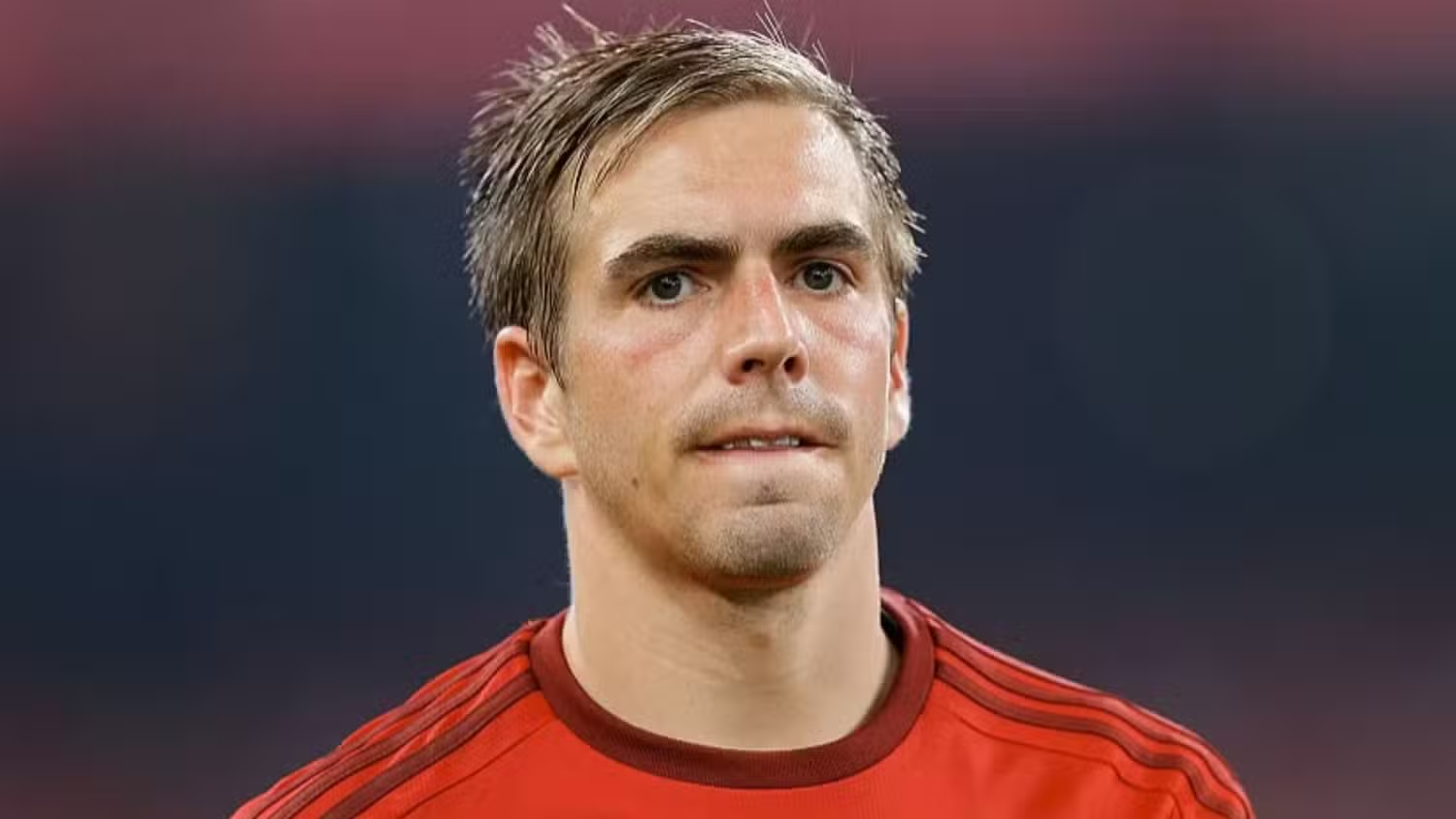
Philipp Lahm, regarded as one of the most adaptable football players in history, was the ideal professional. Despite his small stature, Lahm’s career was greatly enhanced by the fact that he had a lion’s heart. Throughout his long career, the versatile giant was a reliable full-back. Under Pep Guardiola, he successfully moved to midfield at Bayern Munich.
However, Lahm’s toolkit did not stop there. Lahm was the ideal utility man for any manager he played for since he could play in any position on the pitch if required. playing 113 games for Germany while amassing 652 domestic appearances during periods with VfB Stuttgart and Bayern Munich.
3Lothar Matthaus
Career Span: 1978 – 2001
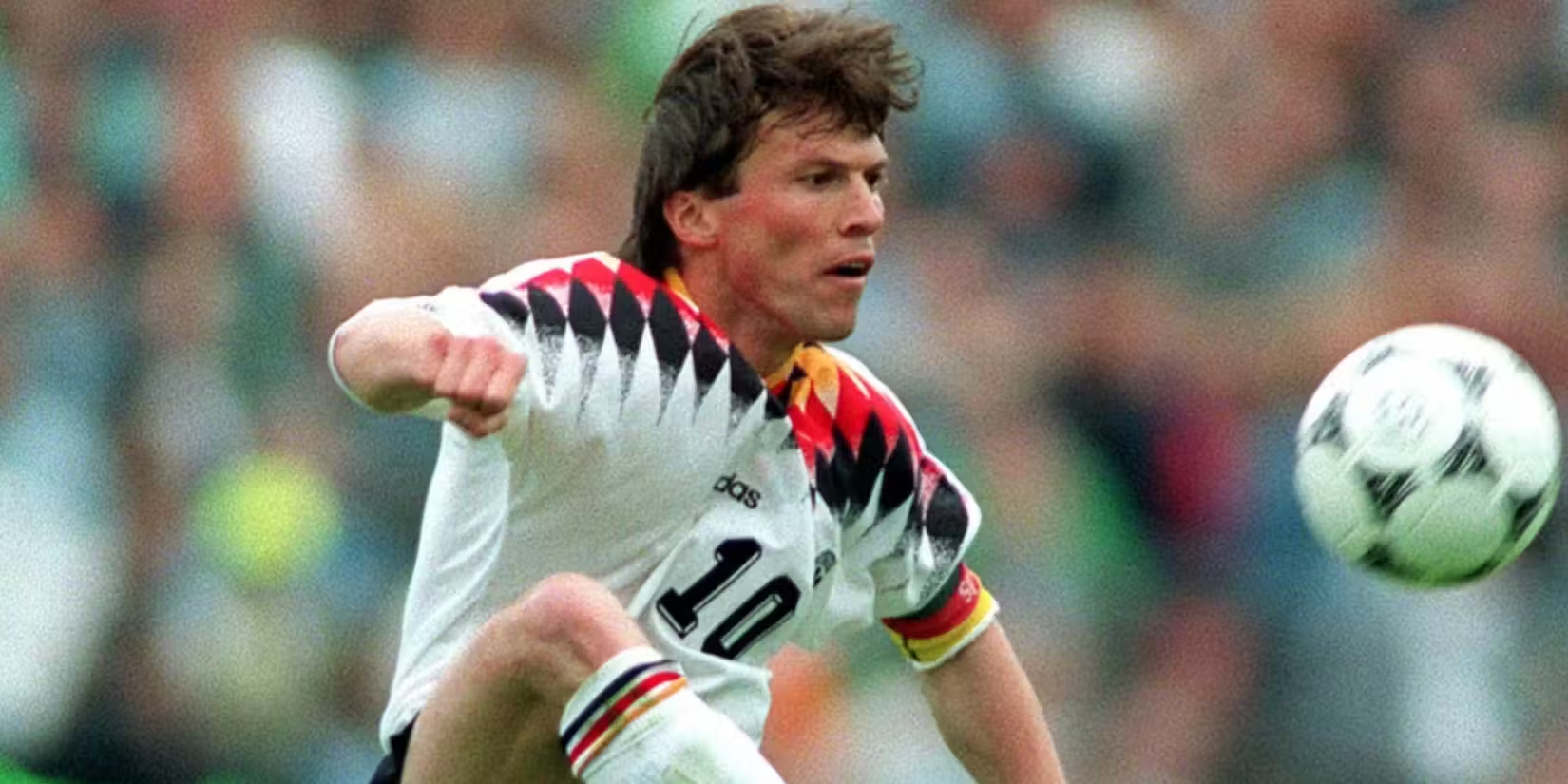
With 150 games, Lothar Matthaus, who retired in 2000, is still Germany’s most-capped player ever, which is a monument to the star’s skill in the midfield. Matthaus scored more than 200 goals during his career and generally exemplified the box-to-box midfielder’s craftsmanship.
He is regarded as one of the best central midfielders in contemporary history, having won the Ballon d’Or in 1990, the World Cup the same year, and numerous titles with Bayern Munich. And to be honest, he is deserving of all the praise he receives because he established himself as a mainstay in the Bavaria engine room for many years and then supplied plenty of cutlery. Well done, Lothar.
2 Gerd Muller Work History: 1963–1982
Gerd Muller, the epitome of lethal edge, is regarded as the best goal scorer in World Cup history. The German just scored ridiculously many goals, which is what he was paid to do far better than anybody else. Although it is noteworthy that he has scored 68 goals for his country in 62 games, his domestic free-scoring prowess far outweighs that total. Yes, he was a machine that just worked with statistics.
Muller helped himself to an incredible 563 goals between 1964 and 1979, earning him the title of Bayern Munich’s all-time goalscorer. Most people believe that this record may never be surpassed. Muller, known as the “Der Bomber” because of his strength, speed, and power, is regarded as the best goal scorer in German football history.
1 The career span of Franz Beckenbauer was 1964–1983.
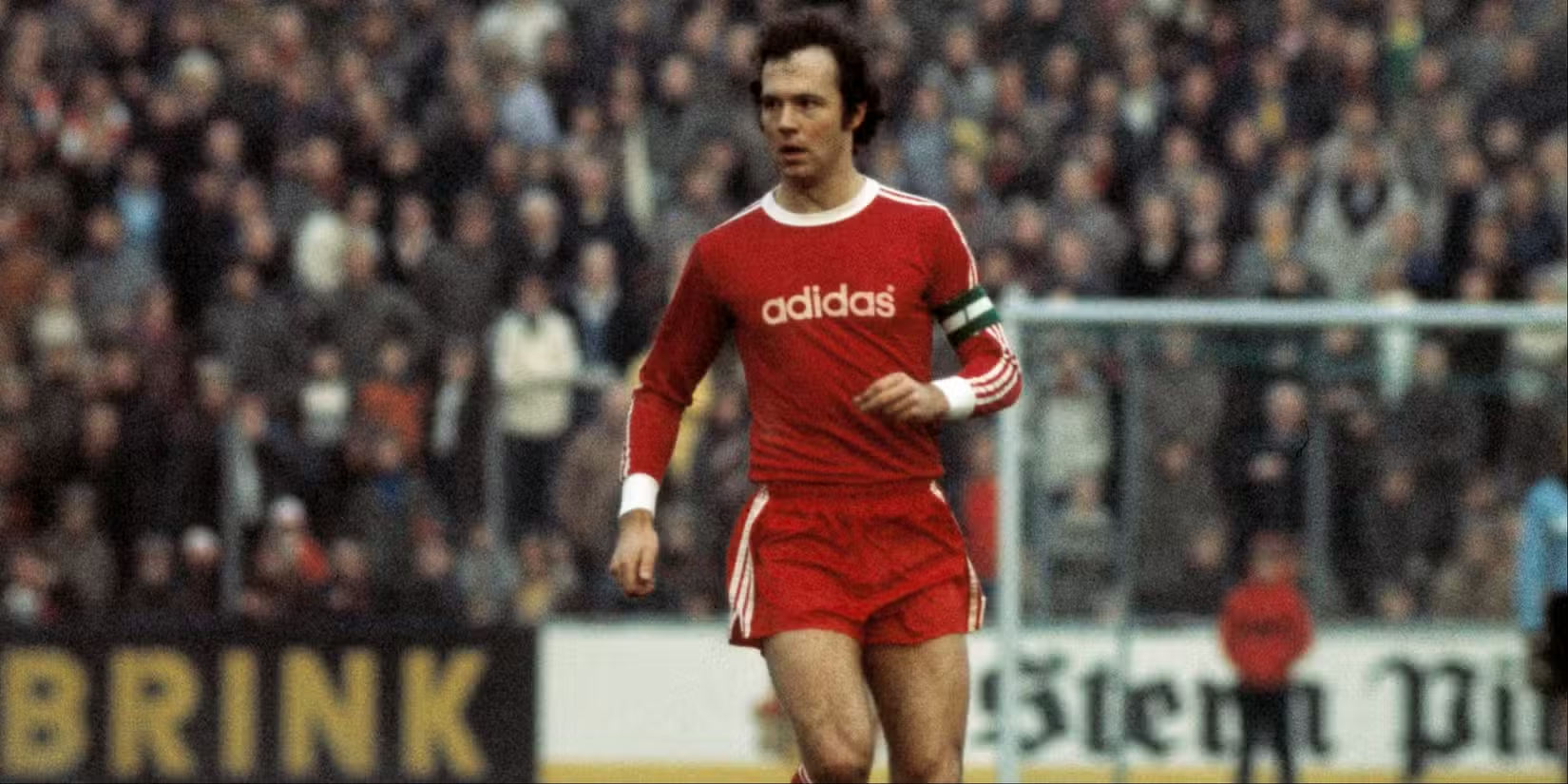
Without a doubt the best option. ‘Der Kaiser’, as Franz Beckenbauer was more lovingly called, was a defensive genius. The center-half, who is credited with creating the “libero” position, was frequently entrusted with directing play between the defence and the goalkeeper, and he was an expert at it.
It is not common for a manager and player to win the World Cup simultaneously, but Beckenbauer did just that in 1972 and 1976. He also added a Ballon d’Or gong to his trophy cabinet on two separate occasions. With three Champions League medals under his belt, he was regarded as a staple for Bayern Munich overall during some of its most notable periods. A real football legend.
xz