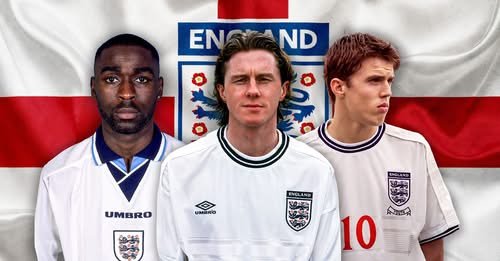
With the England national team, subjectivity, balance, and squad-building are always present.
It goes beyond just enumerating the top 25 English football players at a given moment in time. Three Lions supporters are occasionally perplexed by who is or is not chosen in the most recent team because tactics, style of play, attitude, form, fitness, and long-term potential are all important considerations.
Such instances may be found in Thomas Tuchel’s first England team, where his selections of Marcus Rashford and Jordan Henderson caused some controversy. Three Lions managers have also consistently been accused of favouritism and big-club bias.
In light of this, we have examined five England players who ought to have been awarded more international caps as well as five who were overawarded.
Matt Le Tissier Only Has Eight Caps

Without a question, one of the most naturally talented football players England has ever produced is Matt Le Tissier. The former Southampton forward was even named as one of the legendary boss Pep Guardiola’s childhood heroes.
Although Le Tissier produced moments of incredible individual skill during Match of the Day’s 90-second roundups, he was both a luxury and a liability from a tactical standpoint. Perhaps it makes sense why Bobby Robson, Graham Taylor, Terry Venables, and Glenn Hoddle were all hesitant to call upon Le Tiss during his prime because he never left Southampton and never put himself up against the best players in the world in European competitions.
However, eight caps is a pitiful number for a player who played in the first division of English football for seven seasons with double figures, three of which were in the 20s, from 1989 to 1998.
Steve McManaman Only Has 37 Caps, Too Few
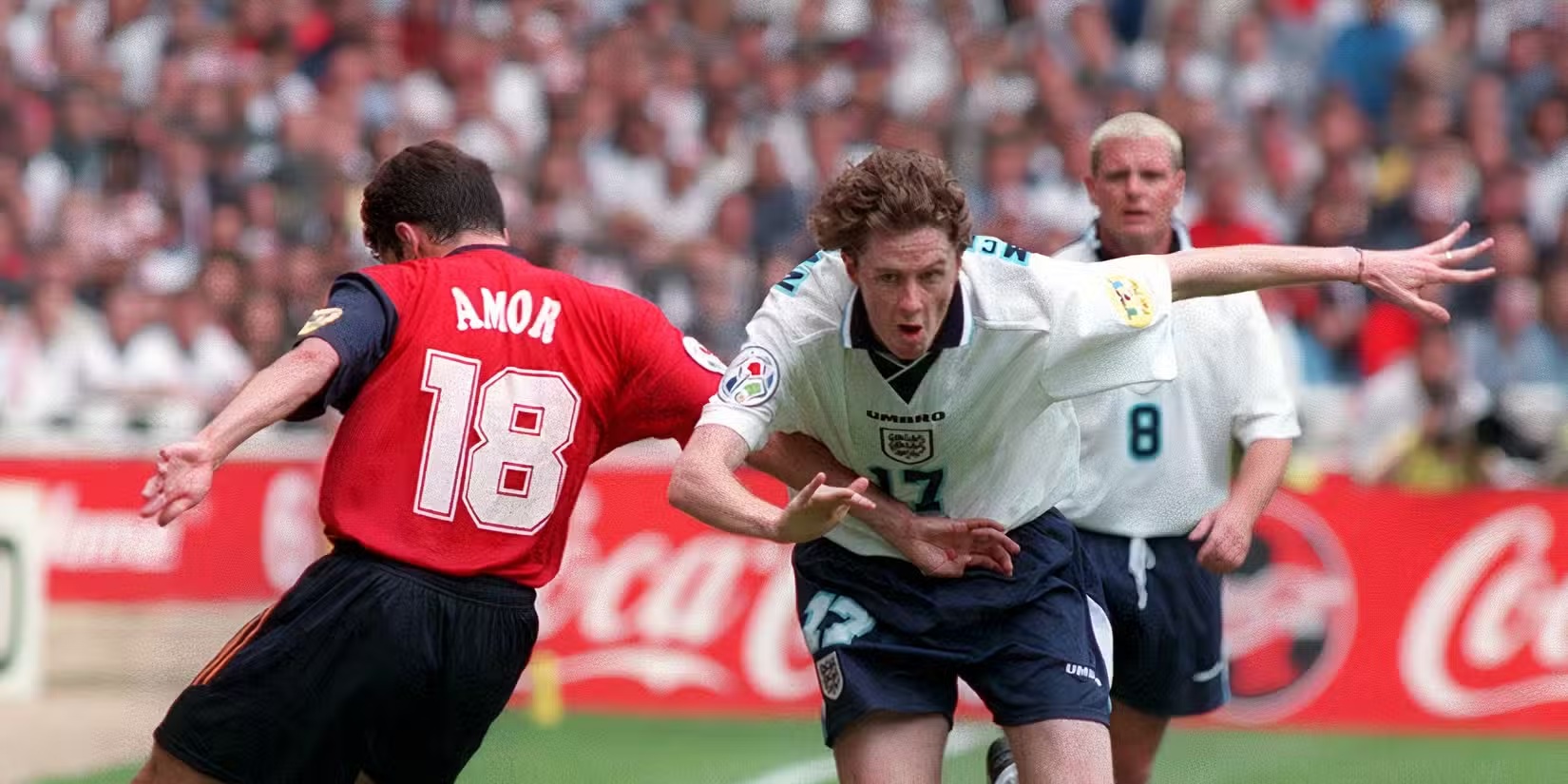
After establishing himself as one of the Premier League’s top players at Liverpool in the 1990s, Steve McManaman was initially highly favoured within the England fold, making the Team of the Tournament for Euro 1996 and being nominated for Best Player.
However, the Scouse wideman did not agree with Glenn Hoddle, Terry Venables’ replacement, who used strange and unusual training techniques, including as the much-maligned ‘faith healer’ Eileen Drewery. It seems that Macca and his close pal Robbie Fowler were shunned because they didn’t agree with Hoddle’s strategy.
As a result, during Hoddle’s time, McManaman’s caps dried up. Kevin Keegan gave him a little reprieve, but the now-Real Madrid star’s England career ended abruptly when Sven Goran-Eriksson took over. Even though he made 13 games in the Champions League and won a second title with Real Madrid at the end of the 2001–02 season, Sven left a message on McManaman’s answer phone informing him that he would not be included in England’s 2002 World Cup squad.
It’s difficult to find a player for any nation who has won numerous Champions League titles yet has so few caps, but McManaman paid a heavy price for his icy ties with England management.
Only 15 Caps for Andy Cole
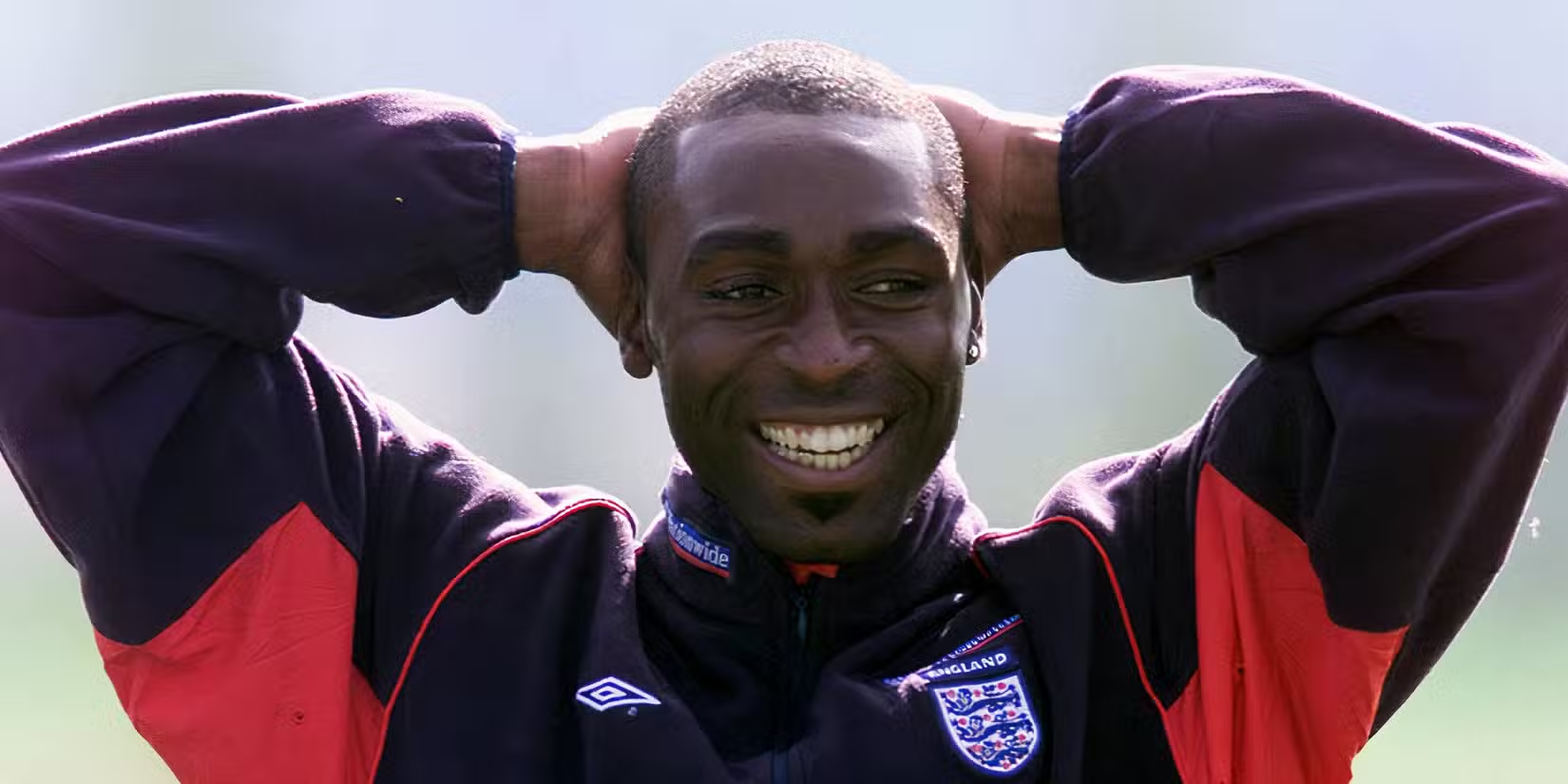
It is regrettable that Andy Cole’s prime years coincided with competition for spots in the England squad from Alan Shearer, Teddy Sheringham, Ian Wright, Les Ferdinand, Robbie Fowler, Michael Owen, and Emile Heskey. Additionally, Cole only scored once while playing for the Three Lions in a routine 3-1 victory over Albania, wasting the opportunities he did have.
Cole’s position in the England lineup, however, was unrelated to his performance at the club level. Before being surpassed by Wayne Rooney and Harry Kane, he was the main goal scorer for Manchester United and, for a long time, the second-highest scorer in Premier League history.
Despite Cole scoring 25 goals for United that season, Glenn Hoddle publicly justified his exclusion from England’s 1998 World Cup squad by asserting that he needed six or seven scoring opportunities.
Even though Cole scored at least nine goals for five different clubs in twelve different Premier League seasons, that seems to be a constant criticism of him throughout his career.
Carrick, Michael
34 caps is too few.
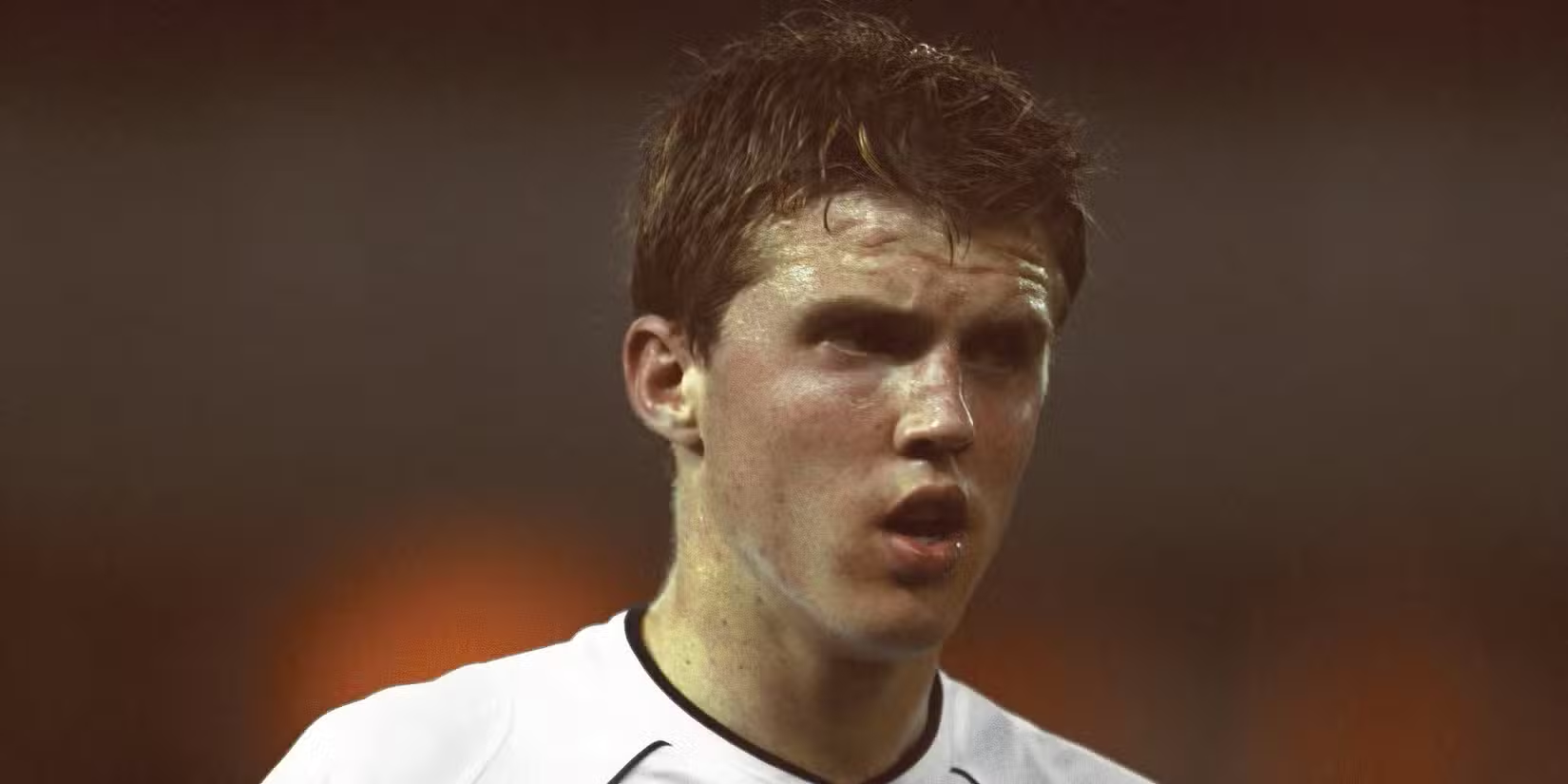
The ongoing undervaluation of Michael Carrick is a superb example of the tactical and technical incompetence that often cost England’s Golden Generation in important international competitions. In theory, this person would be the ideal anchor-man for Steven Gerrard and Frank Lampard, who would both be free to play as tandem No. 8s since he could recycle possession, pull strings in midfield, and initiate assaults with beautiful long-range passing.
Rather than putting one of the Liverpool or Chelsea stars out on the left wing, England coaches kept turning to Gareth Barry or Owen Hargreaves, two much less cultured but more aggressive midfielders, to try to resolve the Gerrard-Lampard dilemma. David Beckham even played deep midfield, sometimes known as the “quarterback” position, for a while.
At Manchester United, Carrick was discreetly collaborating with Paul Scholes, another exceptionally talented and clever midfield player who England frequently exploits. The two won five Premier League titles together, including the 2007–08 Champions League.
Carrick played for England for 15 years, however just four of those years saw him play for the Three Lions more than three times.
Hoddle, Glenn
53 caps is too few.
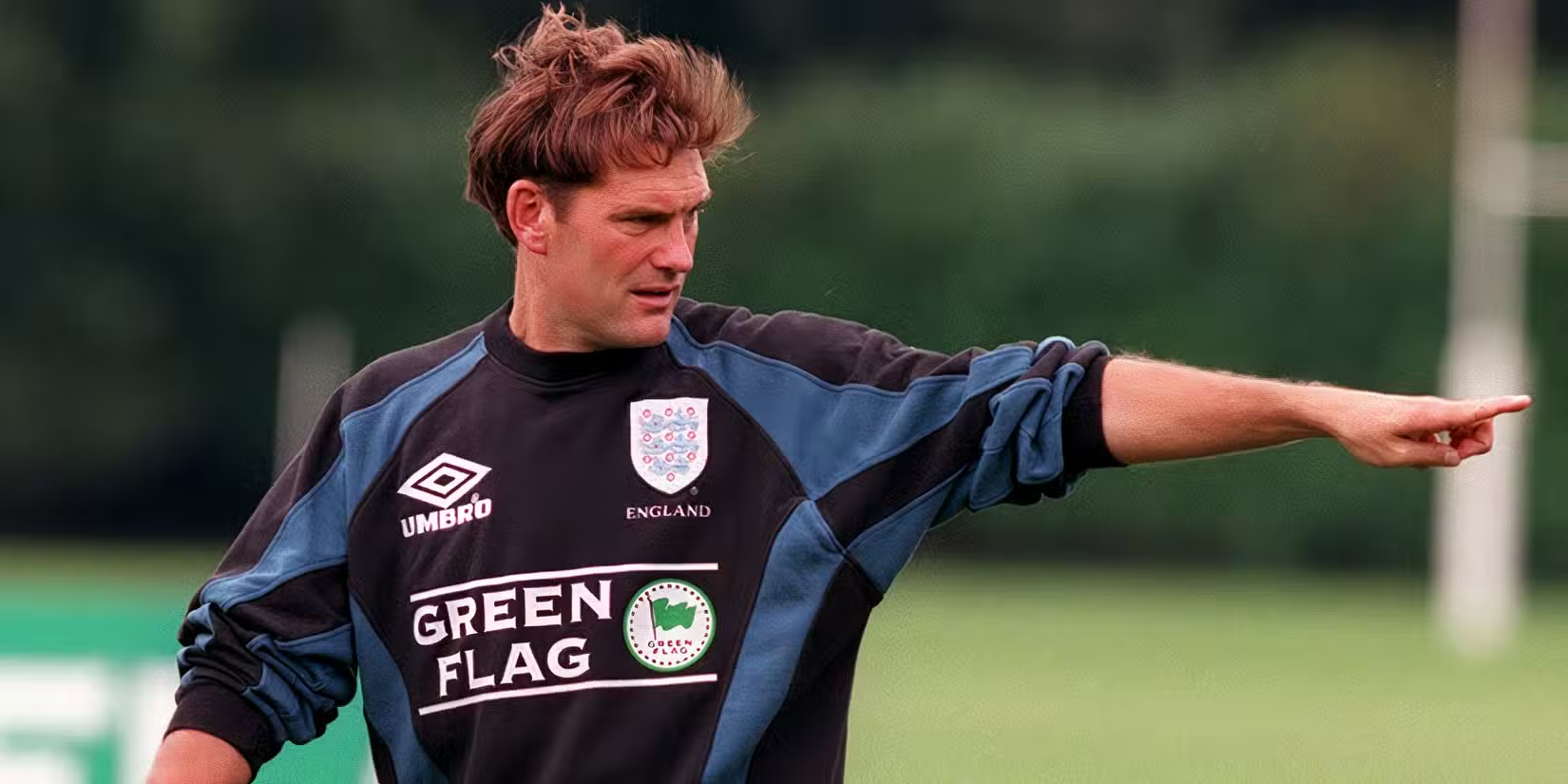
The former England manager never quite gained the recognition he deserved as a Three Lions player, which is ironic given that Glenn Hoddle ignored many of the players already discussed in this piece.
53 caps isn’t bad considering how bad England was in the 1980s and how they didn’t even make it to major tournaments. However, Hoddle was a true class act and one of the world’s most inventive midfielders at the time. Nevertheless, his significance within the England fold was never certain. The year after Hoddle, Bryan Robson, a much more conventional, vivacious, and versatile midfielder, made his England debut and went on to earn 90 caps.
Hoddle was never a good fit for the Three Lions’ 4-4-2 shape and their continued obsession with direct tactics. According to a well-known joke by Michel Platini, “If he had been French, he would have won well over 100 caps and the team would have been built around him.” Sadly, Hoddle, who is without a doubt one of the most naturally talented players in British football, was born in the wrong nation for his style of play.
Matthew Upson: 21 Caps Too Many
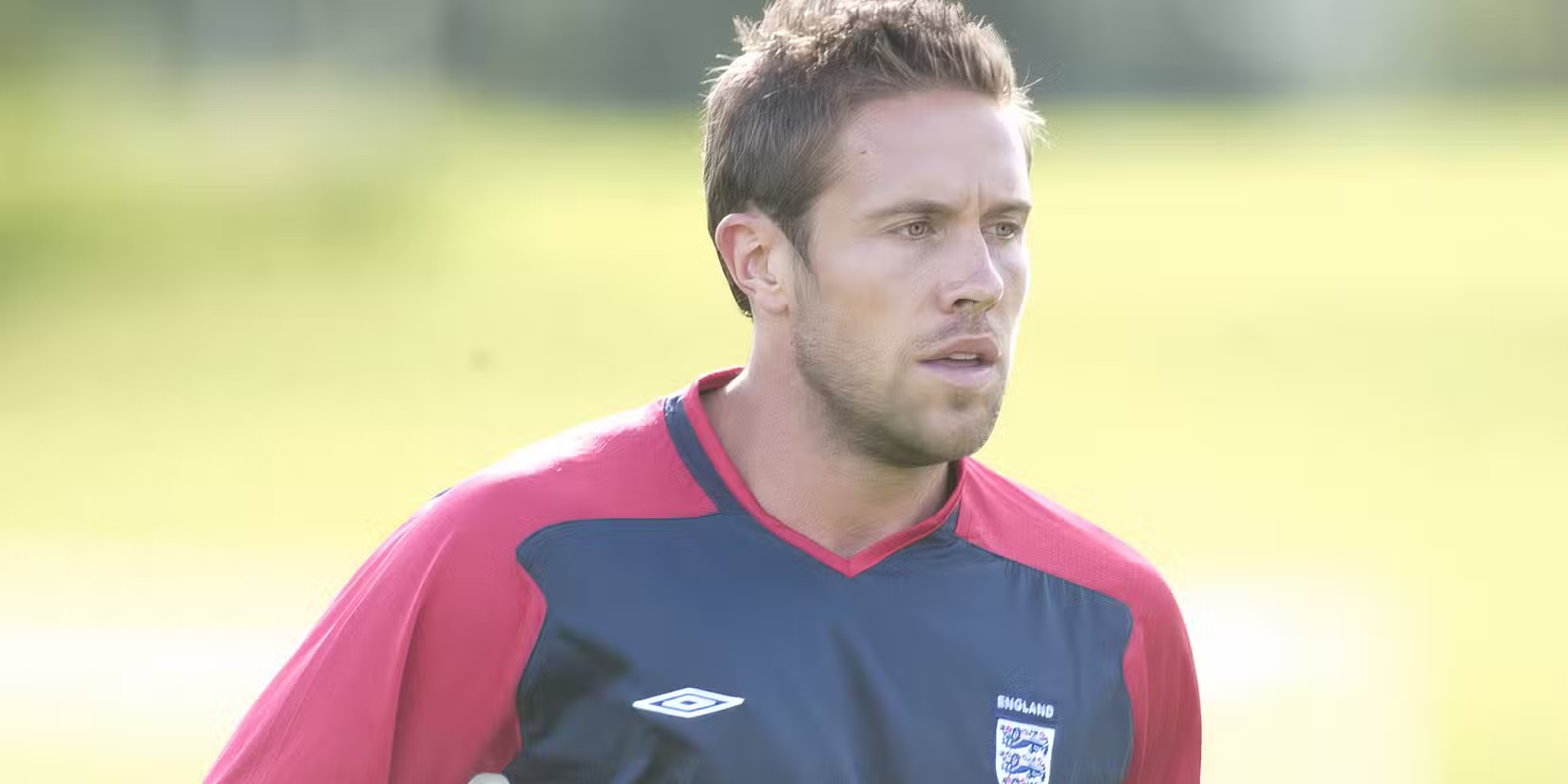
Although 21 caps isn’t a particularly impressive number, it’s incredible that Matthew Upson was awarded so many during a time when England had players like Rio Ferdinand, John Terry, Ledley King, Jonathan Woodgate, Jamie Carragher, and Sol Campbell to pick from.
It’s still puzzling why the West Ham defender became Fabio Capello’s preferred centre-back partner to John Terry during the 2006 World Cup, despite the fact that injuries played a part. This led to a completely terrible 4-1 loss to Germany.
In a match largely remembered for Frank Lampard’s non-goal that helped establish Goal-Line technology, Upson scored England’s lone goal, although he was a complete disaster at the back. Germany’s pacy attack repeatedly turned Terry and Upson, and Upson seemed far out of his depth.
Even players like Michael Dawson (four caps) can feel a little resentful that Capello continually picked Upson over him, despite the fact that the former Arsenal teenager was a good player who was never on par with many of his England peers.
Gareth Barry: 53 Caps Too Many
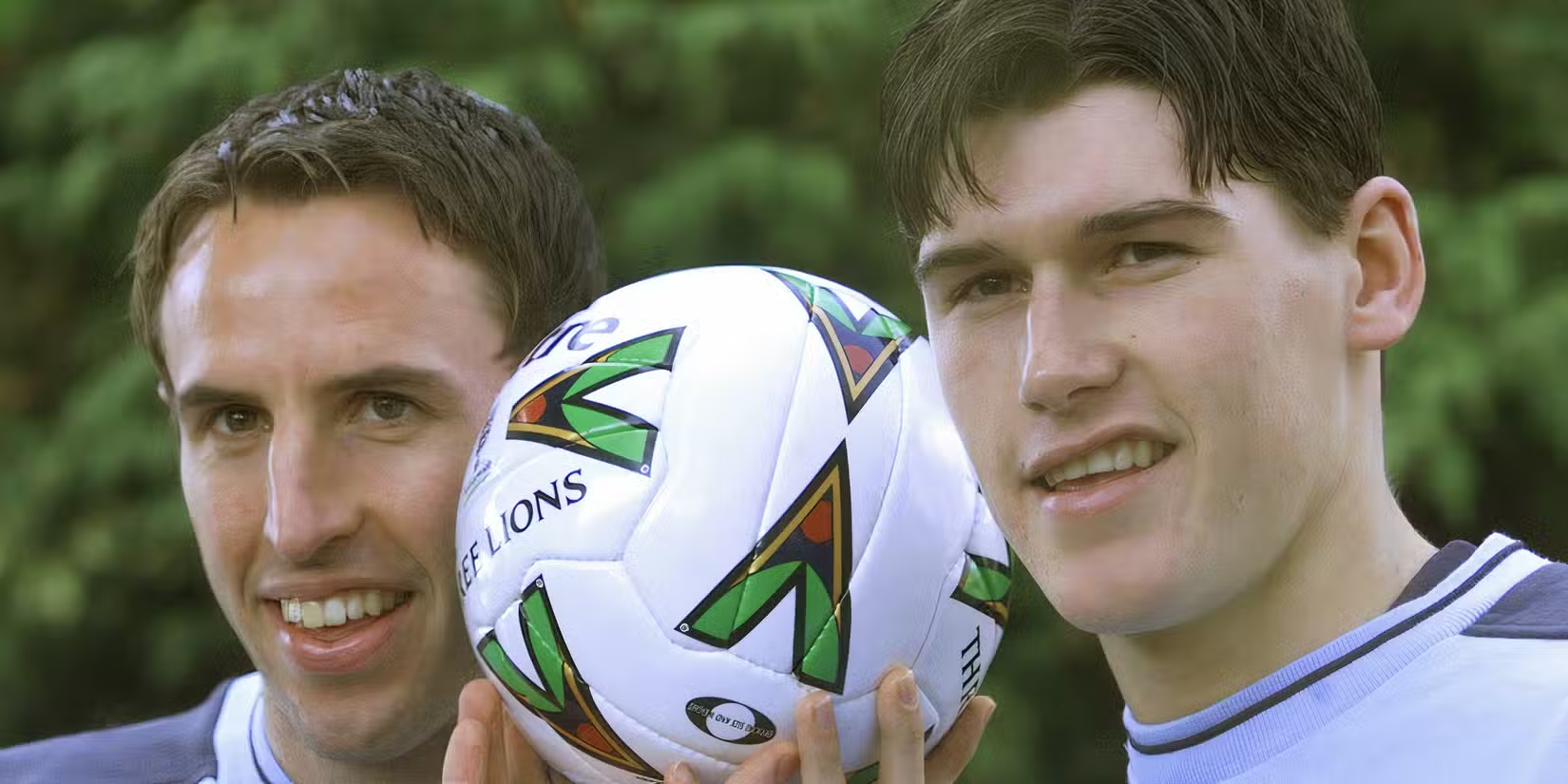
Having the most Premier League appearances of any player in history has its advantages, and Gareth Barry’s England career also benefited from longevity. He made his final game in 2012 after first playing for the Three Lions six times in 2000.
However, between 2008 and 2012, when he only missed six England matches and even captained the team in a 1-1 draw with Ghana, his significance to the national team appeared to be vastly overstated.
Although Barry was a strong and aggressive midfielder, his slowness and lack of ambition when in possession only served to reinforce the perception that England lacked a creative deep midfielder who could help them dominate other teams with the ball, such as Italy’s Andrea Pirlo or Spain’s Sergio Busquets.
England’s closest substitute was Michael Carrick, although Barry was a regular in the starting lineup while the Manchester United midfielder continued to be a fringe member of the national squad. He added to England’s fairly awkward and uncultured playing style and never helped to resolve the Gerrard-Lampard dilemma.
Too Many by Eric Dier: 49 Caps
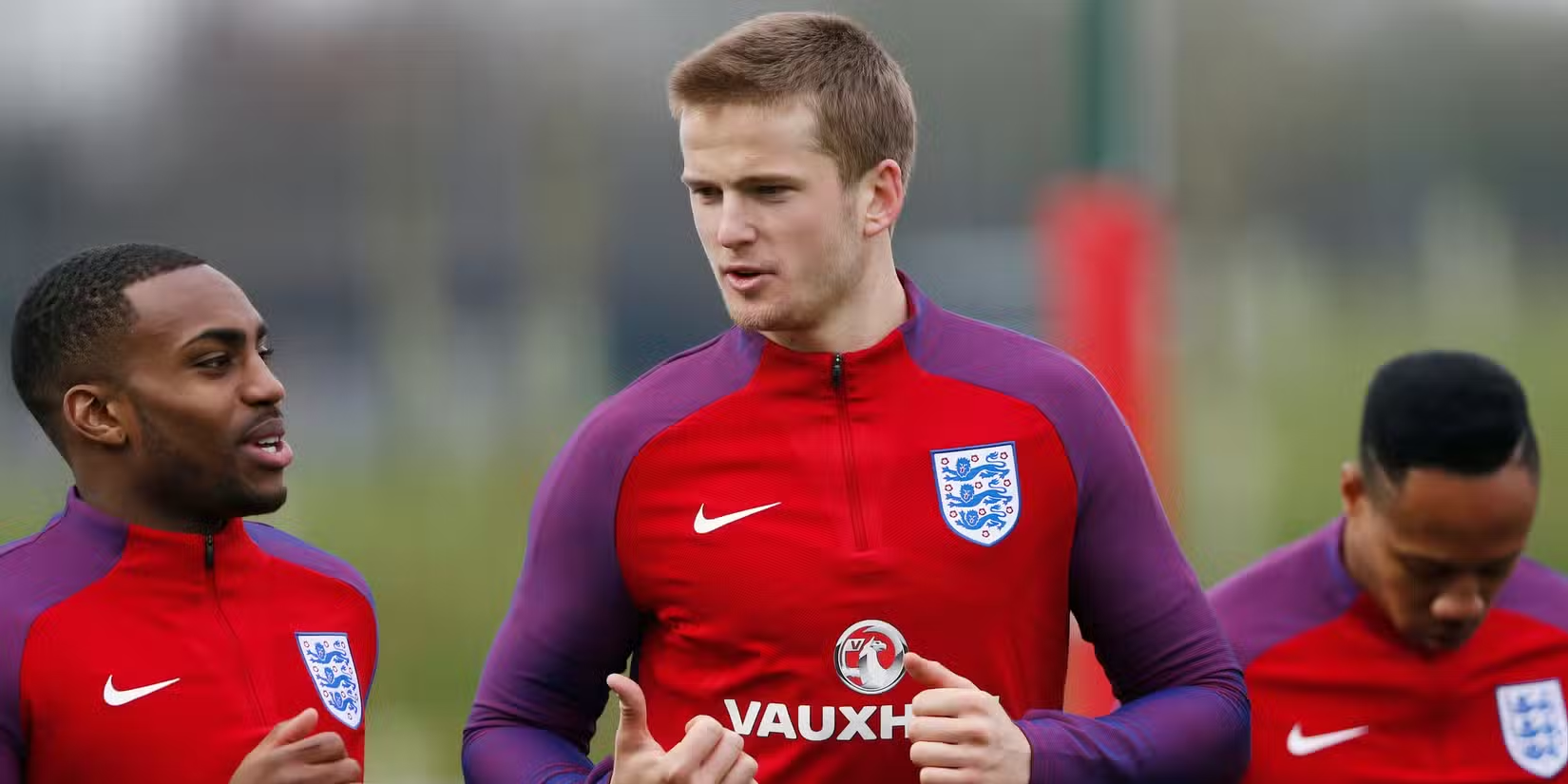
Eric Dier was useful to England, especially to Gareth Southgate, who supported the utility player from Tottenham as a vital member of his team throughout the 2018 World Cup. Dier made Three Lions history during the tournament by ending England’s notorious shoot-out curse by scoring the game-winning penalty against Colombia.
However, Dier was actually involved with the Three Lions much earlier. He had been used by Roy Hodgson in the lead-up to and during Euro 2016, forming the disastrous and woefully unbalanced midfield trio of Dier, Wayne Rooney, and Dele Alli, which began in the heartbreaking loss to Iceland.
Dier, who hasn’t played for the Three Lions since 2022, has already amassed 49 caps and his career isn’t even officially ended at age 31. He was obviously promoted to the first team just for playing for Tottenham at a young age.
Despite never being England’s top center-half or defensive midfielder, Dier has consistently been handed opportunities in such positions. He has even served as England’s captain five times.
Too Many by Emile Heskey: 62 Caps
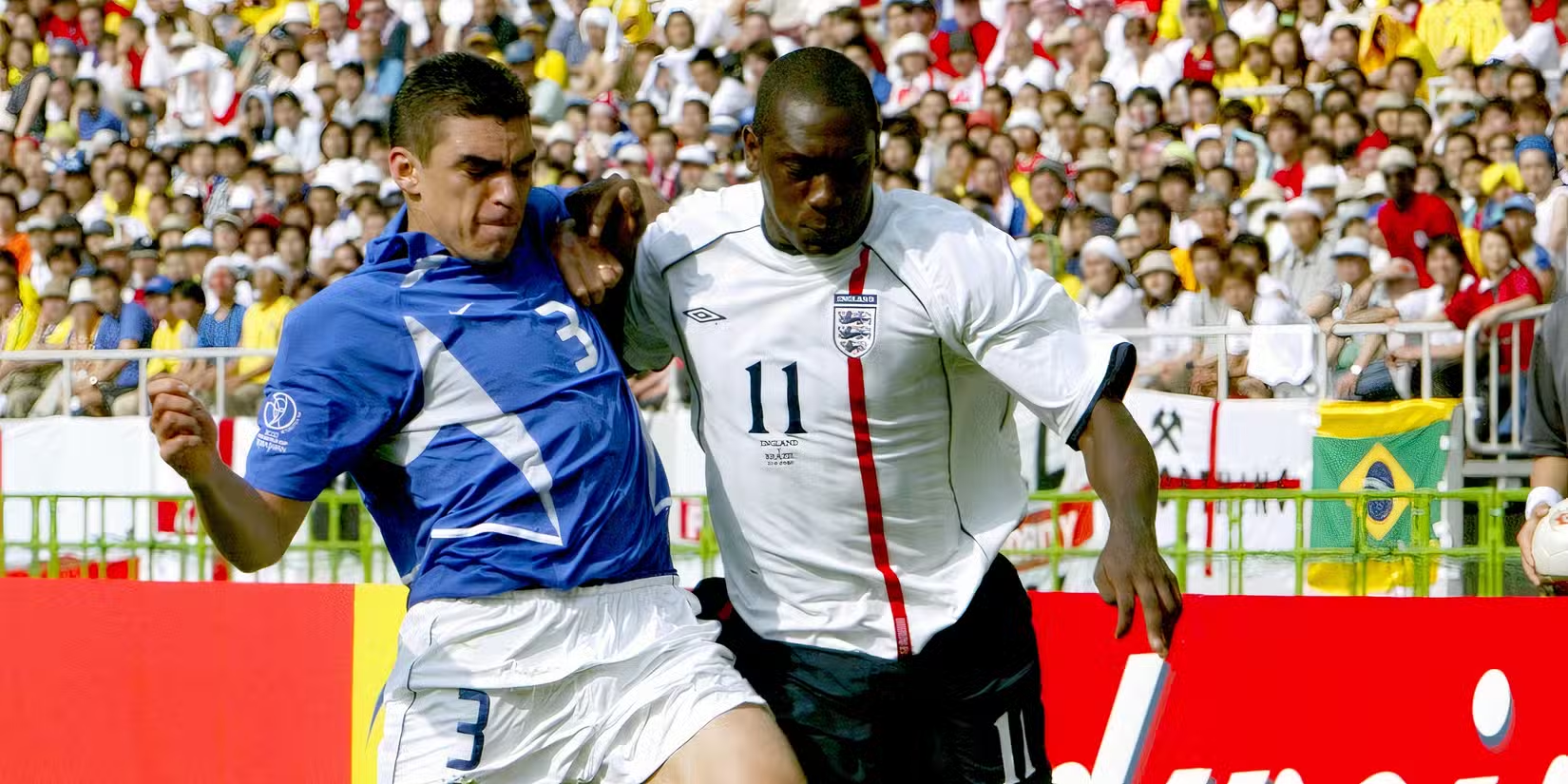
For a while, Emile Heskey was the ideal counterpoint to Michael Owen, who is perhaps the greatest striker in the world. He served a role for the Three Lions. He scored during England’s historic 5-1 thumping of Germany, and his significance ranged from being crucial to merely providing the Three Lions with a helpful backup plan.
However, England’s obsession with Heskey lasted for too long. The target player hadn’t scored ten goals in a season since 2005 and had only managed five goals in the two Premier League seasons before being named in England’s 2010 World Cup squad.
Heskey is among those players who appeared to be given more caps simply because he was already “experienced,” even though his long-term form never truly supported his inclusion in the squad.
He is undoubtedly an underappreciated player who is significantly more significant than his return of only seven goals first indicated. However, Heskey ought to have been a temporary fix rather than a long-term answer for England.
Too Many, Tom Cleverley—13 Caps
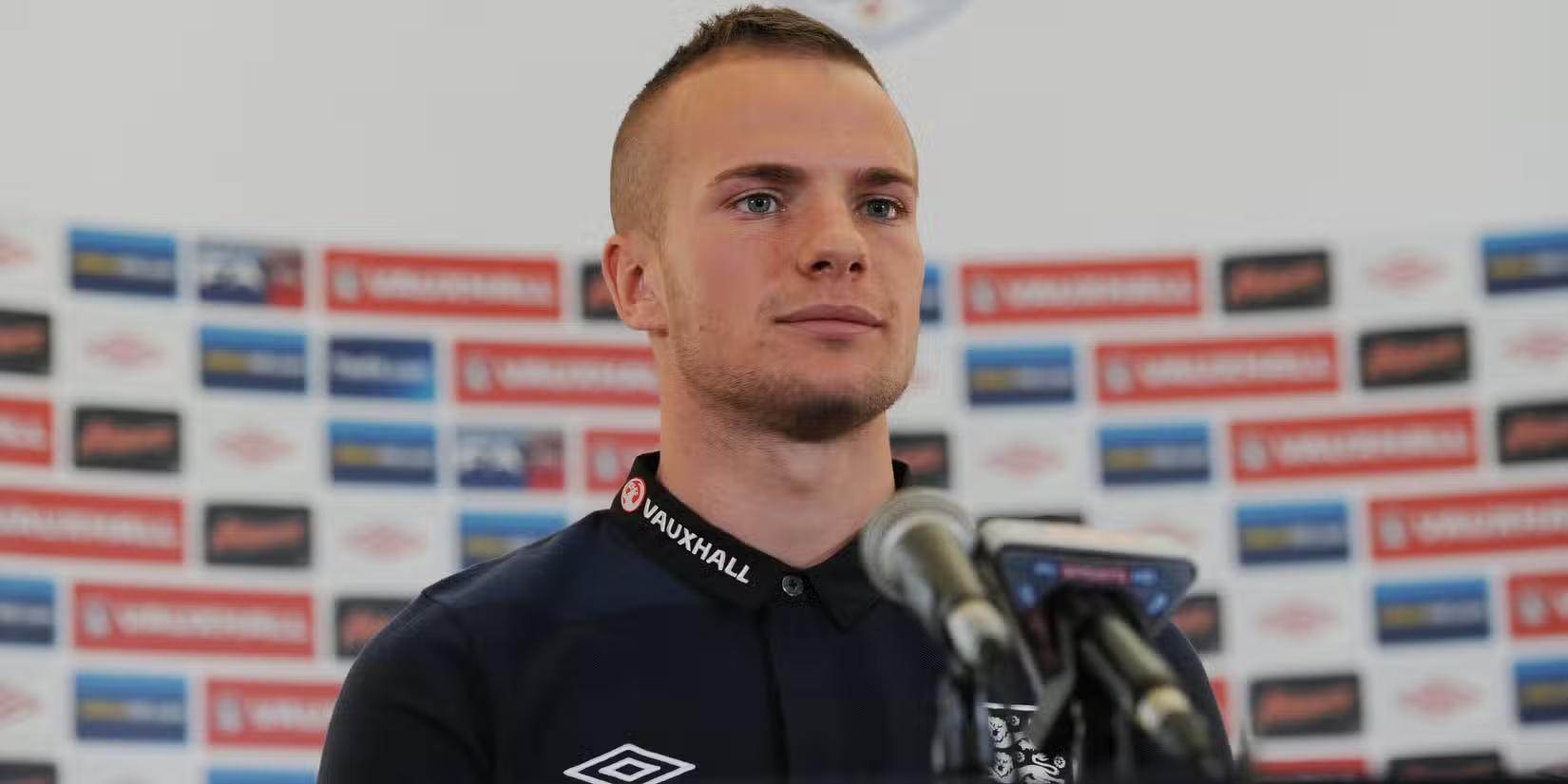
Although 13 caps isn’t much, it’s still out of proportion to the calibre of play Tom Cleverley displayed for the large bulk of his career, including while he was a member of the Three Lions.
The fact that Cleverley made all of his appearances in a two-year period speaks volumes; he was promoted to the England squad after making an impression on Manchester United’s starting lineup and managed to establish himself as the country’s main creative midfielder during World Cup qualifying.
Cleverley made 13 appearances for the Three Lions, including games against Scotland and San Marino, however he never scored and only contributed three assists. Although it wasn’t the worst return, it was an example of supporting a young player too soon; Cleverley suffered at United following the retirement of Sir Alex Ferguson and, more significantly, midfield partner Paul Scholes, before leaving for Aston Villa.
After failing to pull up trees at Villa Park, the midfielder quickly made way for Everton before rejoining Watford, his previous loan team. Despite spending the rest of his career at Vicarage Road, Cleverley was never a sure starter. His brief tenure as a major England player appears particularly strange in retrospect.
xz