In the history of British football, ten teams that are considered to be the most despised have been identified and ranked, with a controversial team occupying the top spot.
Throughout the years, there have been a great number of football clubs that have been regarded as “hated” due to the owners, players, playing style, or level of success of the club.
Taking into consideration the aforementioned factors, Four Four Two selected the teams that were the most reviled throughout the entire history of British football in the year 2023.
Wolves, 1937–1938, number 10
#9: Stoke City, 2009–2010 Season
Stoke became a notorious team as a result of their most powerful weapon while they were under the managerial tutelage of Tony Pulis, a figure who was often criticised for his controversial personality.
Long throws from Rory Delap caused a lot of trouble. Particularly disliked not only due to the fact that the goals it established were so “ugly,” but also due to the “rigamarole that came before each one.”
Delap’s throws were extremely effective, but their approach did not garner many admirers. This was especially true after Ryan Shawcross broke Aaron Ramsey’s leg, who was playing for Arsenal.
Year: 1888/89 – Preston North End, Number 8
Even though Preston was the league champion in the 1888–1889 season, their greatness was tainted by the fact that they were corrupt.
The team, which was primarily comprised of Scots, was enticed by the promise of financial compensation and employment opportunities at a cotton mill where William Sudell, the club’s secretary and manager, was in charge.
The Football Association had previously expelled Preston from the FA Cup for paying players, prior to their success in the league, when the game was still considered to be an amateur game.
As a result of Sudell’s theft of £5,325 (which is equivalent to more than half a million pounds in today’s currency), he was sentenced to prison in the year 1894.
– Arsenal, the year 1919
Despite finishing fifth in Division Two during the 1914–15 season, Arsenal was selected to play in the newly formed First Division, which consisted of 22 teams.
During that time, the chairman of the FA committee, Sir Henry Norris, had secretly negotiated with members of the committee and, according to allegations, had bribed them.
In a vote, the Gunners came out on top, beating Tottenham.
The year 1974-1989, Liverpool
During Liverpool’s period of tremendous success, Bill Shankly, Bob Paisley, Joe Fagan, and Kenny Dalglish presided over the club as managers.
Some of the hard men who played for Liverpool were Ron Yeats, Tommy Smith, Joey Jones, Jimmy Case, Graeme Souness, and Steve McMahon. Liverpool was known for having a team of hard men.
As stated by Four Four Two, “Nor were the fans popular, which resulted in the formation of many of the stereotypes that continue to exist to this day.” As a result of the Heysel disaster, all English clubs were banned from Europe for a period of half a decade, putting an end to the country’s unprecedented hegemony over continental competition (seven European Cups in eight seasons, 1977-1984). The fact that they were celebrating victory so frequently only served to strengthen the hatred that had reached a controversial peak after the Heysel disaster.
Millwall, from 1985 until the present
Tennis at Wimbledon, 1987–1988
Wimbledon’s notorious team, which included players such as Vinnie Jones, John Fashanu, and Lawrie Sanchez, was referred to as the “Crazy Gang during their time at the tournament.
During the process of settling internal scores, they cut the heating and blocked the toilets in the dressing room of the visitors. Additionally, they beat the living daylights out of each other.
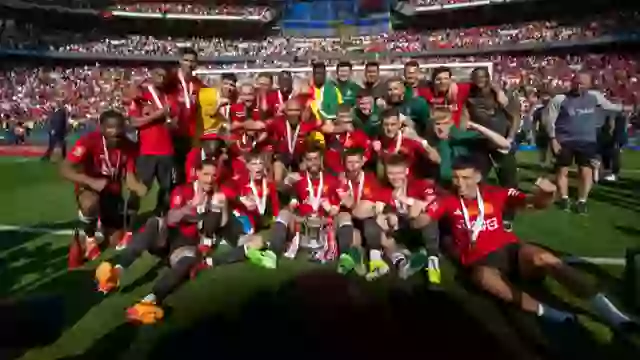
Manchester United, 1998–1999 (number three)
The treble-winning Manchester United team, which was managed by Sir Alex Ferguson and captained by Roy Keane, who was a controversial figure, is still being considered for the title of the greatest British football team in the long history of the sport. On the other hand, they were so adored that they were also so hated.
Following their victories in the Premier League and the FA Cup, the Red Devils were able to secure their third trophy of the season with their comeback victory in the Champions League championship match against Bayern Munich in Barcelona.
MK Dons, 2004/2005, number 2
“MK Dons asserted that they were the rightful owners of Wimbledon’s history and league position. The fact that this synthetic club relocated to Milton Keynes, a new town where concrete cows were once erected to create atmosphere, is a fitting one, as Four Four Two writes.
First place: Leeds United, 1973–1974
Leeds, led by Don Revie’s team that won the championship in 1973–1974, takes the top spot.
His second league title, which George Best referred to as a “bloody nightmare,” was his second league tournament victory.
On the other hand, The Sunday Times referred to the Scot as “10 stone of barbed wire,” which paints its own picture. Four Four Two referred to Billy Bremner as their “chief villain.”
xz