
FIFA plans to employ “dynamic pricing” for 2026 FIFA World Cup tickets, with the most costly tickets to the final now priced at a whopping $6,730. There are still nine months until the tournament begins in the United States, Mexico, and Canada.
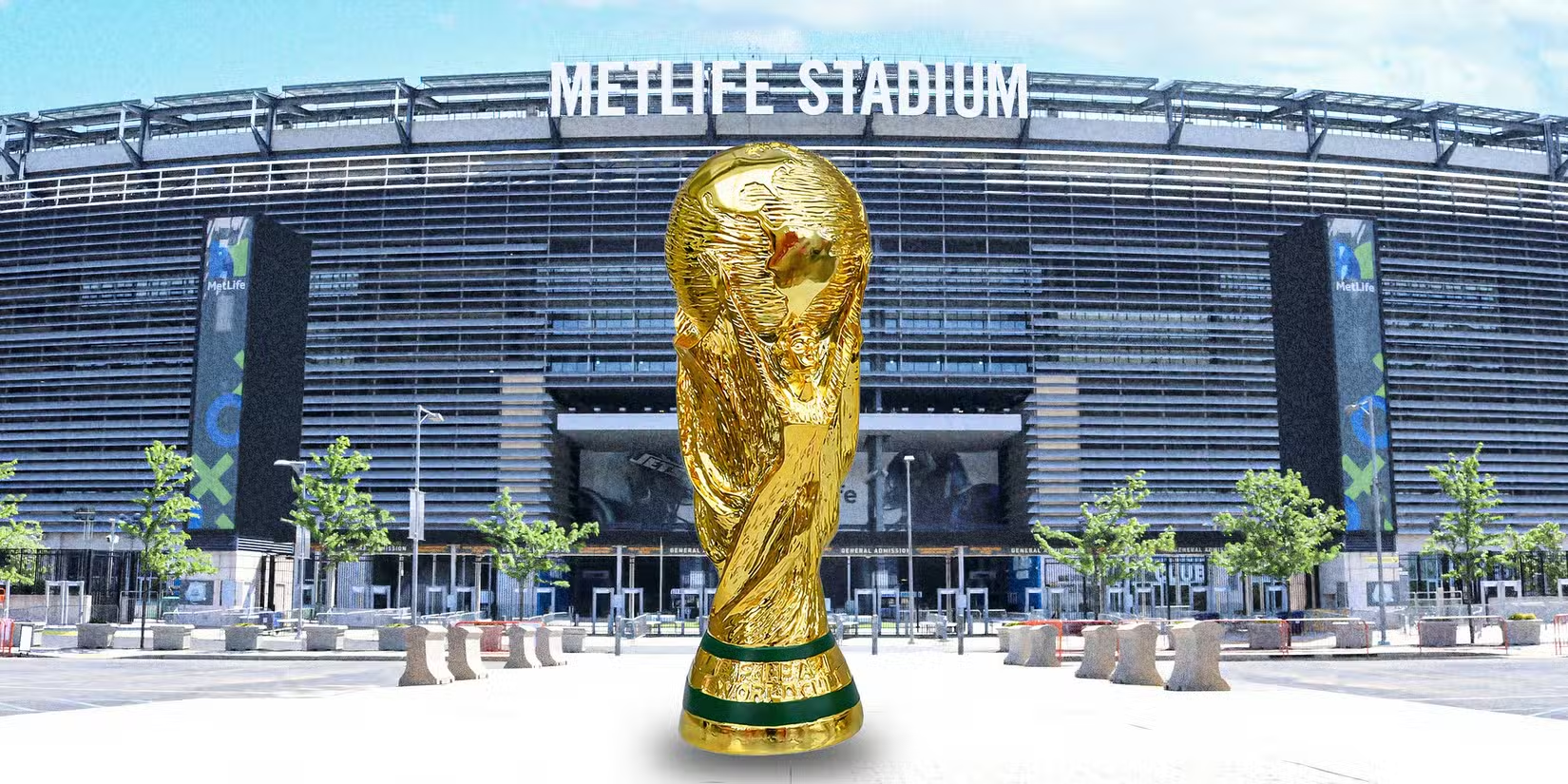
A FIFA official confirmed the current ticket prices and provided figures for both the cheapest group-stage seats and the most costly tickets to the final at MetLife Stadium in East Rutherford, New Jersey. The Athletic’s story clarified how fans can purchase tickets.
FIFA’s Variable Prices for 2026 World Cup Tickets
The lowest tickets for group-stage games are priced at $60, but this is “subject to change once sales begin in October.” The revelation about dynamic pricing, commonly known as “variable pricing,” came during a Zoom conversation between a FIFA executive and reporters on Wednesday.
It was indicated that current ticket prices may change before and after the World Cup’s next draw on December 5th, which will determine group-stage opponents, dates, and locations.
The process will begin with an initial ticket phase, which will open on September 10th and allow fans to apply to purchase tickets (by VISA card). Those chosen at random can then purchase up to 40 (four per match, ten matches in a specified time frame in October).
A second phase runs from late October to early December, giving individuals without a VISA card the opportunity to obtain tickets. This will involve another lottery phase prior to a first-come, first-served phase following the December 5th draw.
How Will Ticket Prices and Seating Work?
There will be four distinct categories that determine ticket costs, with Category 1 being the most expensive and Category 4 being the least expensive. Initial rates have yet to be determined, and one FIFA official reacted to questions about Category 1, 2, and 3 for group-stage matches by asserting that the “numbers weren’t set”.
There was also no word on how many of the $60 tickets would be available or what percentage of a given stadium would be classified as “Category 4” seats, though this figure is thought to be large.
Seating in stadiums is often classified as Category 1 (lower bowl), Category 2 (second deck), and Category 3 and 4 (upper deck). Fans can buy tickets in each category without knowing the section or row they will be allotted, and they cannot request specific seats.
The FIFA source clarified that the $60 fee was only a “starting point” and that “we will apply variable pricing from Day 1 of the process.” This might cause costs to rise or fall between presale through October 21, with fans having until September 19 to apply.
Dynamic pricing was employed for the 2025 FIFA Club World Cup earlier this summer, and FIFA overestimated ticket demand, resulting in a large fall in costs. Some of the competition’s group-stage games had low attendance, which FIFA rushed to address.
The continuation of this technique for the World Cup will, as an official stated, “allow FIFA to maximise revenues and attendance.” The tournament is estimated to generate $3 billion in hospitality and ticket sales, breaking the previous World Cup attendance record set in the United States in 1994.
Fans blast FIFA’s 2026 World Cup ticket sales method.

Fans have sharply criticized FIFA’s decision to use dynamic pricing to sell World Cup tickets next summer. They responded to the report released by The Athletic.
One fan responded by saying it “should be illegal.”
Another football lover was puzzled:
“Someone must switch the entire football world off and on again. “Starting with FIFA.”
One added:
“Shocking. Another bad day for the fans.”
Another person disagreed with projections of matching the 1998 World Cup attendance records:
“This is probably gonna be the worst World Cup attendance of all time.”
One fan outlined why FIFA should adopt UEFA’s ticketing strategy:
“FIFA should look at UEFA’s tournament pricing.” ‘Fan first’ seats behind the goal have become quite reasonable (£30 for the group stage and £80 for the final) in recent Euros. This means that actual fans can attend. It also benefits the environment.
The World Cup will be held in 17 various locales throughout three zones, including the United States, Mexico, and Canada, next summer. Fans who attend many matches will have to pay high travel costs to get around North America, visiting stadiums like AT&T Stadium (Dallas), Estadio Banorte (Mexico City), and BC Pace (Vancouver).
xz